


Tool manipulation knowledge is retrieved by way of the ventral visual object processing pathway
- PMID: 23810714
- PMCID: PMC3795789
- DOI: 10.1016/j.cortex.2013.05.004
Tool manipulation knowledge is retrieved by way of the ventral visual object processing pathway
Abstract
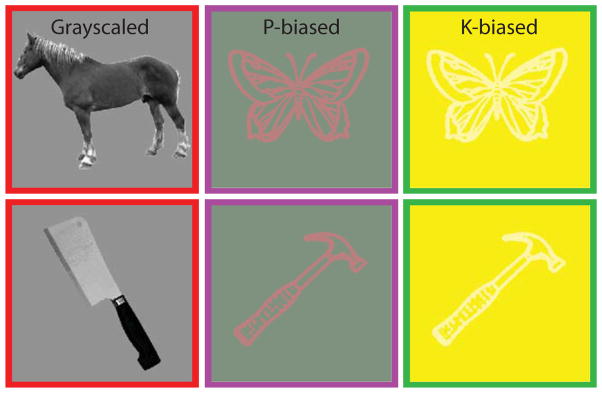
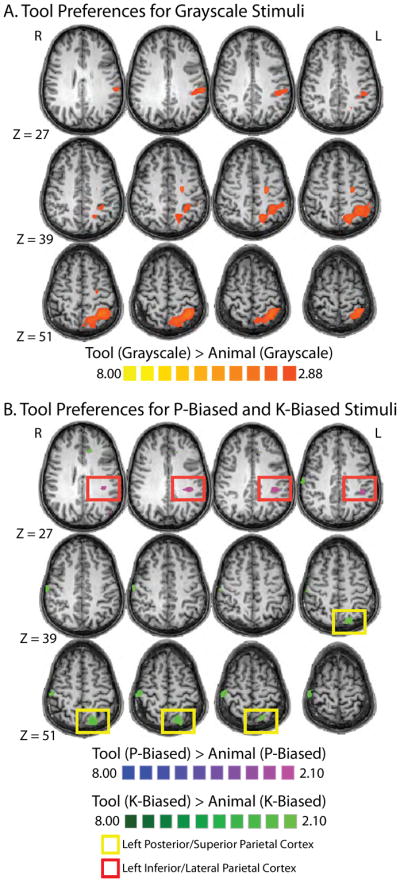
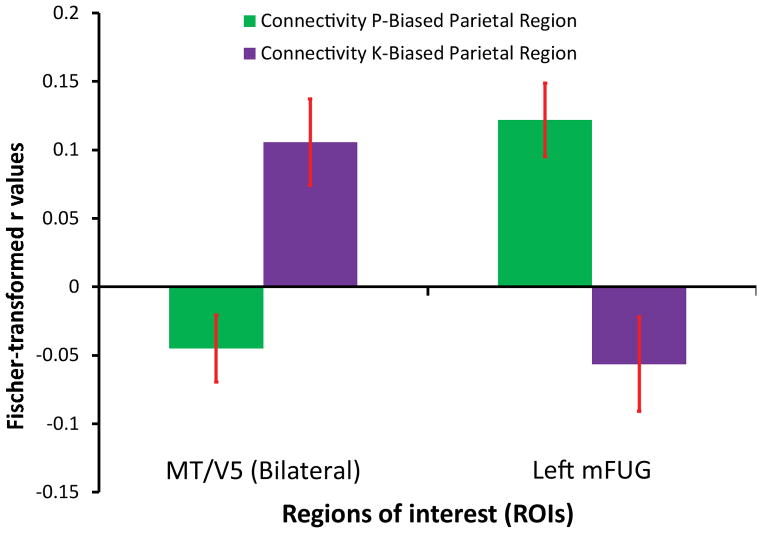
Using functional Magnetic Resonance Imaging (fMRI), we find that object manipulation knowledge is accessed by way of the ventral object processing pathway. We exploit the fact that parvocellular channels project to the ventral but not the dorsal stream, and show that increased neural responses for tool stimuli are observed in the inferior parietal lobule when those stimuli are visible only to the ventral object processing stream. In a control condition, tool-preferences were observed in a superior and posterior parietal region for stimuli titrated so as to be visible by the dorsal visual pathway. Functional connectivity analyses confirm the dissociation between sub-regions of parietal cortex according to whether their principal afferent input is via the ventral or dorsal visual pathway. These results challenge the 'Embodied Hypothesis of Tool Recognition', according to which tool identification critically depends on simulation of object manipulation knowledge. Instead, these data indicate that retrieval of object-associated manipulation knowledge is contingent on accessing the identity of the object, a process that is subserved by the ventral visual pathway.
Keywords: Dorsal stream; Koniocellular pathway; Object recognition; Parvocellular pathway; Subcortical pathways; Ventral stream; Visual pathways; fMRI.
Copyright © 2013 Elsevier Ltd. All rights reserved.
Figures
References
-
- Almeida J, Mahon BZ, Zapater-Raberov V, Dziuba A, Cabaço T, Marques JF, Nakayama K, Caramazza A. Grasping with the eyes: the role of elongation in visual manipulable object recognition. Cognitive Affective and Behavioral Neuroscience. under review. - PubMed
-
- Arbib M. From grasp to language: embodied concepts and the challenge of abstraction. Journal of Physiology Paris. 2008;102(1–3):4–20. - PubMed
-
- Baayen RH, Piepenbrock R, van Rijn H. The CELEX Lexical Database [CD-ROM] Philadelphia: University of Pennsylvania, Linguistic Data Consortium; 1993.
Publication types
MeSH terms
Grants and funding
LinkOut - more resources
Full Text Sources
Other Literature Sources
Medical
