


Patients with heart failure have an increased risk of incident cancer
- PMID: 23810869
- PMCID: PMC3758775
- DOI: 10.1016/j.jacc.2013.04.088
Patients with heart failure have an increased risk of incident cancer
Abstract
Objectives: This study sought to evaluate the risk of cancer in patients with heart failure (HF) compared with community controls and to determine the impact of cancer post-HF on outcomes.
Background: HF is associated with excess morbidity and mortality. Noncardiac causes of adverse outcomes in HF are increasingly recognized, but not fully characterized.
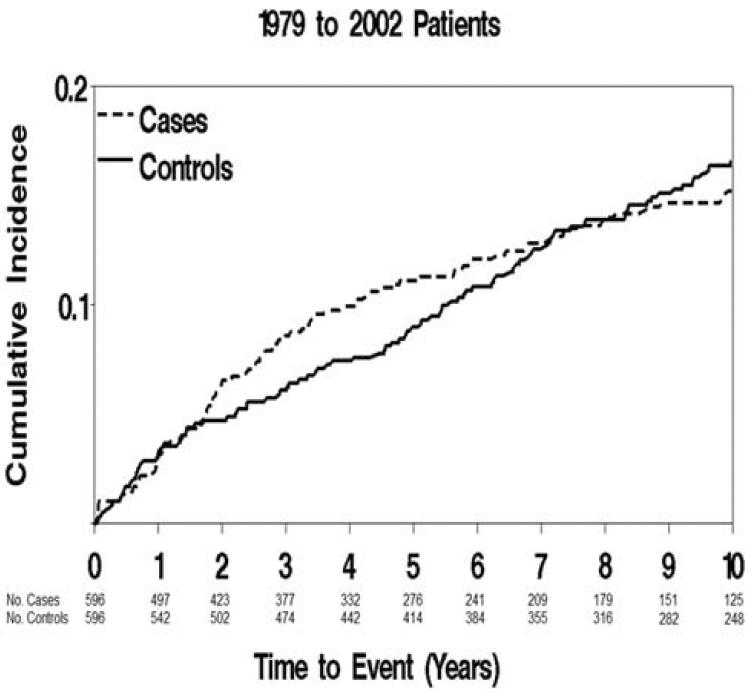
Methods: In a case-control study, we compared the history of cancer among community subjects newly diagnosed with HF from 1979 to 2002 to age-, sex-, and date-matched community controls without HF (961 pairs). Individuals without cancer at the index date (596 pairs) were followed for cancer in a cohort design, and the survival of HF patients who developed cancer was assessed.
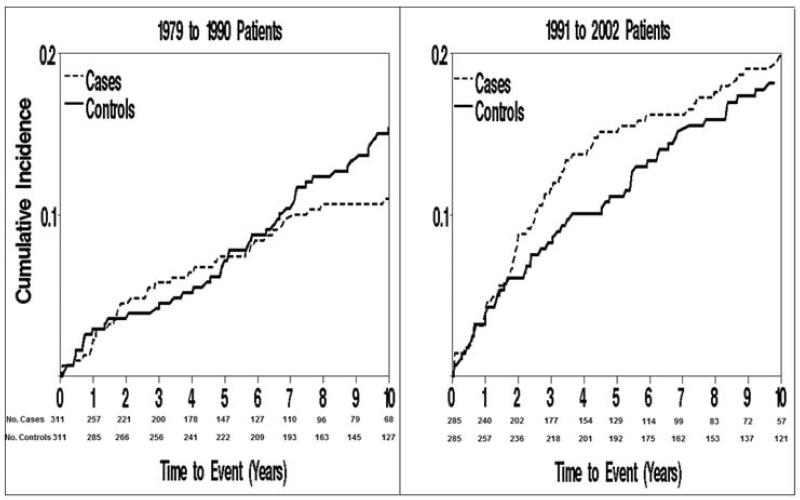
Results: Before the index date, 22% of HF cases and 23% of controls had a history of cancer (odds ratio [OR]: 0.94; 95% confidence interval [CI]: 0.75 to 1.17). During 9,203 person-years of follow-up (7.7 ± 6.4 years), 244 new cancer cases were identified; HF patients had a 68% higher risk of developing cancer (hazard ratio [HR]: 1.68; 95% CI: 1.13 to 2.50) adjusted for body mass index, smoking, and comorbidities. The HRs were similar for men and women, with a trend toward a stronger association among subjects ≤75 years of age (p = 0.22) and during the most recent time period (p = 0.075). Among HF cases, incident cancer increased the risk of death (HR: 1.56; 95% CI: 1.22 to 1.99) adjusted for age, sex, index year, and comorbidities.
Conclusions: HF patients are at increased risk of cancer, which appears to have increased over time. Cancer increases mortality in HF, underscoring the importance of noncardiac morbidity and of cancer surveillance in the management of HF patients.
Keywords: BMI; CI; EF; HF; HR; body mass index; cancer; confidence interval; ejection fraction; epidemiology; follow-up studies; hazard ratio; heart failure; risk.
Copyright © 2013 American College of Cardiology Foundation. Published by Elsevier Inc. All rights reserved.
Figures
Comment in
-
Incident cancer in patients with heart failure: causation or mere association?J Am Coll Cardiol. 2013 Sep 3;62(10):887-8. doi: 10.1016/j.jacc.2013.04.087. Epub 2013 Jun 27. J Am Coll Cardiol. 2013. PMID: 23810872 No abstract available.
References
-
- Roger VL, Weston SA, Redfield MM, et al. Trends in heart failure incidence and survival in a community-based population. JAMA. 2004;292:344–50. - PubMed
Publication types
MeSH terms
Grants and funding
LinkOut - more resources
Full Text Sources
Other Literature Sources
Medical
Research Materials
Miscellaneous
