


Lower cardiorespiratory fitness contributes to increased insulin resistance and fasting glycaemia in middle-aged South Asian compared with European men living in the UK
- PMID: 23811809
- PMCID: PMC3764328
- DOI: 10.1007/s00125-013-2969-y
Lower cardiorespiratory fitness contributes to increased insulin resistance and fasting glycaemia in middle-aged South Asian compared with European men living in the UK
Abstract
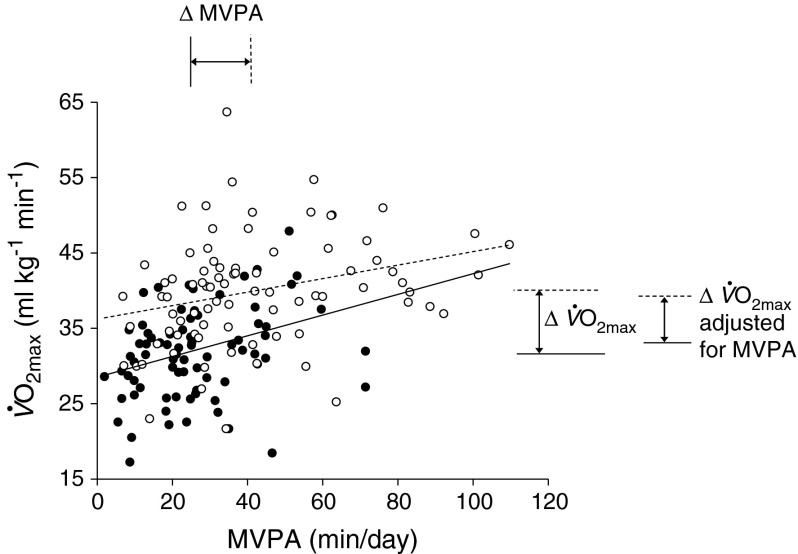
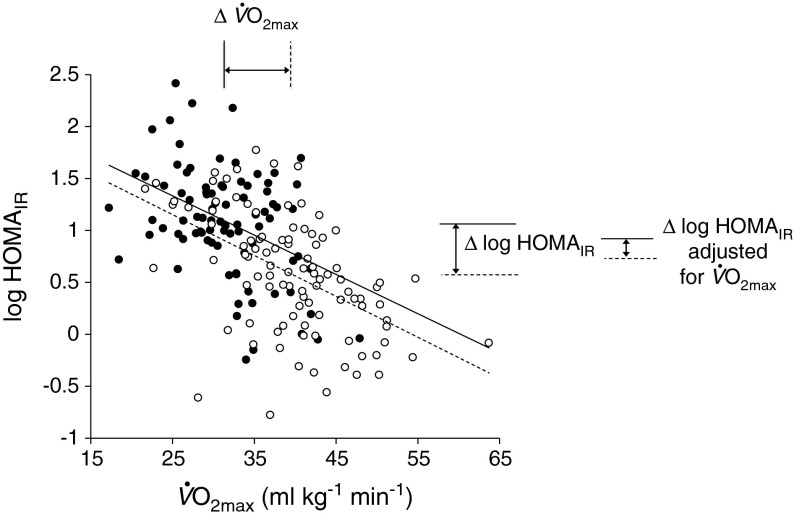
Aims/hypothesis: This study aimed to determine the extent to which increased insulin resistance and fasting glycaemia in South Asian men, compared with white European men, living in the UK, was due to lower cardiorespiratory fitness (maximal oxygen uptake [VO(2max)]) and physical activity.
Methods: One hundred South Asian and 100 age- and BMI-matched European men without diagnosed diabetes, aged 40-70 years, had fasted blood taken for measurement of glucose concentration, HOMA-estimated insulin resistance (HOMA(IR)), plus other risk factors, and underwent assessment of physical activity (using accelerometry), VO(2max), body size and composition, and demographic and other lifestyle factors. For 13 South Asian and one European man, HbA1c levels were >6.5% (>48 mmol/mol), indicating potential undiagnosed diabetes; these men were excluded from the analyses. Linear regression models were used to determine the extent to which body size and composition, fitness and physical activity variables explained differences in HOMA(IR) and fasting glucose between South Asian and European men.
Results: HOMA(IR) and fasting glucose were 67% (p < 0.001) and 3% (p < 0.018) higher, respectively, in South Asians than Europeans. Lower VO(2max), lower physical activity and greater total adiposity in South Asians individually explained 68% (95% CI 45%, 91%), 29% (11%, 46%) and 52% (30%, 80%), respectively, and together explained 83% (50%, 119%) (all p < 0.001) of the ethnic difference in HOMA(IR). Lower VO(2max) and greater total adiposity, respectively, explained 61% (9%, 111%) and 39% (9%, 76%) (combined effect 63% [8%, 115%]; all p < 0.05) of the ethnic difference in fasting glucose.
Conclusions/interpretation: Lower cardiorespiratory fitness is a key factor associated with the excess insulin resistance and fasting glycaemia in middle-aged South Asian, compared with European, men living in the UK.
Figures
References
-
- Mukhopadhyay B, Forouhi NG, Fisher BM, Kesson CM, Sattar N. A comparison of glycaemic and metabolic control over time among South Asian and European patients with type 2 diabetes: results from follow-up in a routine diabetes clinic. Diabet Med. 2006;23:94–98. doi: 10.1111/j.1464-5491.2005.01735.x. - DOI - PubMed
-
- Sproston K, Mindell J (eds) (2006) Health survey for England 2004. Volume 1. The health of minority ethnic groups. The Information Centre, Leeds, UK
-
- Forouhi NG, Sattar N, Tillin T, McKeigue PM, Chaturvedi N. Do known risk factors explain the higher coronary heart disease mortality in South Asian compared with European men? Prospective follow-up of the Southall and Brent studies, UK. Diabetologia. 2006;49:2580–2588. doi: 10.1007/s00125-006-0393-2. - DOI - PubMed
Publication types
MeSH terms
Substances
LinkOut - more resources
Full Text Sources
Other Literature Sources
Medical
