


Maternal depression and rapid subsequent pregnancy among first time mothers
- PMID: 23812059
- PMCID: PMC6060618
- DOI: 10.1097/NMC.0b013e3182861572
Maternal depression and rapid subsequent pregnancy among first time mothers
Abstract
Purpose: To examine differences in prenatal depression among first-time mothers who had a subsequent pregnancy within 6 months of first birth and those who did not. Mothers with depression symptoms were expected to have a greater likelihood of rapid subsequent pregnancy.
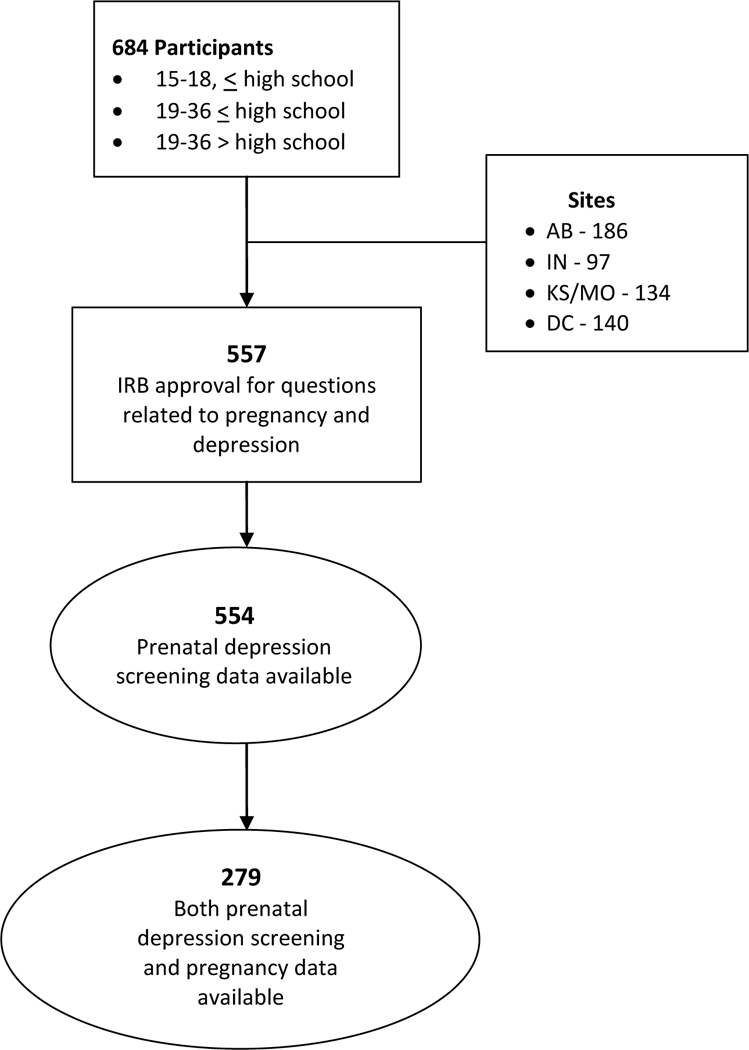
Study design: The Parenting for the First Time study is a longitudinal multisite prospective descriptive study designed to identify and understand the dynamics of subthreshold neglectful parenting behaviors among first-time mothers. Data were collected from the prenatal period through the child's first 3 years of life. The Parenting for the First Time sample consisted of 684 first-time mothers between 15 and 36 years. Data were available on prenatal depression and subsequent pregnancy at 6 months for 279 participants (n = 279).
Methods: Multiple logistic regression analysis was conducted to determine the odds of subsequent pregnancy within 6 months of first birth.
Results: Twelve mothers (5.9%) became pregnant within 6 months of first birth. The odds of subsequent pregnancy were 7.24 greater (95% confidence interval [CI]: 2.18-24.04) among mothers with moderate-to-severe depression. White versus non-White race did not influence subsequent pregnancy (0.91, 95% CI: 0.18-4.49). Pregnancy was not significantly different between teen and adult mothers (odds ratio: 0.92, 95% CI: 0.24-3.68).
Clinical implications: In this sample of first time mothers, moderate-to-severe depression symptoms were associated with subsequent pregnancy within 6 months of first birth. Routine depression screening by nurses during the prenatal period offers opportunities for intensive contraceptive counseling and may help mothers achieve optimal birth spacing.
Conflict of interest statement
Conflicts of Interest :Authors have no conflicts of interest to declare.
Figures
References
-
- Beck AT, Steer RA, & Brown GK (1996). Manual for Beck Depression Inventory II (BDI-II). Psychology Corporation, San Antonio.
-
- DaVanzo J, Hale L, Razzaque A, Rahman M (2007). Effects of interpregnancy interval and outcome of the preceding pregnancy on pregnancy outcomes in Matlab, Bangladesh. BJOG : an international journal of obstetrics and gynaecology, 114, 1079–87. 10.1111/j.1471-0528.2007.01338.x [doi] - DOI - PMC - PubMed
MeSH terms
Grants and funding
LinkOut - more resources
Full Text Sources
Other Literature Sources
Medical
