


Trends of overweight and obesity, physical activity and sedentary behaviour in Czech schoolchildren: HBSC study
- PMID: 23813709
- PMCID: PMC3966283
- DOI: 10.1093/eurpub/ckt085
Trends of overweight and obesity, physical activity and sedentary behaviour in Czech schoolchildren: HBSC study
Abstract
Background: The decline of physical activity (PA) and the increased prevalence of overweight and obese children have been discussed worldwide. This study assessed the trends in the prevalence of overweight and obesity, PA and sedentary behaviour in Czech school-aged children.
Methods: A cross-sectional questionnaire from the Czech Republic was administered in cycles in 2002, 2006 and 2010 under the Health Behaviour in School-Aged Children (HBSC) study. In the study, 14,219 children aged 11-15 years participated.
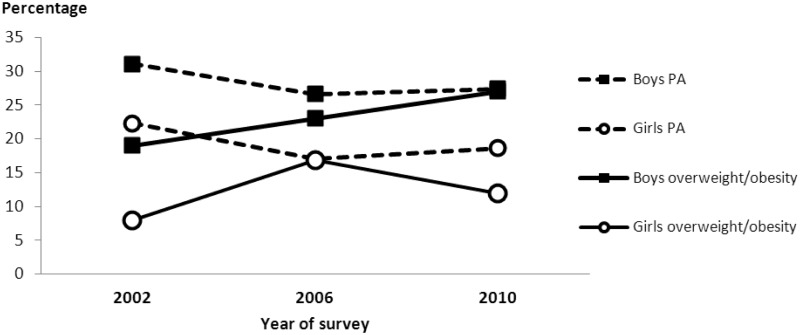
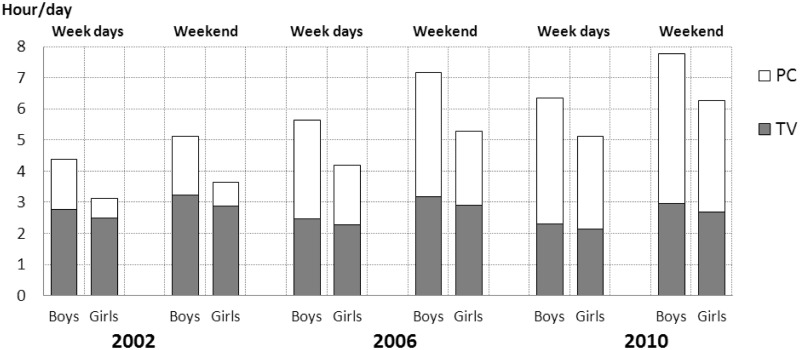
Results: In comparison with 2002, there is a significant increase (P < 0.01) of obese and overweight boys in 2010. The same trend has been recorded in girls, except those in the 13-year-old group. There has been a significant decline (P < 0.05) in meeting PA recommendations in 11-year-old girls and boys and in 13-year-old girls when comparing the 2006 and 2002 data. In 2010, we found a non-significant increase or stagnation of the share of children meeting the PA recommendation compared with 2006. We found an increasing length of sedentary time for children. There were significant associations between>2 h being spent sitting by a TV or PC and consuming fruit and vegetables (negative associations) or sweets and sweetened lemonades (positive associations).
Conclusions: An increasing percentage of obese or overweight children, increased sedentary time and a decline or stagnation of the proportion of children meeting recommendations for PA were found among Czech schoolchildren. Future research should evaluate PA recommendations with respect to gender, age and effective intervention approach to reduce the obesity incidence in childhood.
Figures
References
-
- Branca F, Nikogosian H, Lobstein T, editors. The Challenge of Obesity in the WHO European Region and the Strategies for Response: Summary. Copenhagen: WHO Regional Office for Europe; 2007.
-
- Singh AS, Mulder C, Twisk JW, et al. Tracking of childhood overweight into adulthood: a systematic review of the literature. Obes Rev. 2008;9:474–88. - PubMed
-
- Cattaneo A, Monasta L, Stamatakis E, et al. Overweight and obesity in infants and pre-school children in the European Union: a review of existing data. Obes Rev. 2010;11:389–98. - PubMed
Publication types
MeSH terms
LinkOut - more resources
Full Text Sources
Other Literature Sources
Medical
