


Nightmares: Prevalence among the Finnish General Adult Population and War Veterans during 1972-2007
- PMID: 23814341
- PMCID: PMC3669062
- DOI: 10.5665/sleep.2806
Nightmares: Prevalence among the Finnish General Adult Population and War Veterans during 1972-2007
Abstract
Study objectives: To investigate the prevalence of nightmares among the Finnish general adult population during 1972-2007 and the association between nightmare prevalence and symptoms of insomnia, depression, and anxiety in World War II veterans.
Design: Eight independent cross-sectional population surveys of the National FINRISK Study conducted in Finland in 1972, 1977, 1982, 1987, 1992, 1997, 2002, and 2007.
Setting: Epidemiologic.
Participants: A total of 69,813 people (33,811 men and 36,002 women) age 25-74 years.
Interventions: N/A.
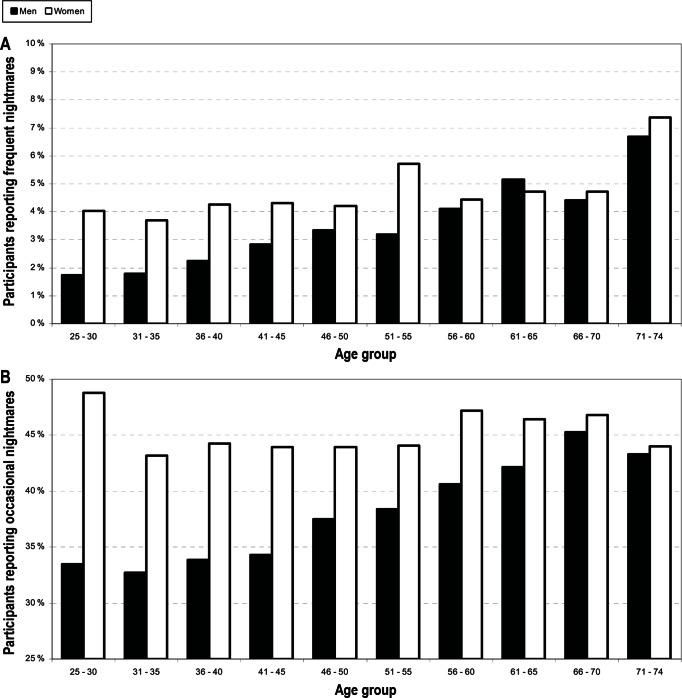
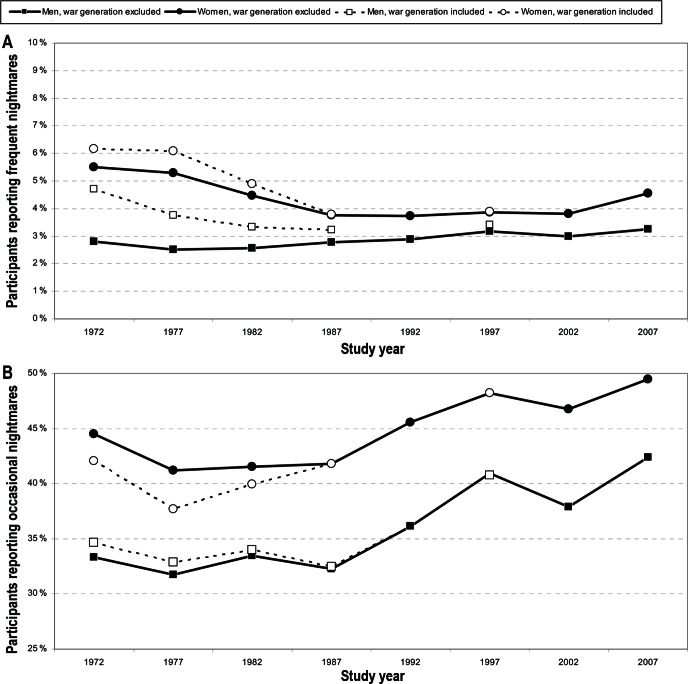
Measurements and results: The investigation of nightmare prevalence and insomnia, depression, and anxiety symptoms was based on questionnaires completed by the participants. Among the whole sample, 3.5% of the men and 4.8% of the women reported frequent nightmares (P < 0.0001 for sex difference), but the prevalence was affected by the age of participants and the year of the survey. Nightmare prevalence increased with age, particularly among the men. The number of people reporting occasional nightmares increased roughly by 20% for both sexes from 1972 to 2007 (P < 0.0001). Participants with war experiences reported more frequent nightmares and symptoms of insomnia, depression, and anxiety than participants without such experiences (P < 0.0001).
Conclusions: Prevalence of nightmares was affected by the sex and age of the participants, and occasional nightmares have become more common in Finland. Exposure to war elevates nightmare prevalence as well as insomnia, depression, and anxiety symptoms even decades after the war; large numbers of war veterans can affect nightmare prevalence on population level.
Citation: Sandman N; Valli K; Kronholm E; Ollila HM; Revonsuo A; Laatikainen T; Paunio T. Nightmares: prevalence among the Finnish general adult population and war veterans during 1972-2007. SLEEP 2013;36(7):1041-1050.
Keywords: Adult; epidemiology; general population; nightmare; sex differences; veterans.
Figures
Comment in
- Sleep. 36:969.
References
-
- American Academy of Sleep Medicine. International classification of sleep disorders. ed 2. Westchester IL: American Academy of Sleep Medicine; 2005.
-
- World Health Organization. The ICD-10 classification of mental and behavioural disorders: diagnostic criteria for research. Geneva: World Health Organization; 1992.
-
- American Psychiatric Association. Diagnostic and statistical manual of mental disorders. 4th-TR ed. Washington, DC: American Psychiatric Association; 2000.
-
- Zadra A, Donderi D. Nightmares and bad dreams: their prevalence and relationship to well-being. J Abnorm Psychol. 2000;109:273–83. - PubMed
-
- Blagrove M, Farmer L, Williams E. The relationship of nightmare frequency and nightmare distress to well being. J Sleep Res. 2004;13:129–36. - PubMed
LinkOut - more resources
Full Text Sources
Other Literature Sources
Medical
