


Quality of life and long-term outcomes of octo- and nonagenarians following acute care surgery: a cross sectional study
- PMID: 23816269
- PMCID: PMC3734003
- DOI: 10.1186/1749-7922-8-23
Quality of life and long-term outcomes of octo- and nonagenarians following acute care surgery: a cross sectional study
Abstract
Background: While advanced age is often associated with poorer surgical outcomes, long-term age-related health status following acute care surgery is unknown. The objective of our study was to assess post-operative cognitive impairment, functional status, and quality of life in elderly patients who underwent emergency surgery.
Methods: We identified 159 octo- and nonagenarians who underwent emergency surgery between 2008 and 2010 at a single tertiary hospital. Patients were grouped into three cohorts: 1, 2, and 3 years post-operative. We conducted a survey in 2011, with octo- and nonagenarians regarding the impact of emergency surgical procedures. Consenting participants responded to four survey questionnaires: (1) Abbreviated Mental Test Score-4, (2) Barthel Index, (3) Vulnerable Elders Survey, and (4) EuroQol-5 Dimensional Scale.
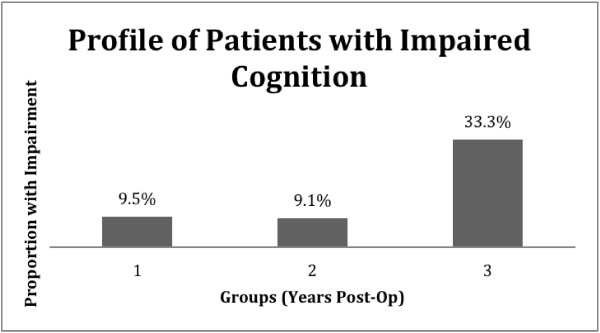
Results: Of the 159 octo- and nonagenarians, 88 (55.3%) patients were alive at the time of survey conduction, and 55 (62.5%) of the surviving patients consented to participate. At 1, 2, and 3 years post-surgery, mortality rates were 38.5%, 44.7%, and 50.0%, respectively. More patients had cognitive impairments at 3 years (33.3%) than at 1 (9.5%) and 2 years (9.1%) post-operatively. No statistical difference in the ability to carry out activities of daily living or functional decline with increasing time post-operatively. However, patients perceived a significant health decline with the greater time that passed following surgery.
Conclusions: Our study showed that half of the patients over the age of 80 are surviving up to 3 years post-operatively. While post-operative functional status appears to be stable across the 3 cohorts of patients, perceived health status declines over time. Understanding the long-term post-operative impact on cognitive impairment, functional status, and quality of life in elderly patients who undergo acute care surgery allows health care professionals to predict their patients' likely post-operative needs.
Figures
References
-
- Canada, D.o.A.a.S.H. Canada’s aging population. Ottawa, Canada: Minister of Public Works and Government Services; 2002.
-
- Canadian Institute for Health Information, Health Care in Canada. A Focus on Seniors and Aging. Ottawa, Ont.: CIHI; 2011.
-
- Jacobsen LA, Kent M, Lee M, Mather M. America’s Aging Population. Popul Ref Bureau. 2011;8:1.
-
- Department of Economic and Social Affairs. World population aging. United Nation; 2009.
LinkOut - more resources
Full Text Sources
Other Literature Sources
