


Vasculogenic mimicry: a novel target for glioma therapy
- PMID: 23816560
- PMCID: PMC3935008
- DOI: 10.5732/cjc.012.10292
Vasculogenic mimicry: a novel target for glioma therapy
Abstract
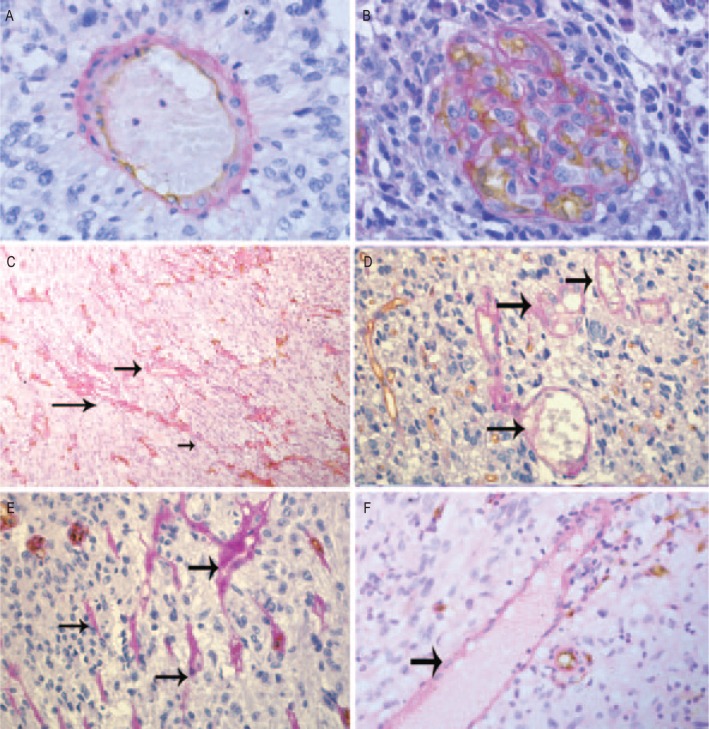
Anti-angiogenic therapy has shown promising but insufficient efficacy on gliomas. Recent studies suggest that vasculogenic mimicry (VM), or the formation of non-endothelial, tumor-cell-lined microvascular channels, occurs in aggressive tumors, including gliomas. There is also evidence of a physiological connection between the endothelial-lined vasculature and VM channels. Tumor cells, by virtue of their high plasticity, can form vessel-like structures themselves, which may function as blood supply networks. Our previous study on gliomas showed that microvessel density was comparably less in VM-positive tumors than in VM-negative tumors. Thus, VM may act as a complement to ensure tumor blood supply, especially in regions with less microvessel density. Patients with VM-positive gliomas survived a shorter period of time than did patients with VM-negative gliomas. Although the detailed molecular mechanisms for VM are not fully understood, glioma stem cells might play a key role, since they are involved in tumor tissue remodeling and contribute to neovascularization via transdifferentiation. In the future, successful treatment of gliomas should involve targeting both VM and angiogenesis. In this review, we summarize the progress and challenges of VM in gliomas.
Figures

References
-
- Stupp R, Mason WP, van den Bent MJ, et al. Radiotherapy plus concomitant and adjuvant temozolomide for glioblastoma. N Engl J Med. 2005;352:987–996. - PubMed
-
- Hegi ME, Diserens AC, Godard S, et al. Clinical trial substantiates the predictive value of O-6-methylguanine-DNA methyltransferase promoter methylation in glioblastoma patients treated with temozolomide. Clin Cancer Res. 2004;10:1871–1874. - PubMed
-
- Hegi ME, Diserens AC, Gorlia T, et al. MGMT gene silencing and benefit from temozolomide in glioblastoma. N Engl J Med. 2005;352:997–1003. - PubMed
-
- Preusser M, Heinzl H, Gelpi E, et al. Histopathologic assessment of hot-spot microvessel density and vascular patterns in glioblastoma: poor observer agreement limits clinical utility as prognostic factors—a translational research project of the European Organization for Research and Treatment of Cancer Brain Tumor Group. Cancer. 2006;107:162–170. - PubMed
Publication types
MeSH terms
Substances
LinkOut - more resources
Full Text Sources
Other Literature Sources
Medical