


Incretin action in the pancreas: potential promise, possible perils, and pathological pitfalls
- PMID: 23818527
- PMCID: PMC3781450
- DOI: 10.2337/db13-0822
Incretin action in the pancreas: potential promise, possible perils, and pathological pitfalls
Abstract
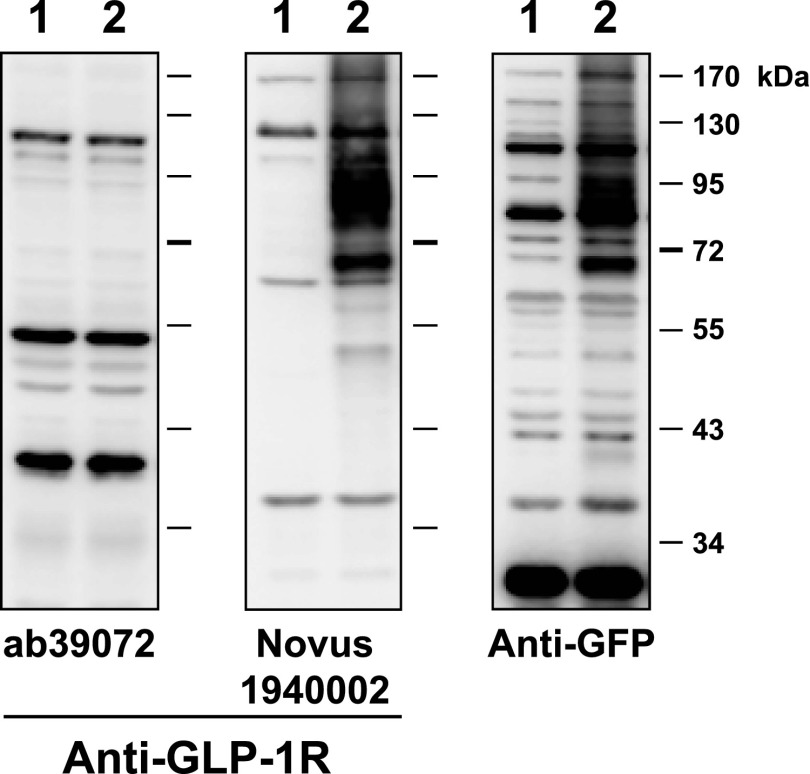
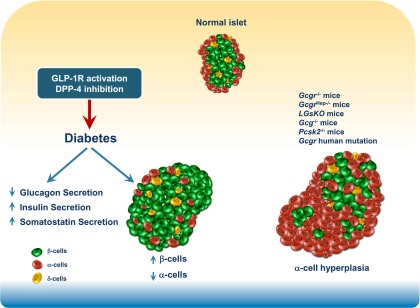
Glucagon-like peptide-1 (GLP-1) and glucose-dependent insulinotropic polypeptide (GIP) are incretin hormones that control the secretion of insulin, glucagon, and somatostatin to facilitate glucose disposal. The actions of incretin hormones are terminated via enzymatic cleavage by dipeptidyl peptidase-4 (DPP-4) and through renal clearance. GLP-1 and GIP promote β-cell proliferation and survival in rodents. DPP-4 inhibitors expand β-cell mass, reduce α-cell mass, and inhibit glucagon secretion in preclinical studies; however, whether incretin-based therapies sustain functional β-cell mass in human diabetic subjects remains unclear. GLP-1 and GIP exert their actions predominantly through unique G protein-coupled receptors expressed on β-cells and other pancreatic cell types. Accurate localization of incretin receptor expression in pancreatic ductal or acinar cells in normal or diabetic human pancreas is challenging because antisera used for detection of the GLP-1 receptor often are neither sufficiently sensitive nor specific to yield reliable data. This article reviews recent advances and controversies in incretin hormone action in the pancreas and contrasts established mechanisms with areas of uncertainty. Furthermore, methodological challenges and pitfalls are highlighted and key areas requiring additional scientific investigation are outlined.
Figures
References
-
- Drucker DJ, Nauck MA. The incretin system: glucagon-like peptide-1 receptor agonists and dipeptidyl peptidase-4 inhibitors in type 2 diabetes. Lancet 2006;368:1696–1705 - PubMed
-
- Campbell JE, Drucker DJ. Pharmacology, physiology, and mechanisms of incretin hormone action. Cell Metab 2013;17:819–837 - PubMed
-
- Butler AE, Campbell-Thompson M, Gurlo T, Dawson DW, Atkinson M, Butler PC. Marked expansion of exocrine and endocrine pancreas with incretin therapy in humans with increased exocrine pancreas dysplasia and the potential for glucagon-producing neuroendocrine tumors. Diabetes 2013;62:2595–2604 - PMC - PubMed
Publication types
MeSH terms
Substances
Grants and funding
LinkOut - more resources
Full Text Sources
Other Literature Sources
Medical
Miscellaneous
