


Nonsense-mediated mRNA decay and loss-of-function of the protein underlie the X-linked epilepsy associated with the W356× mutation in synapsin I
- PMID: 23818987
- PMCID: PMC3688603
- DOI: 10.1371/journal.pone.0067724
Nonsense-mediated mRNA decay and loss-of-function of the protein underlie the X-linked epilepsy associated with the W356× mutation in synapsin I
Abstract
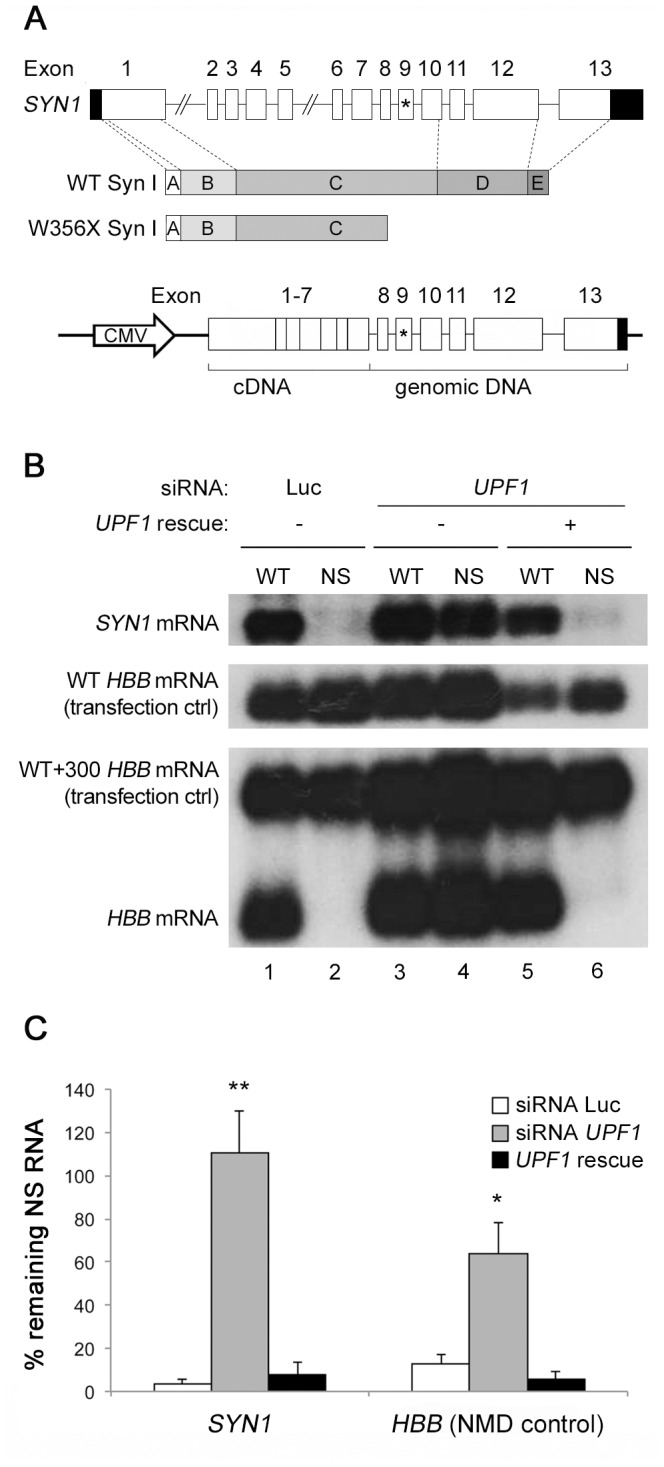
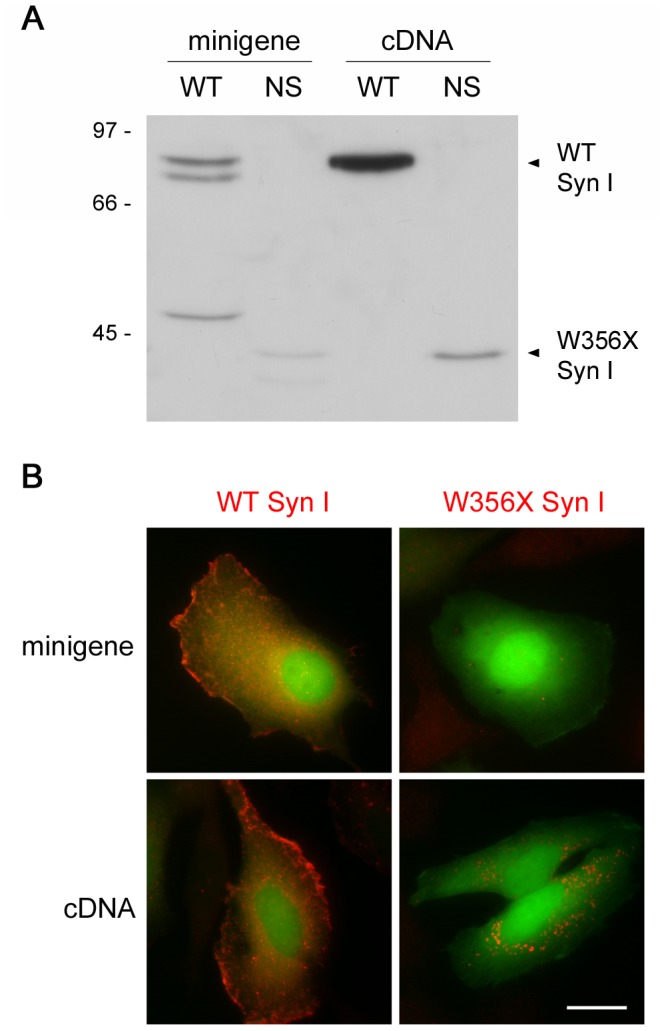
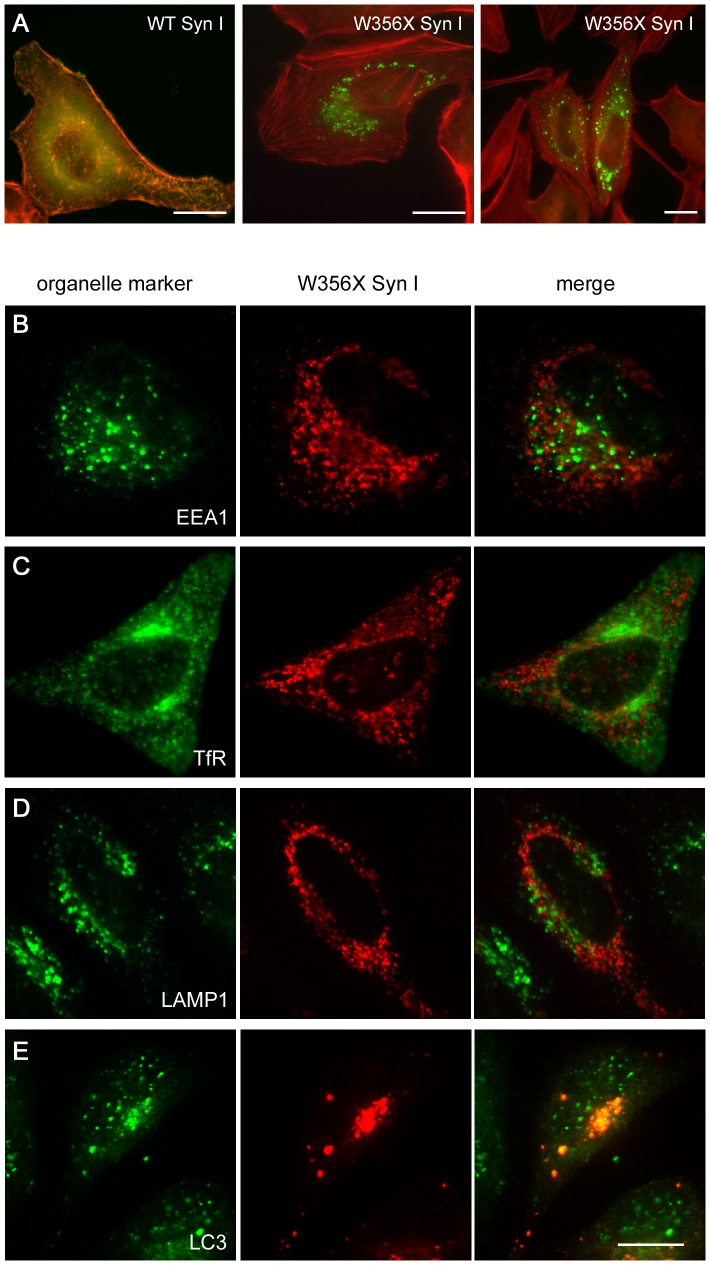
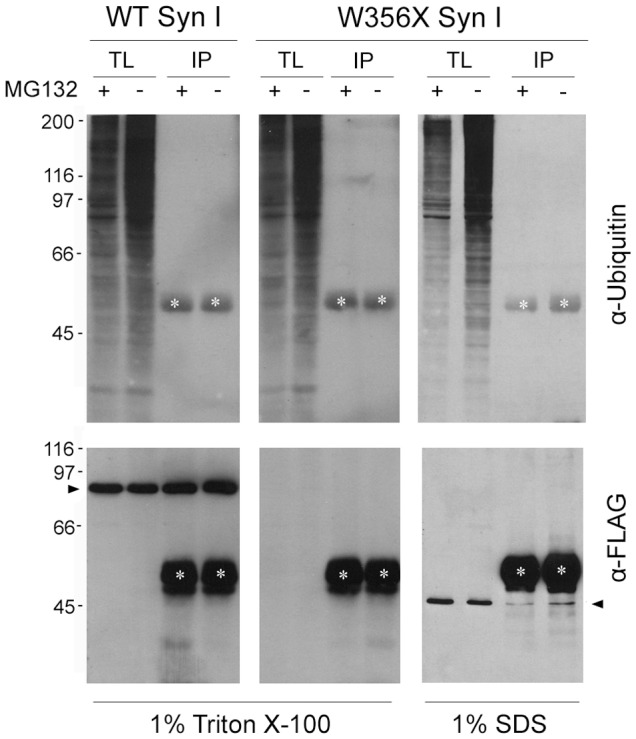
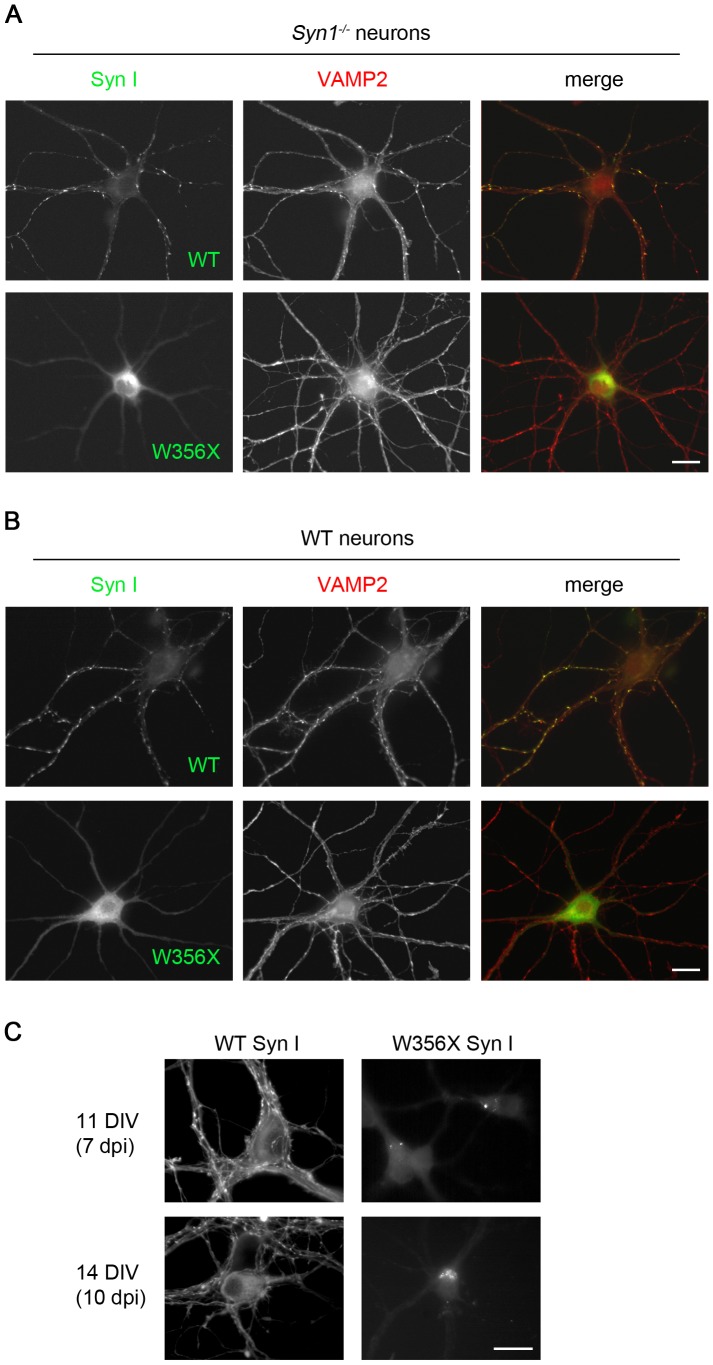
Synapsins are a family of neuronal phosphoproteins associated with the cytosolic surface of synaptic vesicles. Experimental evidence suggests a role for synapsins in synaptic vesicle clustering and recycling at the presynaptic terminal, as well as in neuronal development and synaptogenesis. Synapsin knock-out (Syn1(-/-) ) mice display an epileptic phenotype and mutations in the SYN1 gene have been identified in individuals affected by epilepsy and/or autism spectrum disorder. We investigated the impact of the c.1067G>A nonsense transition, the first mutation described in a family affected by X-linked syndromic epilepsy, on the expression and functional properties of the synapsin I protein. We found that the presence of a premature termination codon in the human SYN1 transcript renders it susceptible to nonsense-mediated mRNA decay (NMD). Given that the NMD efficiency is highly variable among individuals and cell types, we investigated also the effects of expression of the mutant protein and found that it is expressed at lower levels compared to wild-type synapsin I, forms perinuclear aggregates and is unable to reach presynaptic terminals in mature hippocampal neurons grown in culture. Taken together, these data indicate that in patients carrying the W356× mutation the function of synapsin I is markedly impaired, due to both the strongly decreased translation and the altered function of the NMD-escaped protein, and support the value of Syn1(-/-) mice as an experimental model mimicking the human pathology.
Conflict of interest statement
Figures
References
-
- Turnbull J, Lohi H, Kearney JA, Rouleau GA, Delgado-Escueta AV, et al. (2005) Sacred disease secrets revealed: the genetics of human epilepsy. . Hum Mol Genet 14 Spec No. 2 2491–2500. - PubMed
-
- Rees MI (2010) The genetics of epilepsy--the past, the present and future. Seizure 19: 680–683. - PubMed
-
- Nicita F, De Liso P, Danti FR, Papetti L, Ursitti F, et al. (2012) The genetics of monogenic idiopathic epilepsies and epileptic encephalopathies. Seizure 21: 3–11. - PubMed
-
- Rosahl TW, Spillane D, Missler M, Herz J, Selig DK, et al. (1995) Essential functions of synapsins I and II in synaptic vesicle regulation. Nature 375: 488–493. - PubMed
Publication types
MeSH terms
Substances
Grants and funding
LinkOut - more resources
Full Text Sources
Other Literature Sources
Medical
Molecular Biology Databases
