. 2013 May 30:2013:697521.
doi: 10.1155/2013/697521. Print 2013.

The role of chronic inflammation in obesity-associated cancers

Affiliations

The role of chronic inflammation in obesity-associated cancers

Maria E Ramos-Nino. ISRN Oncol. .

Abstract

There is a strong relationship between metabolism and immunity, which can become deleterious under conditions of metabolic stress. Obesity, considered a chronic inflammatory disease, is one example of this link. Chronic inflammation is increasingly being recognized as an etiology in several cancers, particularly those of epithelial origin, and therefore a potential link between obesity and cancer. In this review, the connection between the different factors that can lead to the chronic inflammatory state in the obese individual, as well as their effect in tumorigenesis, is addressed. Furthermore, the association between obesity, inflammation, and esophageal, liver, colon, postmenopausal breast, and endometrial cancers is discussed.


Figures
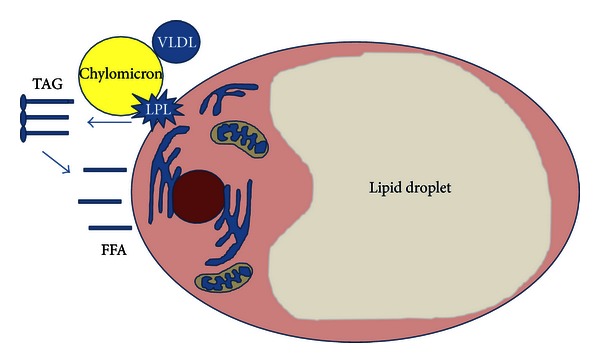
Figure 1
Figure 1
The WAT's adipocyte cell storage triglycerides (TAGs). Approximately 90% of the adipocyte is a lipid droplet. The steps for lipid storage. (a) The adipocyte releases lipoprotein lipase (LPL) to the environment to break down triglyceride molecules presented by the chylomicrons and the very low density lipoprotein (VLDL) into glycerol and free fatty acids. The free fatty acids enter the cell and are reformed into TAGs.
Figure 2
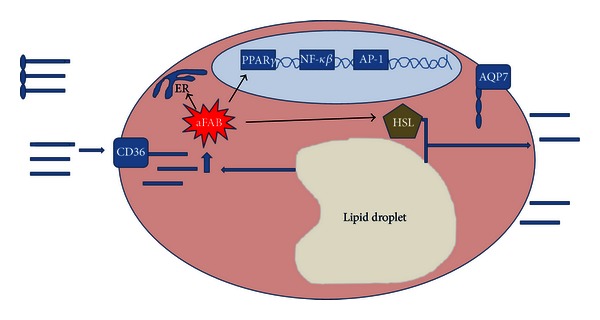
Figure 2
Important molecules during fat release by the WAT's adipocyte. Lipid release from the adipocyte is in part triggered via (a) hormonal activation of hormone-sensitive lipase (HSL); (b) the adipose fatty acid binding protein (aFABP), a carrier protein for free fatty acids, eicosanoids, and retinoids, thought to facilitate the transfer of fatty acids between extra- and intracellular membranes, and lipophilic molecules from outer cell membrane to intracellular receptors such as PPAR; (c) aquaporin 7 which exports the glycerol molecule released from TAGs; and (d) CD36 which facilitates free fatty acid transport through the plasma membrane.
Figure 3
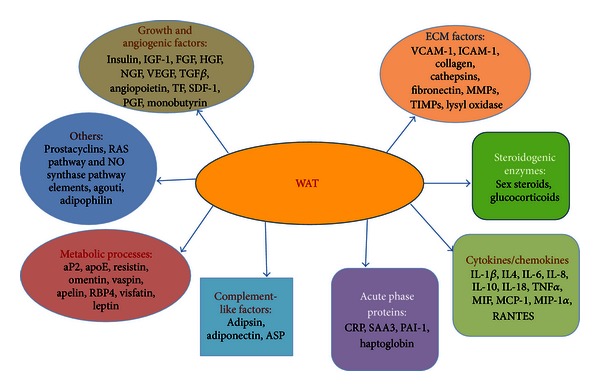
Figure 3
Signals emanating from the white adipose tissue. ASP: acylation-stimulating protein; aP2: activating protein 2; apoE: apolipoprotein E; RBP4: retinol binding protein 4; RAS: rennin-angiotensin system; NO synthase: nitric oxide synthase; IGF-1: insulin-like growth factor 1; FGF: fibroblast growth factor; HGF: hepatocyte growth factor; NGF: nerve growth factor; VEGF: vascular endothelial growth factor; TGFβ: transforming growth factor beta; TF: tissue factor; SDF-1: stromal derived factor; PGF: placental growth factor; VCAM-1: vascular cell adhesion molecule 1; ICAM-1: intracellular adhesion molecule 1; MMPs: matrix metalloproteinase proteins; TIMPs: tissue inhibitor of metalloproteinase; IL: interleukin; TNFα: tumor necrosis factor alpha; MIF: macrophage migrating inhibitor factor; MCP-1: monocyte chemotactic protein-1; MIP-1α: macrophage inflammatory protein 1; RANTES: Regulated on Activation, Normal T cell Expressed and Secreted; CRP: C-reactive protein; SAA3: serum amyloid A3; PAI-1: plasminogen activator-1.

References

    1. Shacter E, Weitzman SA. Chronic inflammation and cancer. Oncology. 2002;16(2):217–232. - PubMed
    1. Hanahan D, Weinberg RA. The hallmarks of cancer. Cell. 2000;100(1):57–70. - PubMed
    1. Rakoff-Nahoum S. Why cancer and inflammation? Yale Journal of Biology and Medicine. 2006;79(3-4):123–130. - PMC - PubMed
    1. Ramos-Nino ME, Testa JR, Altomare DA, et al. Cellular and molecular parameters of mesothelioma. Journal of Cellular Biochemistry. 2006;98(4):723–734. - PMC - PubMed
    1. Woodworth CD, Mossman BT, Craighead JE. Squamous metaplasia of the respiratory tract. Possible pathogenic role in asbestos-associated bronchogenic carcinoma. Laboratory Investigation. 1983;48(5):578–584. - PubMed

LinkOut - more resources