


The Tanzania Connect Project: a cluster-randomized trial of the child survival impact of adding paid community health workers to an existing facility-focused health system
- PMID: 23819587
- PMCID: PMC3668255
- DOI: 10.1186/1472-6963-13-S2-S6
The Tanzania Connect Project: a cluster-randomized trial of the child survival impact of adding paid community health workers to an existing facility-focused health system
Abstract
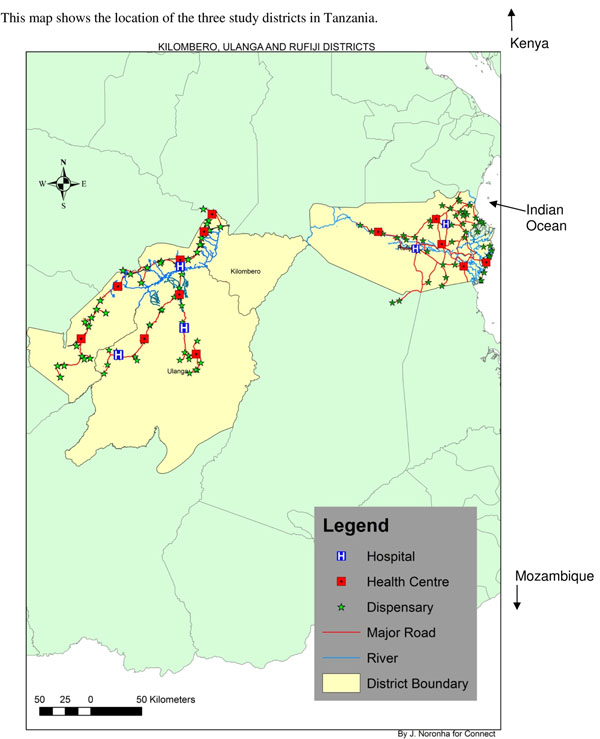
Background: Tanzania has been a pioneer in establishing community-level services, yet challenges remain in sustaining these systems and ensuring adequate human resource strategies. In particular, the added value of a cadre of professional community health workers is under debate. While Tanzania has the highest density of primary health care facilities in Africa, equitable access and quality of care remain a challenge. Utilization for many services proven to reduce child and maternal mortality is unacceptably low. Tanzanian policy initiatives have sought to address these problems by proposing expansion of community-based providers, but the Ministry of Health and Social Welfare (MoHSW ) lacks evidence that this merits national implementation. The Tanzania Connect Project is a randomized cluster trial located in three rural districts with a population of roughly 360,000 ( Kilombero, Rufiji, and Ulanga).
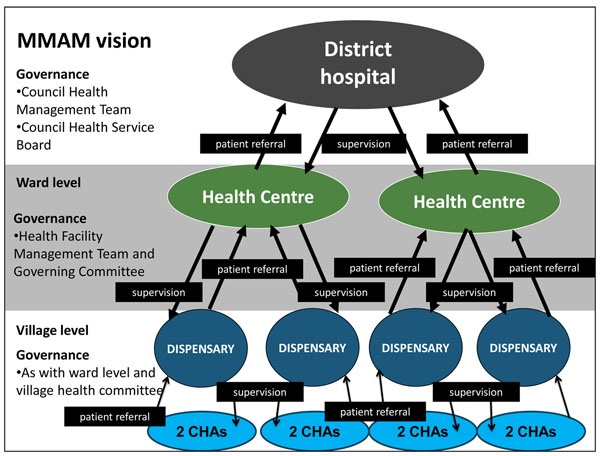
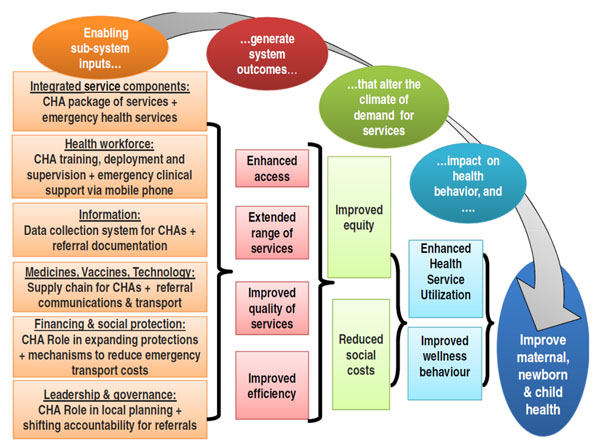
Description of intervention: Connect aims to test whether introducing a community health worker into a general program of health systems strengthening and referral improvement will reduce child mortality, improve access to services, expand utilization, and alter reproductive, maternal, newborn and child health seeking behavior; thereby accelerating progress towards Millennium Development Goals 4 and 5. Connect has introduced a new cadre - Community Health Agents (CHA) - who were recruited from and work in their communities. To support the CHA, Connect developed supervisory systems, launched information and monitoring operations, and implemented logistics support for integration with existing district and village operations. In addition, Connect's district-wide emergency referral strengthening intervention includes clinical and operational improvements.
Evaluation design: Designed as a community-based cluster-randomized trial, CHA were randomly assigned to 50 of the 101 villages within the Health and Demographic Surveillance System (HDSS) in the three study districts. To garner detailed information on household characteristics, behaviors, and service exposure, a random sub-sample survey of 3,300 women of reproductive age will be conducted at the baseline and endline. The referral system intervention will use baseline, midline, and endline facility-based data to assess systemic changes. Implementation and impact research of Connect will assess whether and how the presence of the CHA at village level provides added life-saving value to the health system.
Discussion: Global commitment to launching community-based primary health care has accelerated in recent years, with much of the implementation focused on Africa. Despite extensive investment, no program has been guided by a truly experimental study. Connect will not only address Tanzania's need for policy and operational research, it will bridge a critical international knowledge gap concerning the added value of salaried professional community health workers in the context of a high density of fixed facilities.
Trial registration: ISRCTN96819844.
Figures
References
-
- Jonsson U. Ideological Framework and Health Development in Tanzania 1961-2000. Social Science in Medicine. pp. 745–753. - PubMed
-
- Heggenhougen K, Vaughan P, Muhondwa EPY, Rutabanzibwa Ngaiza J. Community Health Workers: The Tanzanian Experience. Oxford: Oxford University Press; 1987.
-
- Perry H, Freeman P, Gupta S. How effective is community-based primary health care in improving the health of children? Washington, DC: Health Care Working Group and American Public Health Association; 2009.
Publication types
MeSH terms
Associated data
LinkOut - more resources
Full Text Sources
Other Literature Sources
Research Materials
Miscellaneous
