


Pre-arrest predictors of survival after resuscitation from out-of-hospital cardiac arrest in the elderly a systematic review
- PMID: 23819760
- PMCID: PMC3711933
- DOI: 10.1186/1471-2318-13-68
Pre-arrest predictors of survival after resuscitation from out-of-hospital cardiac arrest in the elderly a systematic review
Abstract
Background: To enable older people to make decisions about the appropriateness of cardiopulmonary resuscitation (CPR), information is needed about the predictive value of pre-arrest factors such as comorbidity, functional and cognitive status on survival and quality of life of survivors. We systematically reviewed the literature to identify pre-arrest predictors for survival, quality of life and functional outcomes after out-of-hospital (OHC) CPR in the elderly.
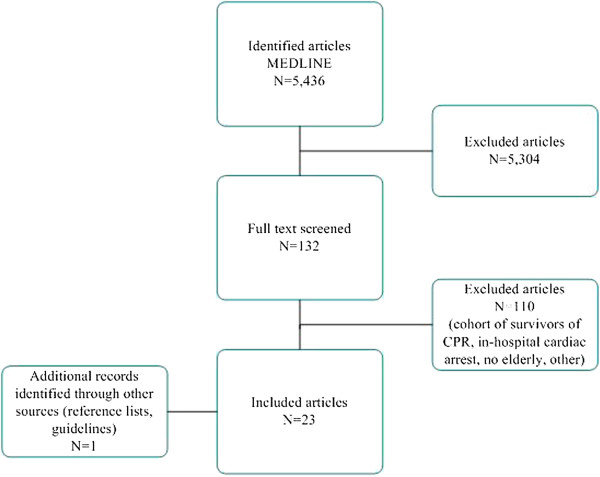
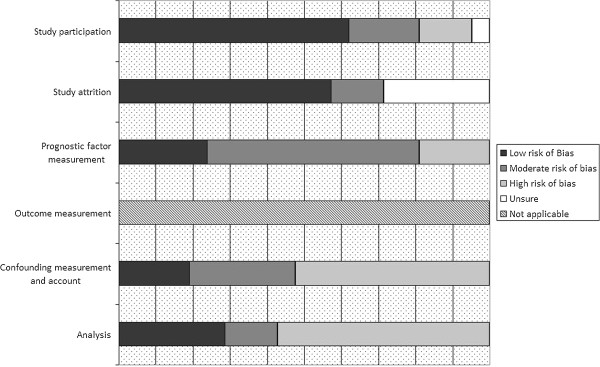
Methods: We searched MEDLINE (through May 2011) and included studies that described adults aged 70 years and over needing CPR after OHC cardiac arrest. Prognostic factors associated with survival to discharge and quality of life of survivors were extracted. Two authors independently appraised the quality of each of the included studies. When possible a meta-analysis of odd's ratios was performed.
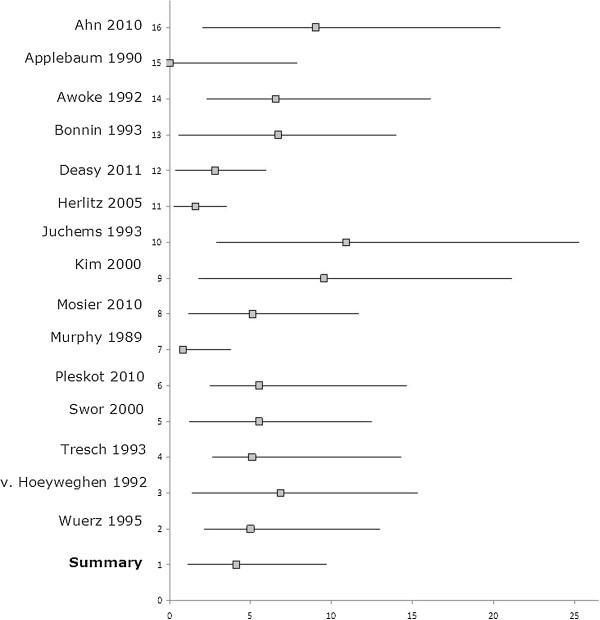
Results: Twenty-three studies were included (n = 44,582). There was substantial clinical and statistical heterogeneity and reporting was often inadequate. The pooled survival to discharge in patients >70 years was 4.1% (95% CI 3.0-5.6%). Several studies showed that increasing age was significantly associated with worse survival, but the predictive value of comorbidity was investigated in only one study. In another study, nursing home residency was independently associated with decreased chances of survival. Only a few small studies showed that age is negatively associated with a good quality of life of survivors. We were unable to perform a meta-analysis of possible predictors due to a wide variety in reporting and statistical methods.
Conclusions: Although older patients have a lower chance of survival after CPR in univariate analysis (i.e. 4.1%), older age alone does not seem to be a good criterion for denying patients CPR. Evidence for the predictive value of comorbidities and for the predictive value of age on quality of life of survivors is scarce. Future studies should use uniform methods for reporting data and pre-arrest factors to increase the available evidence about pre arrest factors on the chance of survival. Furthermore, patient-specific outcomes such as quality of life and post-arrest cognitive function should be investigated too.
Figures
References
-
- Ebell MH, Afonso AM. Pre-arrest predictors of failure to survive after in-hospital cardiopulmonary resuscitation: a meta-analysis. Fam Pract. 2011. - PubMed
Publication types
MeSH terms
LinkOut - more resources
Full Text Sources
Other Literature Sources
Medical
