. 2013 Sep;41(9):1703-14.
doi: 10.1124/dmd.113.052084. Epub 2013 Jul 2.

Biotransformation of a novel positive allosteric modulator of metabotropic glutamate receptor subtype 5 contributes to seizure-like adverse events in rats involving a receptor agonism-dependent mechanism

Affiliations

Biotransformation of a novel positive allosteric modulator of metabotropic glutamate receptor subtype 5 contributes to seizure-like adverse events in rats involving a receptor agonism-dependent mechanism

Thomas M Bridges et al. Drug Metab Dispos. 2013 Sep.

Abstract

Activation of metabotropic glutamate receptor subtype 5 (mGlu5) represents a novel strategy for therapeutic intervention into multiple central nervous system disorders, including schizophrenia. Recently, a number of positive allosteric modulators (PAMs) of mGlu5 were discovered to exhibit in vivo efficacy in rodent models of psychosis, including PAMs possessing varying degrees of agonist activity (ago-PAMs), as well as PAMs devoid of agonist activity. However, previous studies revealed that ago-PAMs can induce seizure activity and behavioral convulsions, whereas pure mGlu5 PAMs do not induce these adverse effects. We recently identified a potent and selective mGlu5 PAM, VU0403602, that was efficacious in reversing amphetamine-induced hyperlocomotion in rats. The compound also induced time-dependent seizure activity that was blocked by coadministration of the mGlu5 antagonist, 2-methyl-6-(phenylethynyl) pyridine. Consistent with potential adverse effects induced by ago-PAMs, we found that VU0403602 had significant allosteric agonist activity. Interestingly, inhibition of VU0403602 metabolism in vivo by a pan cytochrome P450 (P450) inactivator completely protected rats from induction of seizures. P450-mediated biotransformation of VU0403602 was discovered to produce another potent ago-PAM metabolite-ligand (M1) of mGlu5. Electrophysiological studies in rat hippocampal slices confirmed agonist activity of both M1 and VU0403602 and revealed that M1 can induce epileptiform activity in a manner consistent with its proconvulsant behavioral effects. Furthermore, unbound brain exposure of M1 was similar to that of the parent compound, VU0403602. These findings indicate that biotransformation of mGlu5 PAMs to active metabolite-ligands may contribute to the epileptogenesis observed after in vivo administration of this class of allosteric receptor modulators.


Figures
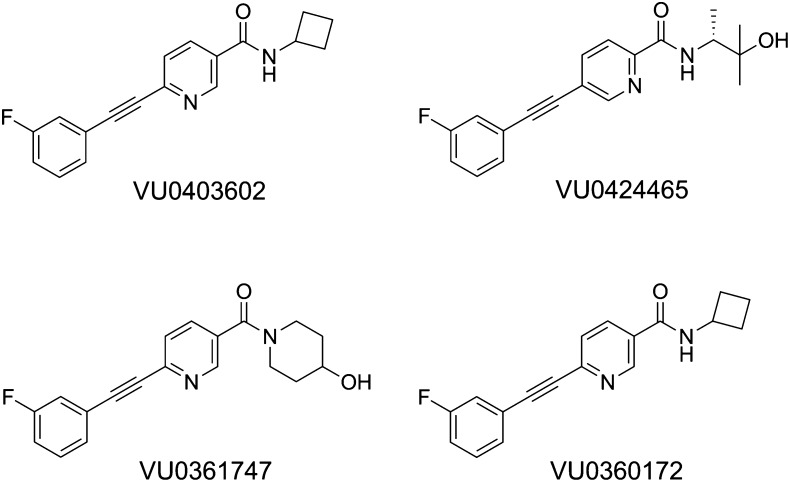
Fig. 1.
Fig. 1.
Structures of mGlu5 allosteric modulators.
Fig. 2.
Fig. 2.
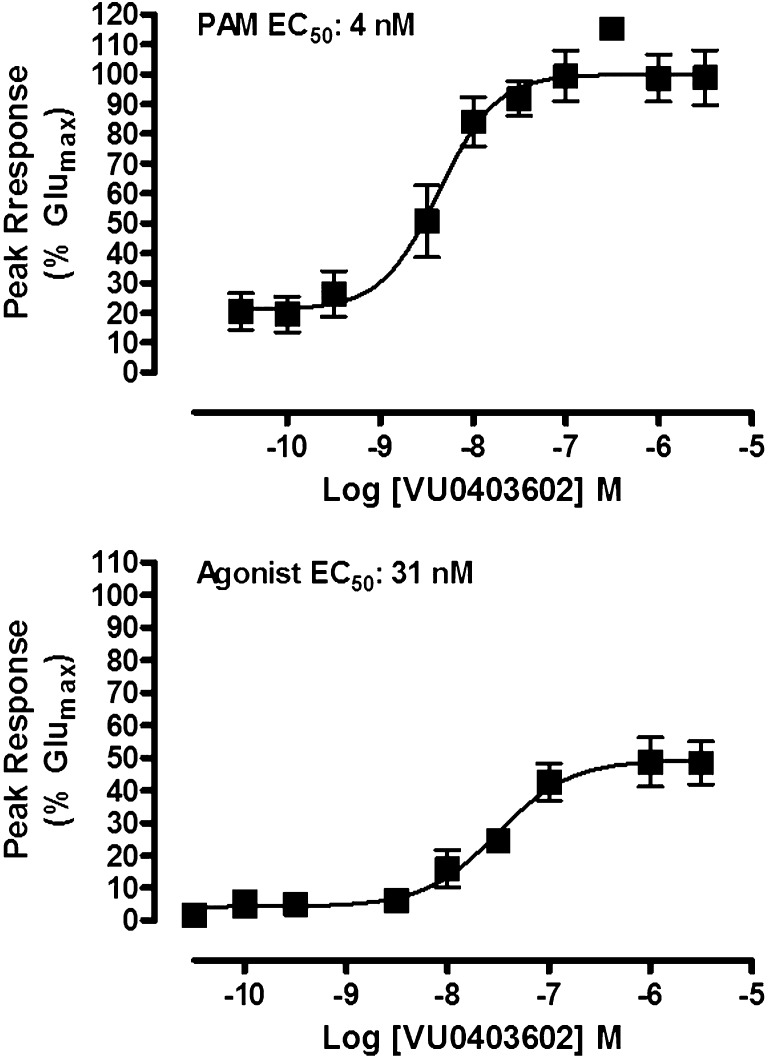
VU0403602 is a potent positive allosteric modulator of mGlu5 with direct agonist activity in the absence of glutamate in vitro. VU0403602 causes concentration-dependent increases in the mobilization of intracellular calcium in recombinant cells expressing mGlu5 in the presence (top) and absence (bottom) of a fixed submaximal (∼EC20) concentration of glutamate and with a PAM EC50 of 4 nM (100% response achieved relative to the maximal response obtained with glutamate, % Glumax) and an agonist EC50 of 31.1 nM (49.4% Glumax). Data represent the mean ± S.E.M. of four independent experiments performed in duplicate.
Fig. 3.
Fig. 3.
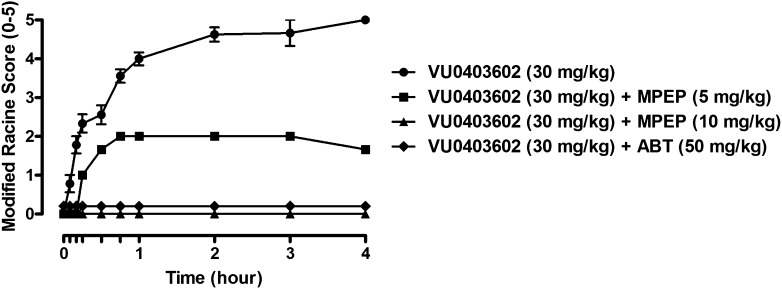
The mGlu5 ago-PAM VU0403602 induces time-dependent increases in behavioral convulsions, which are mitigated by pretreatment with the mGlu5 antagonist MPEP or the P450 inactivator ABT in male Sprague-Dawley rats. VU0403602 administration (i.p., 30 mg/kg, n = 9) causes full clonic-tonic seizure activity (modified Racine score 5); the same administration of VU0403602 to rats pretreated with a lower dose of MPEP (i.p., 5 mg/kg, n = 3) or a higher dose of MPEP (i.p., 10 mg/kg, n = 3) reduced (modified Racine score 2) or completely blocked (modified Racine score 0), respectively, the severity of seizure activity. In rats pretreated with ABT (PO, 50 mg/kg, n = 6), administration of VU0403602 (i.p., 30 mg/kg) failed to induce any seizure activity (modified Racine score 0). Data represent mean ± S.E.M.
Scheme 1.
Scheme 1.
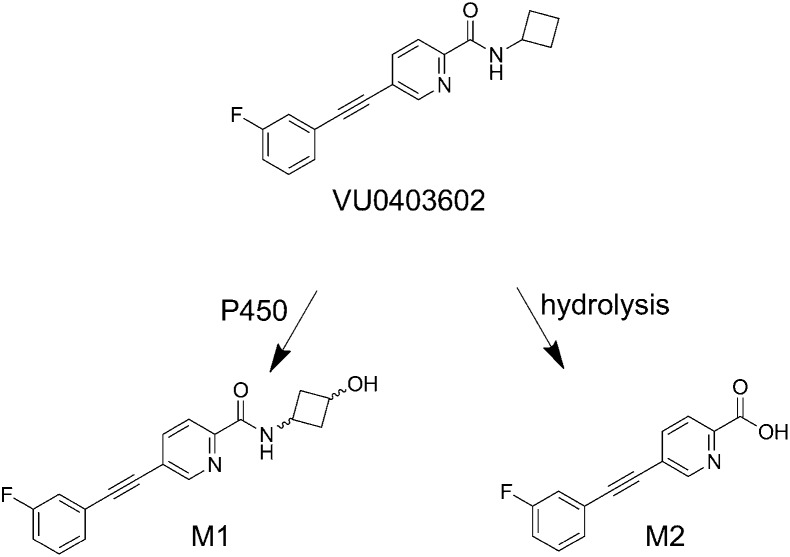
Principal pathways of VU0403602 metabolism observed in vitro in male Sprague-Dawley rat hepatic S9 fractions.
Fig. 4.
Fig. 4.
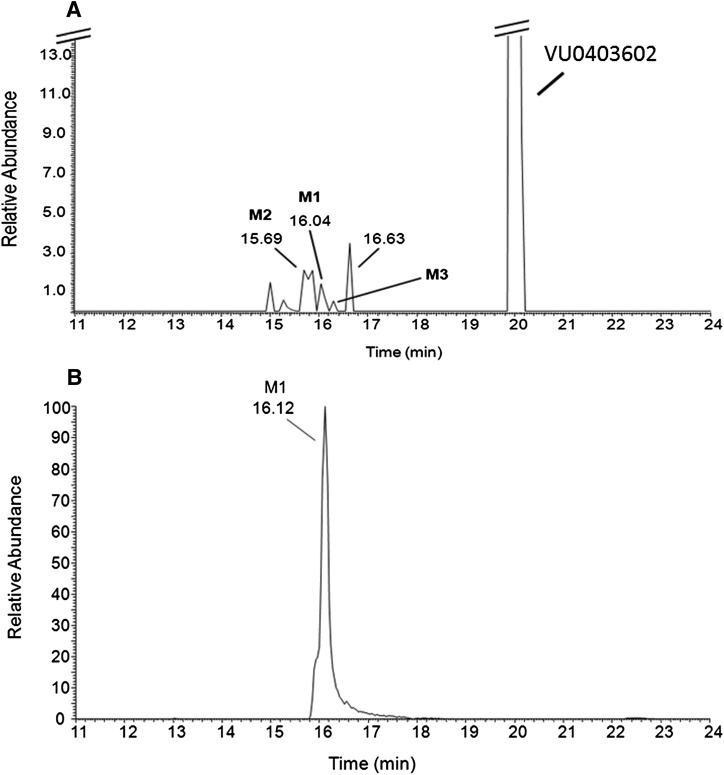
Representative reconstructed LC/MS/MS total ion current (TIC) (A) of extracts from a Rat hepatic S9 incubation (+NADPH) of VU0403602, showing the principal metabolites M1 and M2, as well as a minor hydroxylated metabolite M3. A corresponding TIC (B) from the LC/MS/MS analysis (MS/MS, m/z 311) of brain extracts from rats receiving a 30 mg/kg dose (i.p.) of VU0403602 reveals M1 to be the principal hydroxylated metabolite in vivo.
Fig. 5.
Fig. 5.
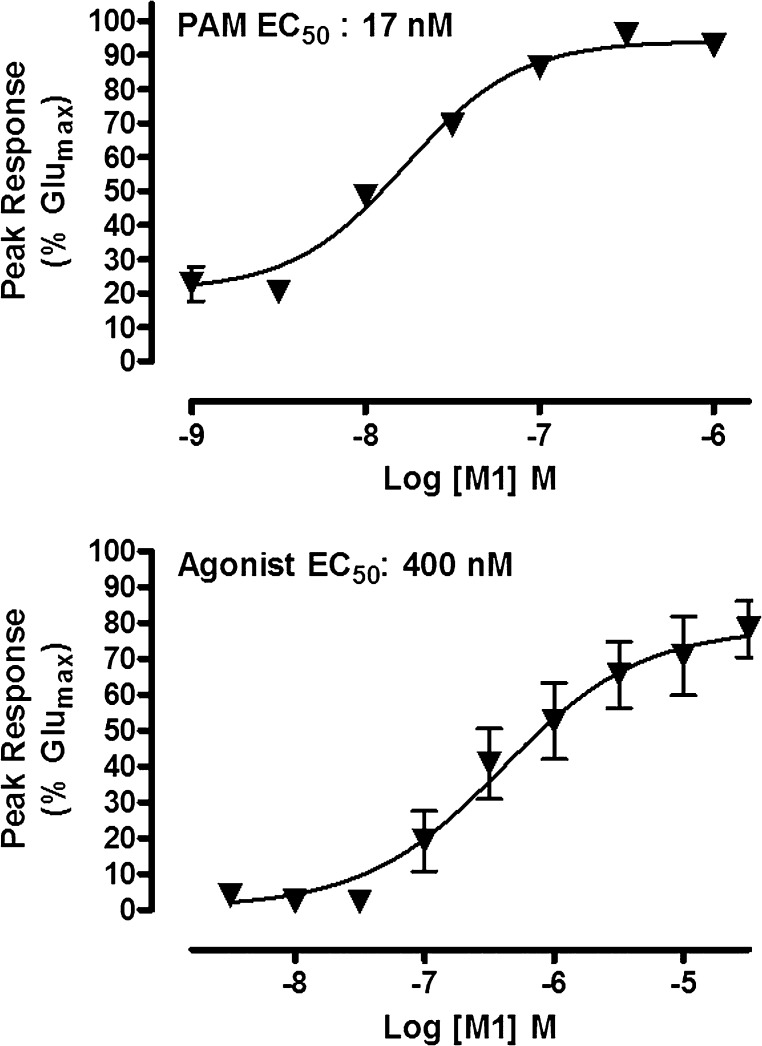
M1 is a potent positive allosteric modulator of mGlu5 with direct agonist activity in the absence of glutamate in vitro. M1 causes concentration-dependent increases in the mobilization of intracellular calcium in recombinant cells expressing mGlu5 in the presence (top) and absence (bottom) of a fixed submaximal (∼EC20) concentration of glutamate and with a PAM EC50 of 16.9 nM (94% Glumax) and an agonist EC50 of 400 nM (79% Glumax). Data represent the mean ± S.E.M. of at least three independent experiments performed in duplicate.
Fig. 6.
Fig. 6.
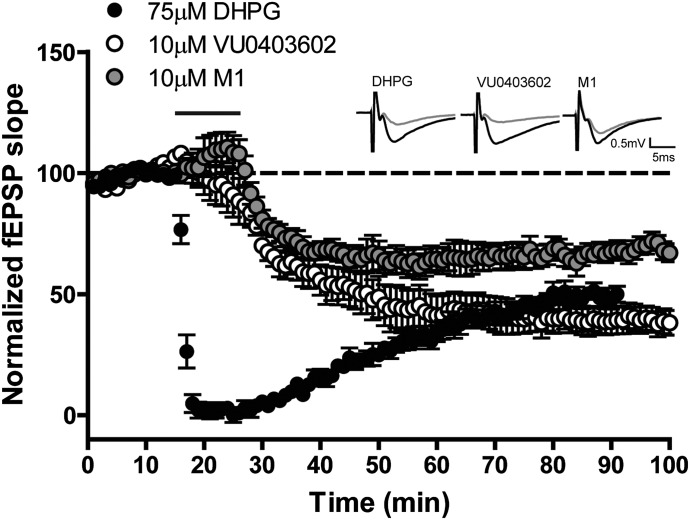
VU0403602 and M1 (VU0453103) induce long-term depression at the Schaffer collateral-CA1 synapse in hippocampus. A stimulus that produced a 50%–60% fEPSP slope was used as baseline stimulation for each recording. Bath application of 75 µM DHPG for 10 minutes (solid line) induced LTD that lasted at least 55 minutes after washout (n = 8). Similarly, bath application of either 10 µM VU0403602 or 10 µM M1 for 10 minutes (solid line) resulted in LTD that lasted at least 55 minutes after washout of the compound (n = 8, 7, respectively). Insets are sample traces measured predrug (black) or 55 minutes after compound washout (gray). Data represent mean ± S.E.M.
Fig. 7.
Fig. 7.
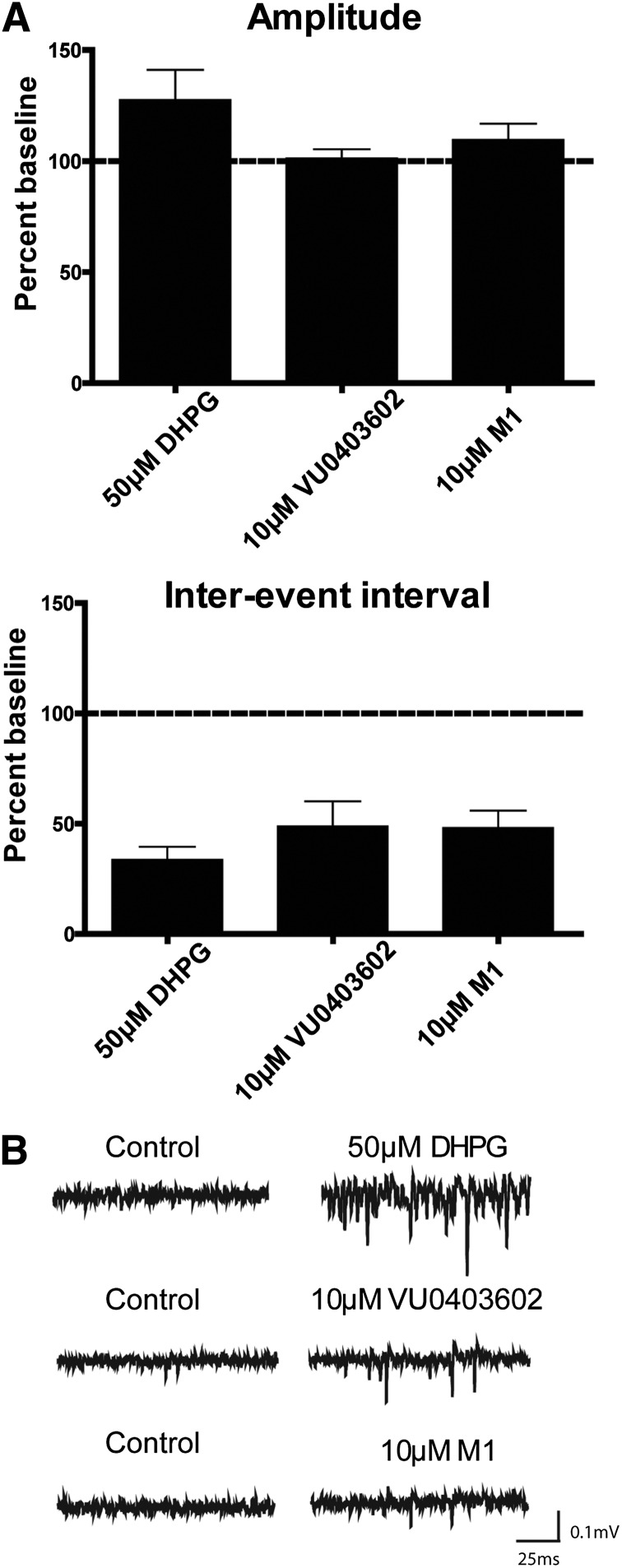
VU0403602 and M1 (VU0453103) induce epileptiform activity in CA3 neurons in hippocampus. Amplitude and interevent interval of spontaneous firing were determined using field potential recordings in CA3 in the hippocampal formation. (A) Application of 50 µM DHPG (n = 11), 10 µM VU0403602 (n = 8), or 10 µM M1 (n = 7) for 10 minutes resulted in a robust decrease in the interevent interval of spontaneous events while having no significant effect on amplitude of spontaneous events. Data represent mean ± S.E.M. (B) Sample traces from individual experiments taken before and after the addition of the compound.
Fig. 8.
Fig. 8.
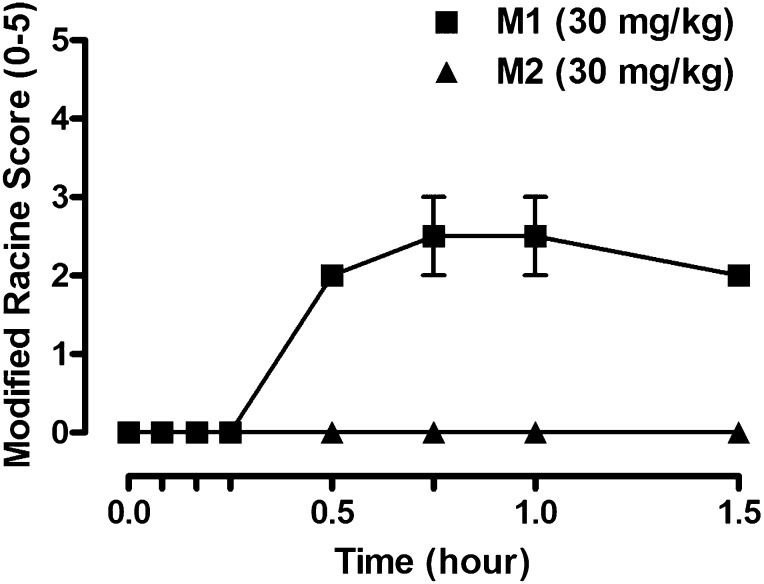
The mGlu5 ago-PAM metabolite M1 induces dose- and time-dependent increases in behavioral adverse effects in male Sprague-Dawley rats receiving a single administration (i.p., 30 mg/kg, n = 2), whereas the inactive metabolite M2 is devoid of AEs (i.p., 30 mg/kg, n = 2). Data represent mean ± S.E.M.

References

    1. Balani SK, Miwa GT, Gan LS, Wu JT, Lee FW. (2005) Strategy of utilizing in vitro and in vivo ADME tools for lead optimization and drug candidate selection. Curr Top Med Chem 5:1033–1038 - PubMed
    1. Balani SKZ, Zhu T, Yang TJ, Liu Z, He B, Lee FW. (2002) Effective dosing regimen of 1-aminobenzotriazole for inhibition of antipyrine clearance in rats, dogs, and monkeys. Drug Metab Dispos 30:1059–1062 - PubMed
    1. Conn PJ, Lindsley CW, Jones CK. (2009) Activation of metabotropic glutamate receptors as a novel approach for the treatment of schizophrenia. Trends Pharmacol Sci 30:25–31 - PMC - PubMed
    1. Cosford ND, Roppe J, Tehrani L, Schweiger EJ, Seiders TJ, Chaudary A, Rao S, Varney MA. (2003) [3H]-methoxymethyl-MTEP and [3H]-methoxy-PEPy: potent and selective radioligands for the metabotropic glutamate subtype 5 (mGlu5) receptor. Bioorg Med Chem Lett 13:351–354 - PubMed
    1. Gregory KJ, Dong EN, Meiler J, Conn PJ. (2011) Allosteric modulation of metabotropic glutamate receptors: structural insights and therapeutic potential. Neuropharmacology 60:66–81 - PMC - PubMed

Publication types

Substances