


Regulation of protein degradation by O-GlcNAcylation: crosstalk with ubiquitination
- PMID: 23824911
- PMCID: PMC3861702
- DOI: 10.1074/mcp.R113.029751
Regulation of protein degradation by O-GlcNAcylation: crosstalk with ubiquitination
Abstract
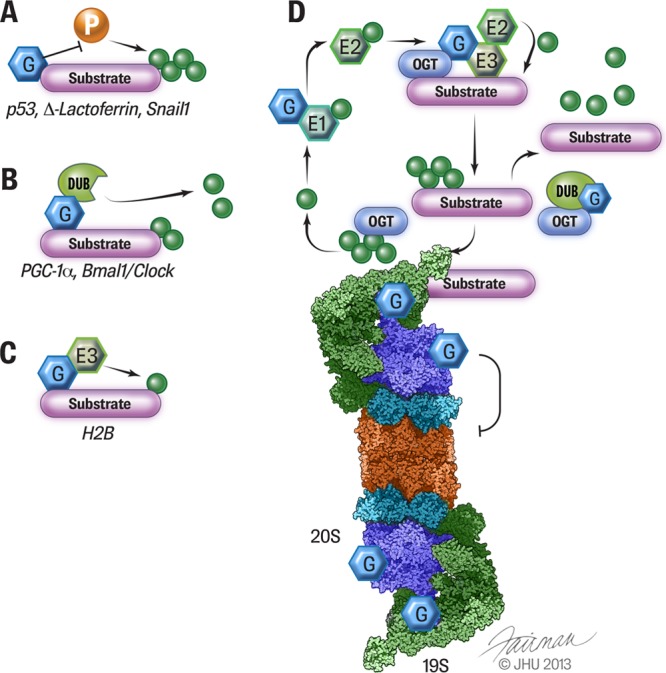
The post-translational modification of intracellular proteins by O-linked N-acetylglucosamine (O-GlcNAc) regulates essential cellular processes such as signal transduction, transcription, translation, and protein degradation. Misfolded, damaged, and unwanted proteins are tagged with a chain of ubiquitin moieties for degradation by the proteasome, which is critical for cellular homeostasis. In this review, we summarize the current knowledge of the interplay between O-GlcNAcylation and ubiquitination in the control of protein degradation. Understanding the mechanisms of action of O-GlcNAcylation in the ubiquitin-proteosome system shall facilitate the development of therapeutics for human diseases such as cancer, metabolic syndrome, and neurodegenerative diseases.
Figures
References
-
- Kimura Y., Tanaka K. (2010) Regulatory mechanisms involved in the control of ubiquitin homeostasis. J Biochem. 147, 793–798 - PubMed
-
- Hershko A., Ciechanover A. (1998) The ubiquitin system. Annu. Rev. Biochem. 67, 425–479 - PubMed
-
- Hicke L. (2001) Protein regulation by monoubiquitin. Nat. Rev. Mol. Cell Biol. 2, 195–201 - PubMed
Publication types
MeSH terms
Substances
Grants and funding
LinkOut - more resources
Full Text Sources
Other Literature Sources
