


Temperature changes between neighboring days and mortality in summer: a distributed lag non-linear time series analysis
- PMID: 23826095
- PMCID: PMC3691212
- DOI: 10.1371/journal.pone.0066403
Temperature changes between neighboring days and mortality in summer: a distributed lag non-linear time series analysis
Abstract
Background: Many studies have shown that high temperatures or heat waves were associated with mortality and morbidity. However, few studies have examined whether temperature changes between neighboring days have any significant impact on human health.
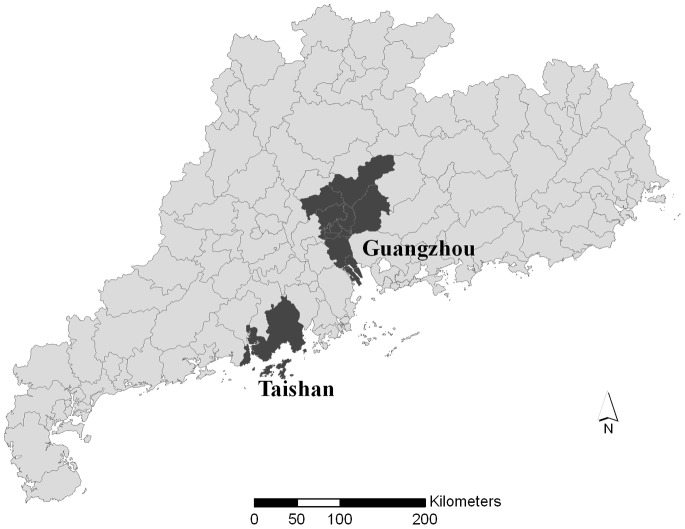
Method: A distributed lag non-linear model was employed to investigate the effect of temperature changes on mortality in summer during 2006-2010 in two subtropical Chinese cities. The temperature change was defined as the difference of the current day's and the previous day's mean temperature.
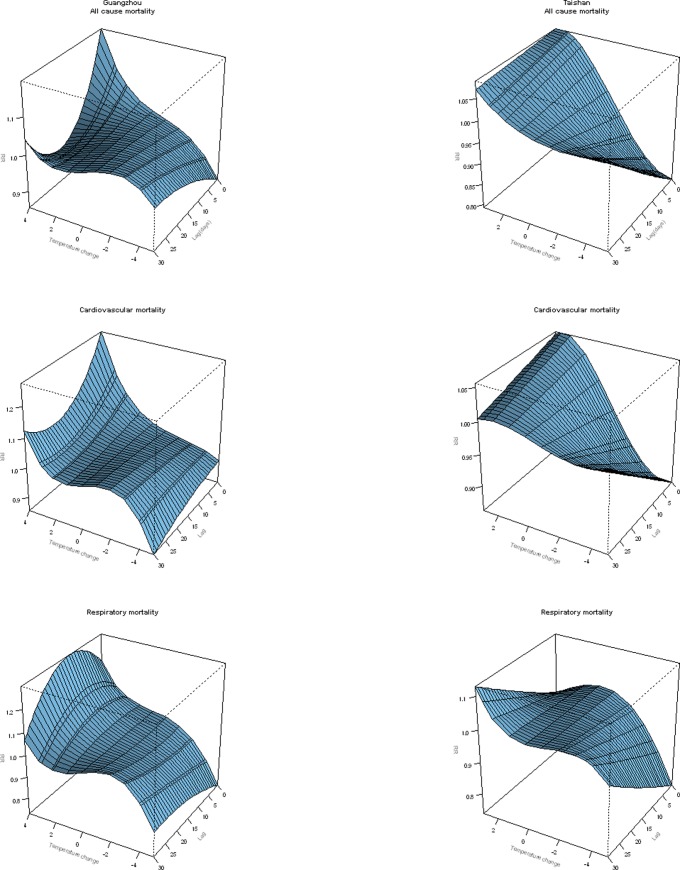
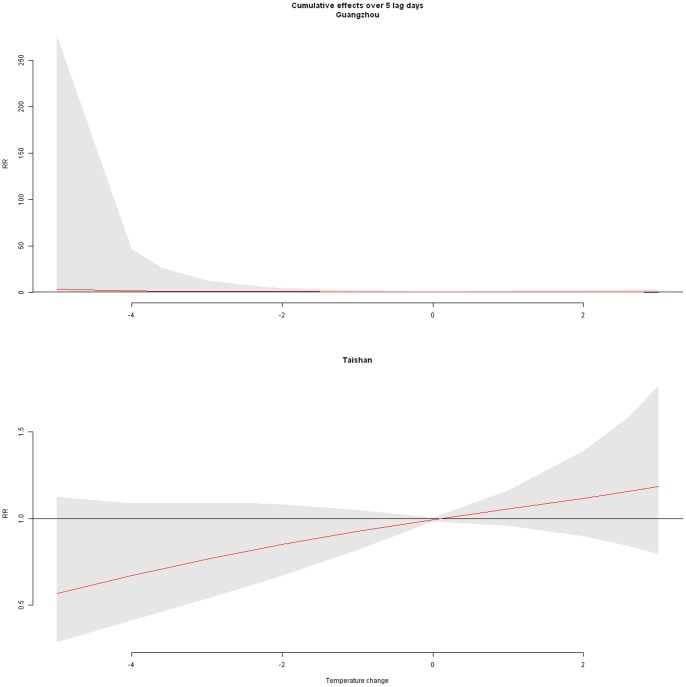
Results: We found non-linear effects of temperature changes between neighboring days in summer on mortality in both cities. Temperature increase was associated with increased mortality from non-accidental diseases and cardiovascular diseases, while temperature decrease had a protective effect on non-accidental mortality and cardiovascular mortality in both cities. Significant association between temperature changes and respiratory mortality was only found in Guangzhou.
Conclusion: This study suggests that temperature changes between neighboring days might be an alternative temperature indicator for studying temperature-mortality relationship.
Conflict of interest statement
Figures
References
-
- Gasparrini A, Armstrong B, Kovats S, Wilkinson P (2012) The effect of high temperatures on cause-specific mortality in England and Wales. Occupational and Environmental Medicine 69: 56–61. - PubMed
-
- Goldberg MS, Gasparrini A, Armstrong B, Valois MF (2011) The short-term influence of temperature on daily mortality in the temperate climate of Montreal, Canada. Environmental Research 111: 853–860. - PubMed
-
- Yu W, Hu W, Mengersen K, Guo Y, Pan X, et al. (2011) Time course of temperature effects on cardiovascular mortality in Brisbane, Australia. Heart 97: 1089–1093. - PubMed
-
- Lin H, Yang L, Liu Q, Wang T, Hossain SR, et al. (2012) Time series analysis of Japanese encephalitis and weather in Linyi City, China. Int J Public Health 57: 289–296. - PubMed
Publication types
MeSH terms
LinkOut - more resources
Full Text Sources
Other Literature Sources
