


Cannabinoid Receptor 2 (CB2) Plays a Role in the Generation of Germinal Center and Memory B Cells, but Not in the Production of Antigen-Specific IgG and IgM, in Response to T-dependent Antigens
- PMID: 23826323
- PMCID: PMC3695093
- DOI: 10.1371/journal.pone.0067587
Cannabinoid Receptor 2 (CB2) Plays a Role in the Generation of Germinal Center and Memory B Cells, but Not in the Production of Antigen-Specific IgG and IgM, in Response to T-dependent Antigens
Abstract
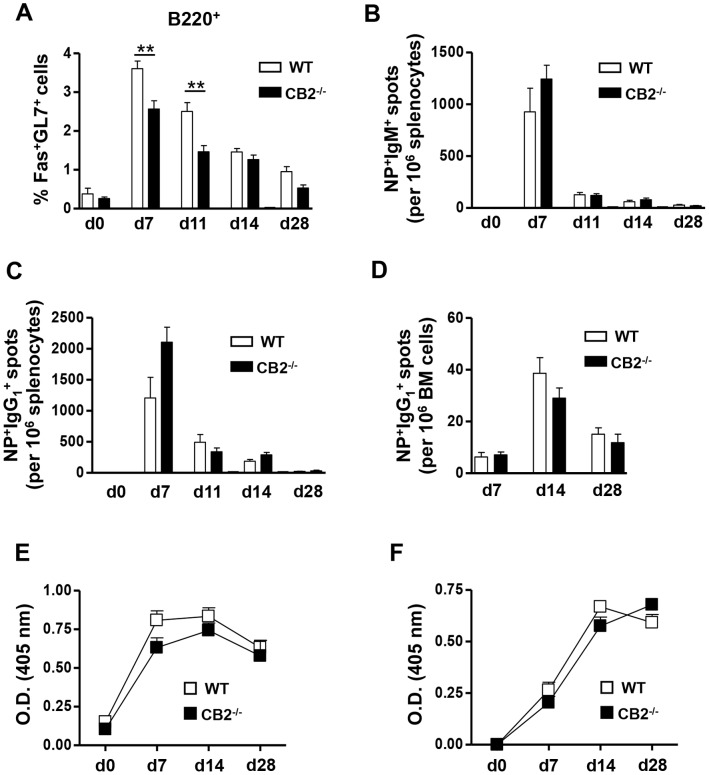
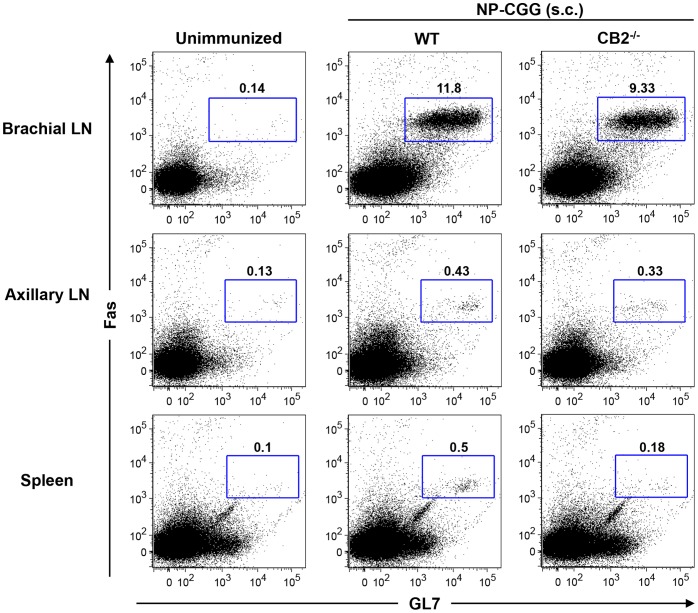
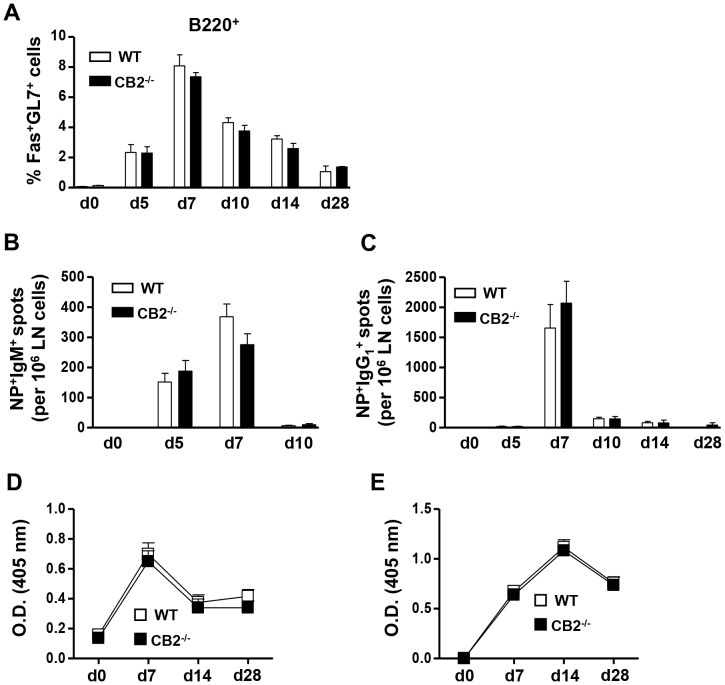
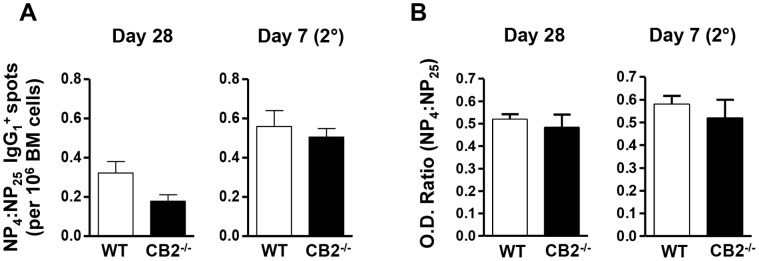
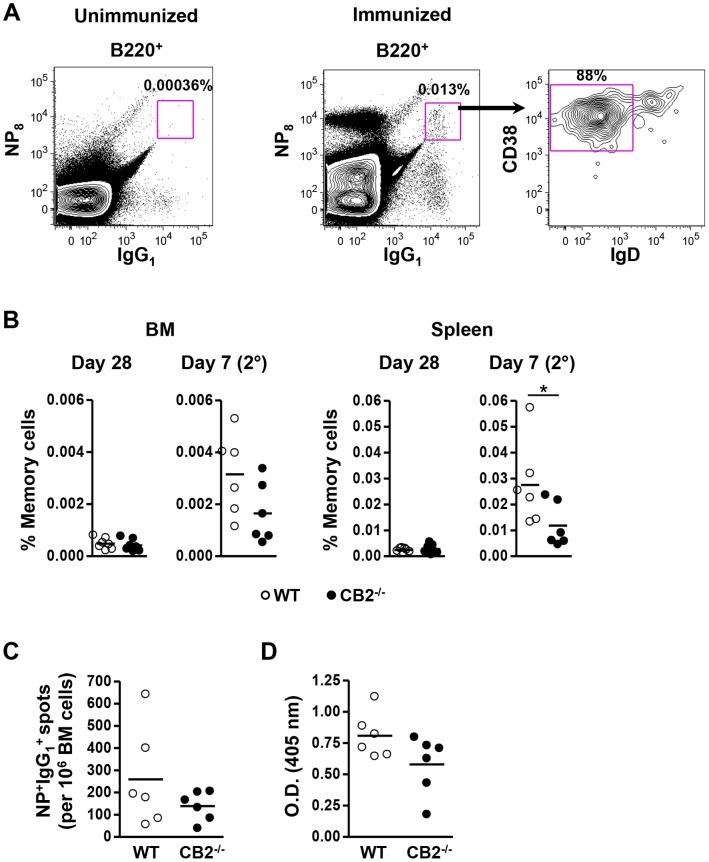
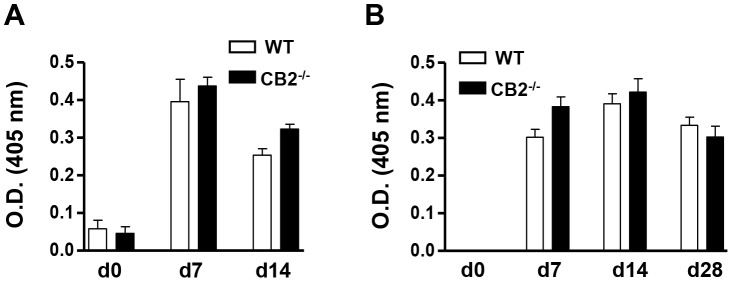
The cannabinoid receptor 2 (CB2) has been reported to modulate B cell functions including migration, proliferation and isotype class switching. Since these processes are required for the generation of the germinal center (GC) and antigen-specific plasma and memory cells following immunization with a T-dependent antigen, CB2 has the capacity to alter the quality and magnitude of T-dependent immune responses. To address this question, we immunized WT and CB2(-/-) mice with the T-dependent antigen 4-hydroxy-3-nitrophenylacetyl (NP)-chicken-gamma-globulin (CGG) and measured GC B cell formation and the generation of antigen-specific B cells and serum immunoglobulin (Ig). While there was a significant reduction in the number of splenic GC B cells in CB2(-/-) mice early in the response there was no detectable difference in the number of NP-specific IgM and IgG1 plasma cells. There was also no difference in NP-specific IgM and class switched IgG1 in the serum. In addition, we found no defect in the homing of plasma cells to the bone marrow (BM) and affinity maturation, although memory B cell cells in the spleen were reduced in CB2(-/-) mice. CB2-deficient mice also generated similar levels of antigen-specific IgM and IgG in the serum as WT following immunization with sheep red blood cells (sRBC). This study demonstrates that although CB2 plays a role in promoting GC and memory B cell formation/maintenance in the spleen, it is dispensable on all immune cell types required for the generation of antigen-specific IgM and IgG in T-dependent immune responses.
Conflict of interest statement
Figures
References
-
- Munro S, Thomas KL, Abu-Shaar M (1993) Molecular characterization of a peripheral receptor for cannabinoids. Nature 365: 61–65. - PubMed
-
- Galiegue S, Mary S, Marchand J, Dussossoy D, Carriere D, et al. (1995) Expression of central and peripheral cannabinoid receptors in human immune tissues and leukocyte subpopulations. Eur J Biochem 232: 54–61. - PubMed
-
- Sugiura T, Kondo S, Kishimoto S, Miyashita T, Nakane S, et al. (2000) Evidence that 2-arachidonoylglycerol but not N-palmitoylethanolamine or anandamide is the physiological ligand for the cannabinoid CB2 receptor. Comparison of the agonistic activities of various cannabinoid receptor ligands in HL-60 cells. J Biol Chem 275: 605–612. - PubMed
-
- Derocq JM, Segui M, Marchand J, Le Fur G, Casellas P (1995) Cannabinoids enhance human B-cell growth at low nanomolar concentrations. FEBS Lett 369: 177–182. - PubMed
Publication types
MeSH terms
Substances
Grants and funding
LinkOut - more resources
Full Text Sources
Other Literature Sources
Molecular Biology Databases
Miscellaneous
