. 2013 Sep;38(7):605-17.
doi: 10.1093/chemse/bjt032. Epub 2013 Jul 4.

Gustatory receptor neurons in Manduca sexta contain a TrpA1-dependent signaling pathway that integrates taste and temperature

Affiliations

Gustatory receptor neurons in Manduca sexta contain a TrpA1-dependent signaling pathway that integrates taste and temperature

Anika Afroz et al. Chem Senses. 2013 Sep.

Abstract

Temperature modulates the peripheral taste response of many animals, in part by activating transient receptor potential (Trp) cation channels. We hypothesized that temperature would also modulate peripheral taste responses in larval Manduca sexta. We recorded excitatory responses of the lateral and medial styloconic sensilla to chemical stimuli at 14, 22, and 30 °C. The excitatory responses to 5 chemical stimuli-a salt (KCl), 3 sugars (sucrose, glucose, and inositol) and an alkaloid (caffeine)-were unaffected by temperature. In contrast, the excitatory response to the aversive compound, aristolochic acid (AA), increased robustly with temperature. Next, we asked whether TrpA1 mediates the thermally dependent taste response to AA. To this end, we 1) identified a TrpA1 gene in M. sexta; 2) demonstrated expression of TrpA1 in the lateral and medial styloconic sensilla; 3) determined that 2 TrpA1 antagonists (HC-030031 and mecamylamine) inhibit the taste response to AA, but not caffeine; and then 4) established that the thermal dependence of the taste response to AA is blocked by HC-030031. Taken together, our results indicate that TrpA1 serves as a molecular integrator of taste and temperature in M. sexta.

Keywords: TrpA1; aristolochic acid; insect; taste; temperature.


Figures
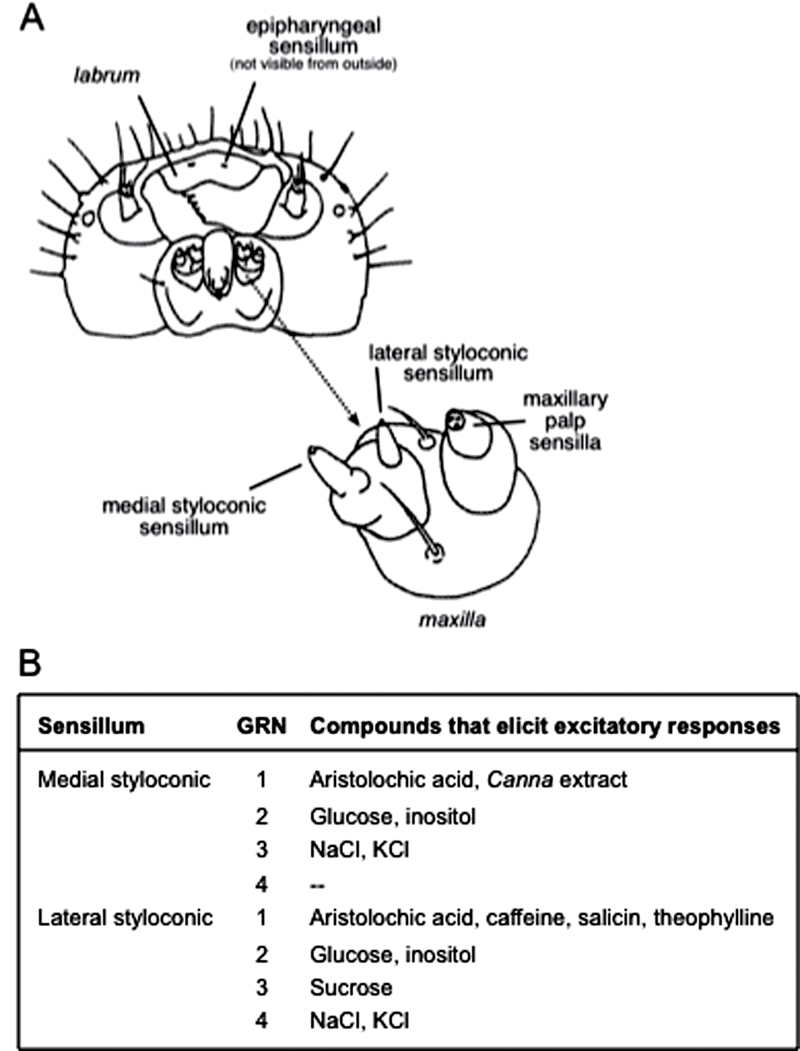
Figure 1
Figure 1
(A) Cartoon of the head of a M. sexta caterpillar, as viewed from below. An enlargement of the maxilla (indicated with an arrow) is provided to clarify the location of the medial and lateral styloconic sensilla. This cartoon was adapted from Bernays and Chapman 1994; their Fig. 3.4). (B) Chemical stimuli that elicit excitatory responses in GRNs within the lateral and medial styloconic sensilla of M. sexta. These molecular receptive ranges were derived from previous studies (Schoonhoven 1972; Glendinning et al. 2002; Glendinning et al. 2007).
Figure 2
Figure 2
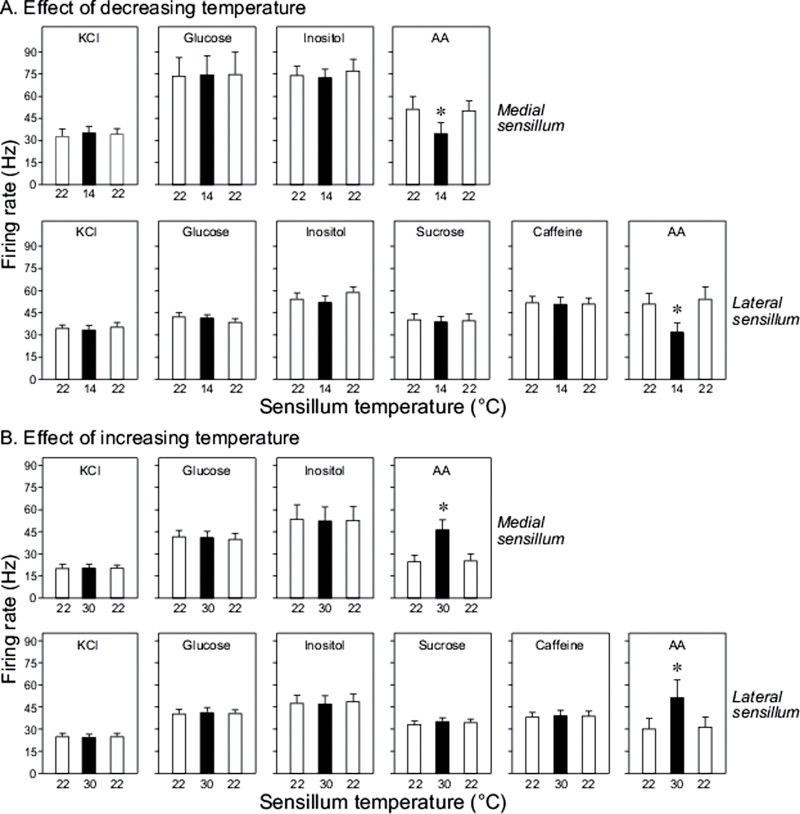
Effect of decreasing (A) or increasing (B) the temperature of the medial and lateral styloconic sensilla on excitatory responses to KCl (0.6M), glucose (0.3M), inositol (10mM), sucrose (0.3M), caffeine (5mM), and AA (0.1mM). We tested the sensilla at 22, 14, and 22 °C (A); and 22, 30 and 22 °C (B). Within each panel, we indicate when the black bar differed significantly from the white bars (P ≤ 0.05, Tukey multiple comparison test) with an asterisk. Each bar reflects mean ± standard error; n = 10–11/medial and lateral sensilla (each from different caterpillars).
Figure 3
Figure 3
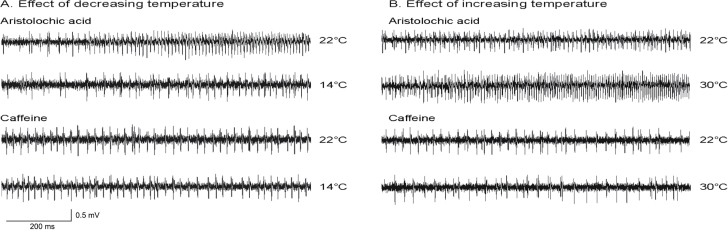
Illustration of how decreasing (A) or increasing (B) sensilla temperature altered the neural responses of a lateral styloconic sensillum to AA (0.1mM), but not caffeine (5mM). Note that both chemicals were dissolved in 0.1M KCl. In A, we show neural responses at 22, 14 and 22 °C; and in B, we show neural responses at 22, 30 and 22 °C.
Figure 4
Figure 4
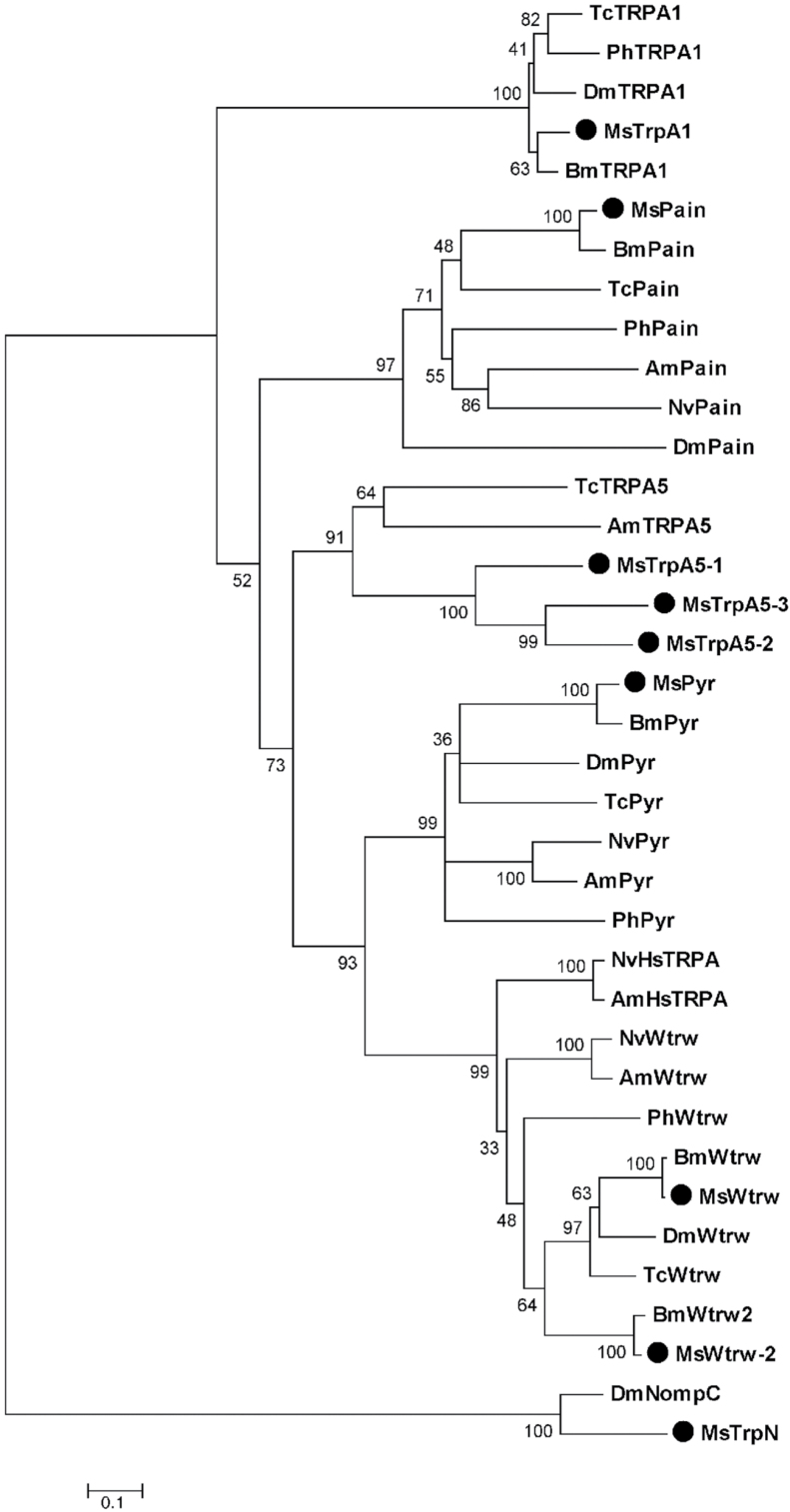
Neighbor-joining cluster analysis of putative M. sexta TrpA and TrpN sequences and those previously identified in other insects. Putative M. sexta sequences are labeled with a dot. Other insect sequences were obtained from the literature (Matsuura et al. 2009). Bm: Bombyx mori; Ms: Manduca sexta; Dm: Drosophila melanogaster; Tc: Tribolium castaneum; Am: Apis mellifera; Nv: Nasonia vitripennis; Ph: Pediculus humanus. Bootstrap values from 1000 replicates are shown. Scale bar represents number of amino acid substitutions per site.
Figure 5
Figure 5
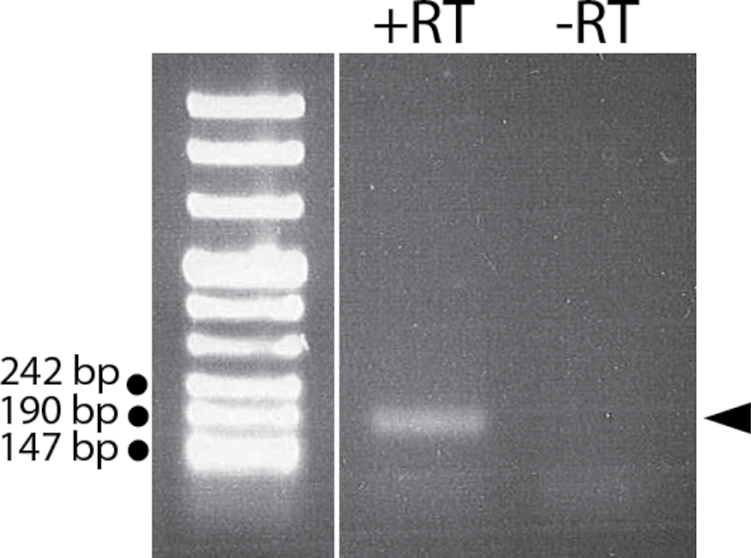
The putative TrpA1 mRNA from M. sexta is expressed in the lateral and medial styloconic sensilla. RT-PCR for TrpA1 was performed on tissue samples containing both classes of sensilla. The expected 205-bp fragment was amplified from tissue samples (arrow; compare with indicated size standards, Roch ME ladder VIII). Reverse transcriptase was omitted in samples labeled –RT and included in those labeled +RT.
Figure 6
Figure 6
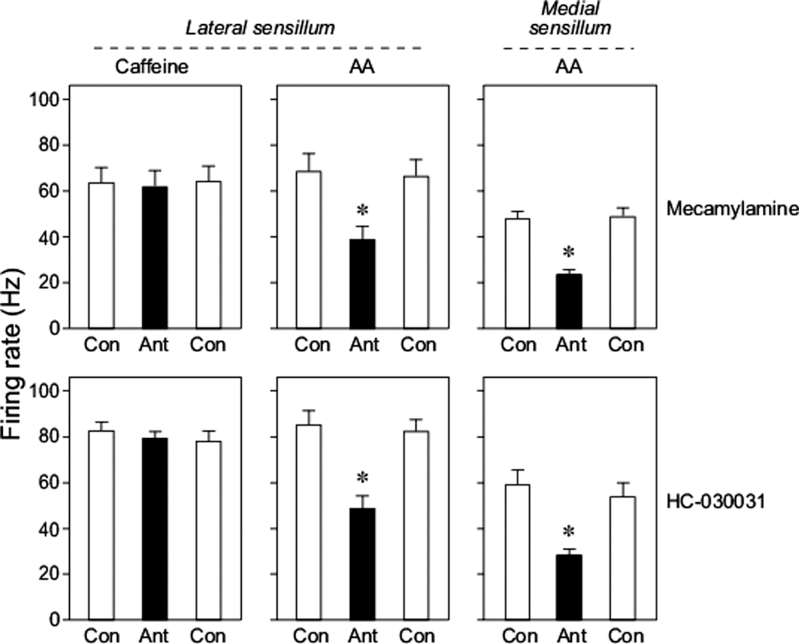
Impact of 2 TrpA1 antagonists (mecamylamine and HC-030031) on excitatory responses of the lateral styloconic sensilla to 5mM caffeine and 0.1mM AA, and of the medial styloconic sensilla to 0.1mM AA. Sensilla temperature was 22 °C for all recordings. We show results for mecamylamine (top row of panels) and HC-030031 (bottom row of panels) separately. In each panel, we show the response to 3 consecutive stimulations: taste stimulus alone (Control or Con), taste stimulus plus a TrpA1 antagonist (Ant), and then Con again. Within each panel, we indicate when the black bar differed significantly from the white bars (P ≤ 0.05, Tukey multiple comparison test) with an asterisk. Each bar reflects mean ± standard error; n = 10/medial and lateral sensilla (each from different caterpillars).
Figure 7
Figure 7
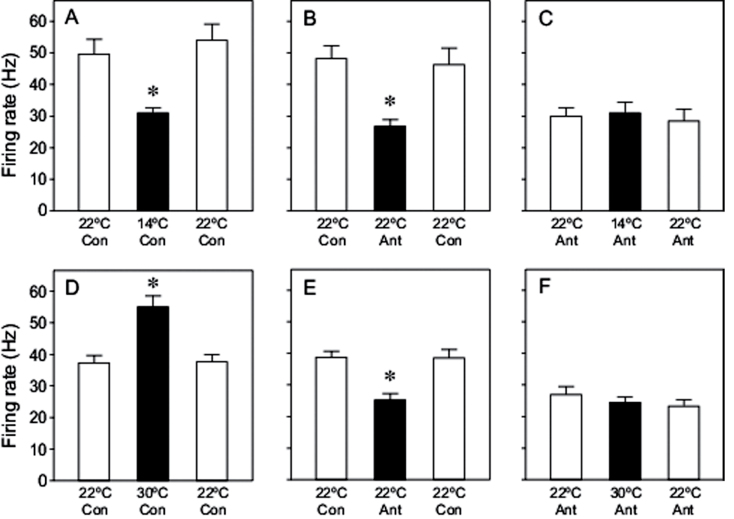
Effect of temperature and the TrpA1 antagonist, HC-030031, on the excitatory response of the lateral styloconic sensillum to 0.1mM AA. The top row of panels shows the effect of (A) decreasing sensilla temperature alone, (B) the antagonist alone, and (C) decreasing sensilla temperature in the presence of the antagonist. The bottom row of panels shows the effect of (D) increasing sensilla temperature alone, (E) the antagonist alone, and (F) increasing sensilla temperature in the presence of the antagonist. Note we used 10 sensilla (each from different caterpillars) to generate all of the data in the top row of panels, and a different set of 10 sensilla to generate all of the data in the bottom row of panels. Below each bar within a panel, we indicate sensilla temperature, and whether the TrpA1 antagonist was (Ant) or was not (Con) present in the 0.1mM AA solution. Within each panel, we indicate when the black bar differed significantly from the white bars (P ≤ 0.05, Tukey multiple comparison test) with an asterisk. Each bar reflects mean ± standard error.

References

    1. Adolph AR. 1973. Thermal sensitivity of lateral inhibition in Limulus eye. J Gen Physiol. 62(4):392–406 - PMC - PubMed
    1. Aho AC, Donner K, Reuter T. 1993. Retinal origins of the temperature effect on absolute visual sensitivity in frogs. J Physiol. 463:501–521 - PMC - PubMed
    1. Bell RA, Joachim FA. 1976. Techniques for rearing laboratory colonies of tobacco hornworms and pink bollworms. Ann Entomol Soc Am. 69:365–373
    1. Bernays EA, Chapman RF. 1994. Host-plant selection by phytophagous insects. New York: Chapman & Hall;
    1. Bestmann HJ, Dippold K. 1983. Temperaturabhiingigkeit von elektroantennogrammen bei Lepidopteren. Naturwissensch. 70:47–48

Publication types

LinkOut - more resources