


Optimizing the transduction efficiency of capsid-modified AAV6 serotype vectors in primary human hematopoietic stem cells in vitro and in a xenograft mouse model in vivo
- PMID: 23830234
- PMCID: PMC3711144
- DOI: 10.1016/j.jcyt.2013.04.003
Optimizing the transduction efficiency of capsid-modified AAV6 serotype vectors in primary human hematopoietic stem cells in vitro and in a xenograft mouse model in vivo
Abstract
Background aims: Although recombinant adeno-associated virus serotype 2 (AAV2) vectors have gained attention because of their safety and efficacy in numerous phase I/II clinical trials, their transduction efficiency in hematopoietic stem cells (HSCs) has been reported to be low. Only a few additional AAV serotype vectors have been evaluated, and comparative analyses of their transduction efficiency in HSCs from different species have not been performed.
Methods: We evaluated the transduction efficiency of all available AAV serotype vectors (AAV1 through AAV10) in primary mouse, cynomolgus monkey and human HSCs. The transduction efficiency of the optimized AAV vectors was also evaluated in human HSCs in a murine xenograft model in vivo.
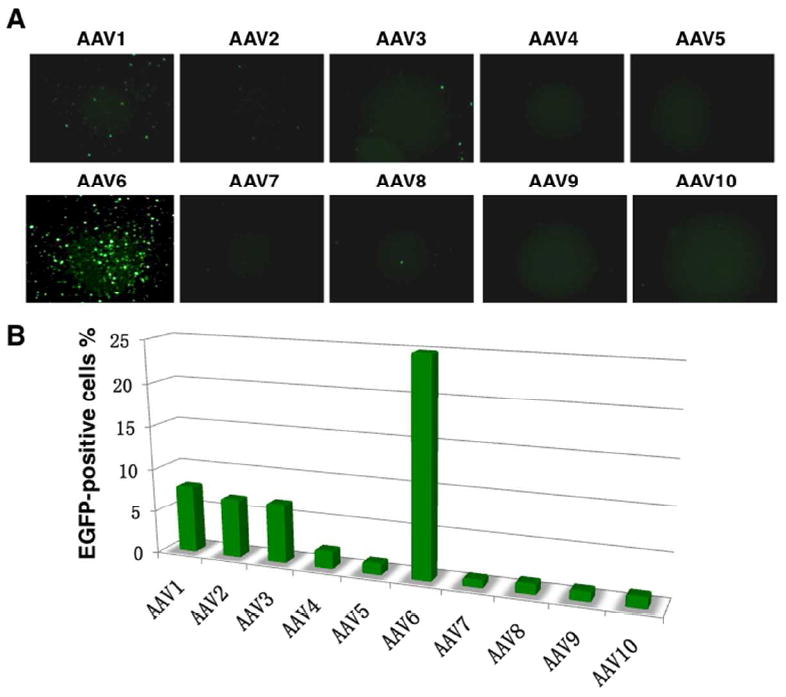
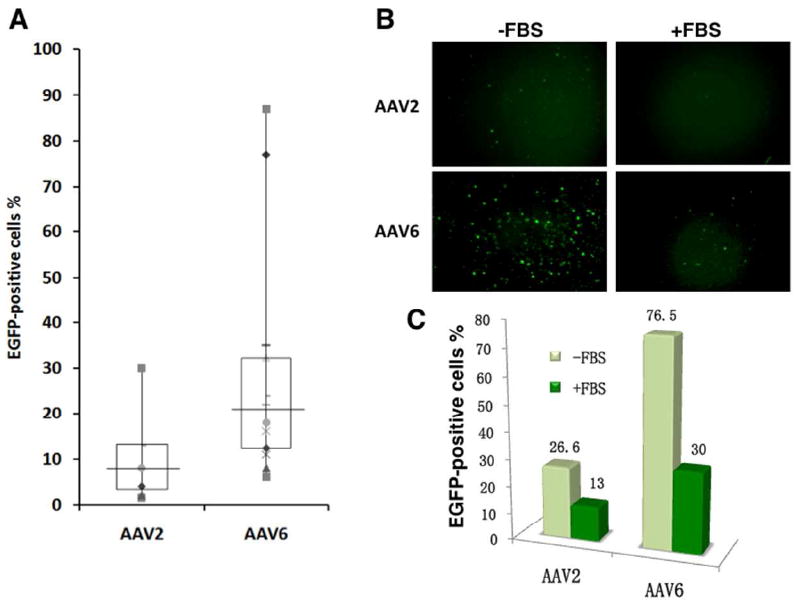
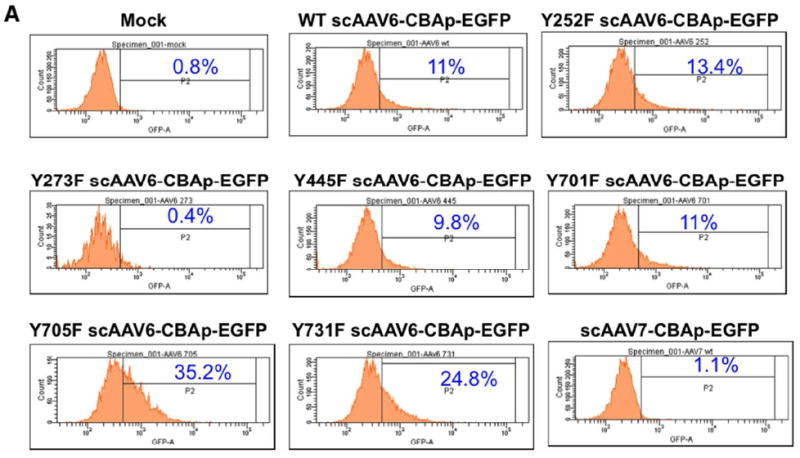
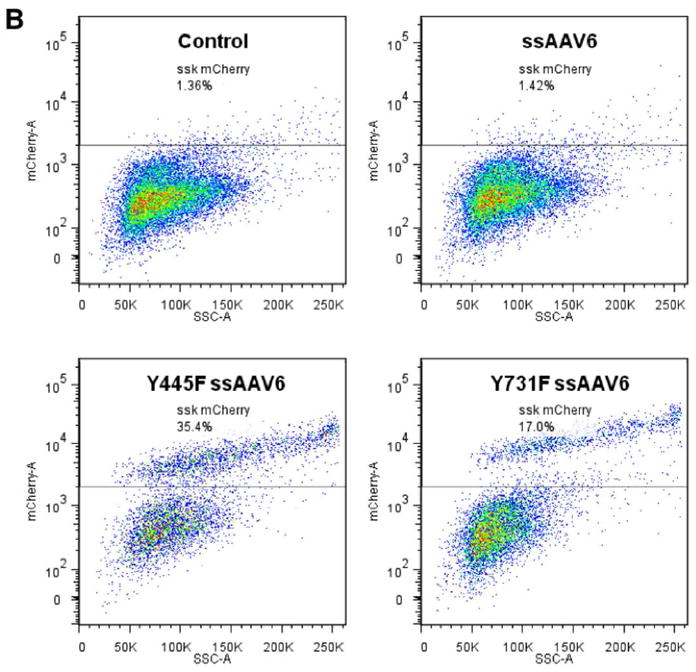
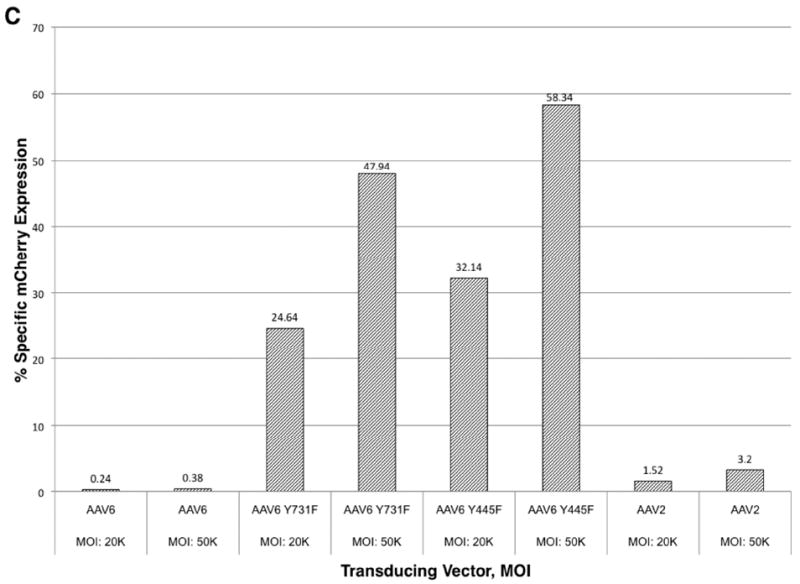
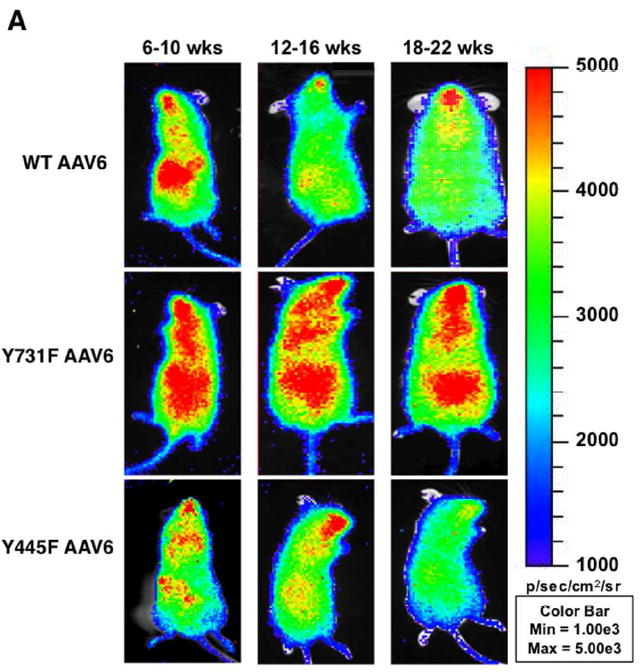
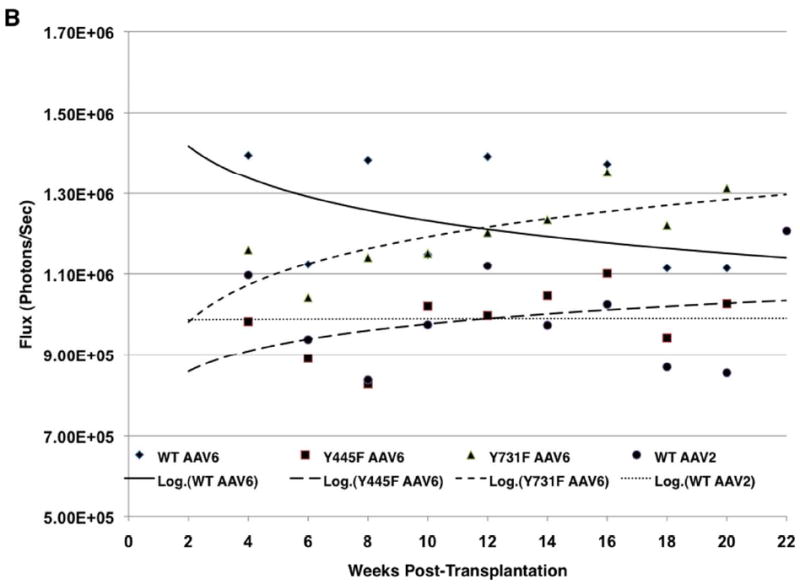
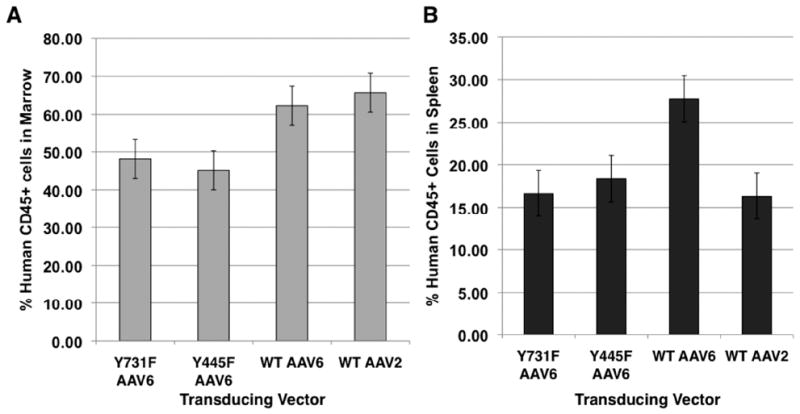
Results: We observed that although there are only six amino acid differences between AAV1 and AAV6, AAV1, but not AAV6, transduced mouse HSCs well, whereas AAV6, but not AAV1, transduced human HSCs well. None of the 10 serotypes transduced cynomolgus monkey HSCs in vitro. We also evaluated the transduction efficiency of AAV6 vectors containing mutations in surface-exposed tyrosine residues. We observed that tyrosine (Y) to phenylalanine (F) point mutations in residues 445, 705 and 731 led to a significant increase in transgene expression in human HSCs in vitro and in a mouse xenograft model in vivo.
Conclusions: These studies suggest that the tyrosine-mutant AAV6 serotype vectors are the most promising vectors for transducing human HSCs and that it is possible to increase further the transduction efficiency of these vectors for their potential use in HSC-based gene therapy in humans.
Keywords: AAV vectors; gene expression; gene transfer; hematopoietic stem cells.
Copyright © 2013 International Society for Cellular Therapy. All rights reserved.
Figures
References
-
- Mueller C, Flotte TR. Clinical gene therapy using recombinant adeno-associated virus vectors. Gene Therapy. 2008;15(11):858–63. - PubMed
-
- Mingozzi F, High KA. Therapeutic in vivo gene transfer for genetic disease using AAV: progress and challenges. Nature Reviews Genetics. 2011;12(5):341–55. - PubMed
-
- Goodman S, Xiao X, Donahue RE, et al. Recombinant adeno-associated virus-mediated gene transfer into hematopoietic progenitor cells. Blood. 1994;84(5):1492–500. - PubMed
Publication types
MeSH terms
Substances
Grants and funding
- P01 DK-058327/DK/NIDDK NIH HHS/United States
- K01 HL103172/HL/NHLBI NIH HHS/United States
- R01 HL097088/HL/NHLBI NIH HHS/United States
- P01 DK058327/DK/NIDDK NIH HHS/United States
- R01 EB002073/EB/NIBIB NIH HHS/United States
- R01 HL-087285/HL/NHLBI NIH HHS/United States
- R01 HL087285/HL/NHLBI NIH HHS/United States
- R01 HL058881/HL/NHLBI NIH HHS/United States
- R01 HL076901/HL/NHLBI NIH HHS/United States
- HL-076901/HL/NHLBI NIH HHS/United States
- P01 HL053586/HL/NHLBI NIH HHS/United States
- F32 HL009870/HL/NHLBI NIH HHS/United States
- P50 DK049218/DK/NIDDK NIH HHS/United States
- R01 HL065570/HL/NHLBI NIH HHS/United States
- P30 CA033572/CA/NCI NIH HHS/United States
- P30 CA-33572/CA/NCI NIH HHS/United States
- R01 HL-097088/HL/NHLBI NIH HHS/United States
- R01 HL-065770/HL/NHLBI NIH HHS/United States
LinkOut - more resources
Full Text Sources
Other Literature Sources
Medical
