


Primary care patients' views and decisions about, experience of and reactions to direct-to-consumer genetic testing: a longitudinal study
- PMID: 23832288
- PMCID: PMC3773312
- DOI: 10.1007/s12687-013-0156-y
Primary care patients' views and decisions about, experience of and reactions to direct-to-consumer genetic testing: a longitudinal study
Abstract
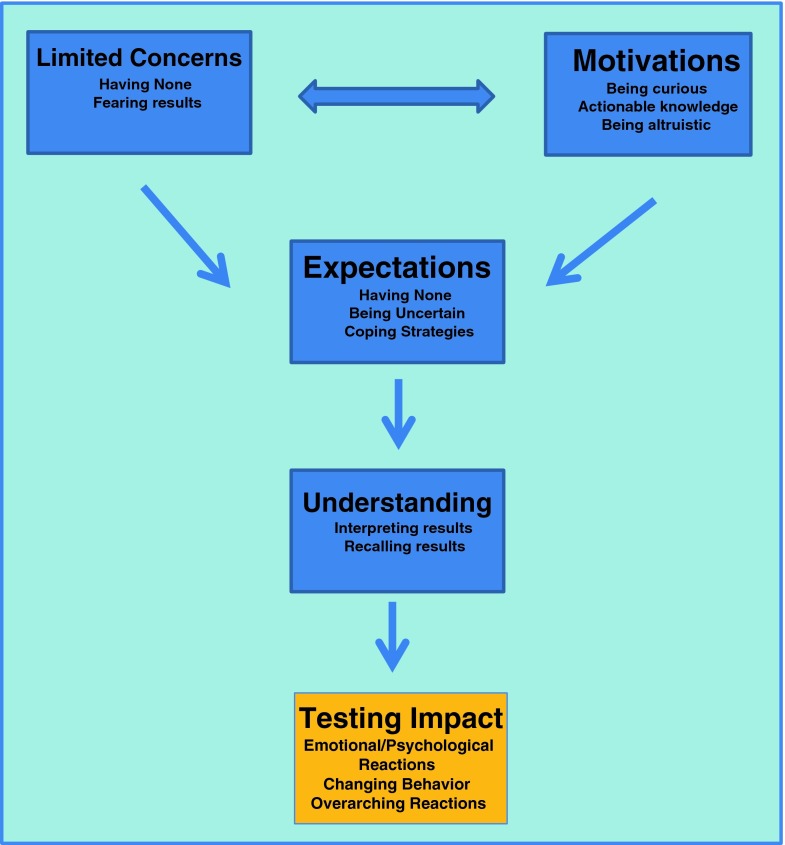
Little is known about the decisions and perspectives of participants undergoing direct-to-consumer genetic testing (DTCGT). The aims of this study were to examine the views, attitudes and decision-making factors of primary care patients regarding DTCGT. Their experience of and reactions to testing also emerged during the study. In this longitudinal, qualitative study, 20 primary care patients participated in DTCGT and individual interviews: (1) prior to testing after the informed consent session, (2) after receiving results, (3) 3 months post-test, and (4) 12 months post-test. Interviews included open-ended questions and all transcripts were analyzed using grounded theory, constant comparison methods. Five key themes emerged from data analysis as participants underwent DTCGT and reflected on their decision over time: (1) limited concerns about DTCGT, (2) motivations for testing, (3) expectations of testing, (4) understanding of results, and (5) impact of testing and results. While a few participants expressed concerns before testing, participants were motivated to test by curiosity, gaining actionable knowledge, and altruism. Most were uncertain of what to expect from DTCGT and needed assistance in understanding results. While many reported testing had no significant impact on them, being relieved or pleased after testing was the most common emotional effect. Notably, a few participants made positive health changes in response to testing. Given the paucity of information about primary care patients and DTCGT, this study adds more in-depth information to the emerging research on how such participants' view, make decisions about, experience and react to DTCGT over time. Because uncertainty remains about the accuracy of DTCGT, the response of primary care patients to this testing requires further investigation.
Figures
References
-
- American College of Medicine Genetics Board of Directors ACMG statement on direct-to-consumer genetic testing. Genet Med. 2004;6(1):60. - PubMed
LinkOut - more resources
Full Text Sources
Other Literature Sources
