


From physiology to pharmacy: developments in the pathogenesis and treatment of recurrent urinary tract infections
- PMID: 23832844
- PMCID: PMC3797163
- DOI: 10.1007/s11934-013-0354-5
From physiology to pharmacy: developments in the pathogenesis and treatment of recurrent urinary tract infections
Abstract
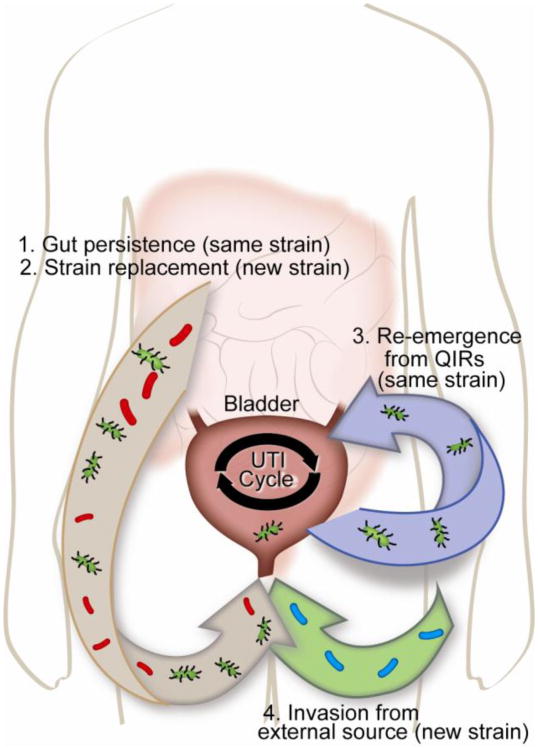
Urinary tract infections (UTIs) are common, and over half of women report having had at least one in their lifetime. Nearly a third of these women experience recurrent UTI episodes, but the mechanisms of these recurrences are not fully elucidated. Frequent use of antimicrobials for treatment and prevention of UTIs and other infections has contributed to the evolution of multidrug-resistant microorganisms globally. This is a looming worldwide crisis that has created an urgent need for novel strategies for the treatment and prevention of UTIs. Furthering our understanding of the mechanisms of recurrent UTIs, from both host and bacterial perspectives, will be paramount in developing targeted management strategies. In this review, we discuss recent findings regarding recurrent UTIs in women, including progress in our understanding of the mechanisms of recurrence as well as emerging treatments.
Conflict of interest statement
Dr. Thomas M. Hooton serves on the board and owns stock in the company of Fimbrion Therapeutics, Inc.
Figures
References
-
- Foxman B, Barlow R, D'Arcy H, et al. Urinary tract infection: self-reported incidence and associated costs. Ann Epidemiol. 2000;10:509–515. - PubMed
-
- Griebling TL. Urinary Tract Infection in Women. In: Litwin MS, Saigal CS, editors. Urologic Diseases in America. US DHHS, PHS, NIH, NIDDKD; Washington DC: 2007. pp. 587–620. US GPO.
-
- Foxman B. The epidemiology of urinary tract infection. Nat Rev Urol. 2010;7:653–660. - PubMed
Publication types
MeSH terms
Substances
Grants and funding
LinkOut - more resources
Full Text Sources
Other Literature Sources
Medical
