


Circulating tumor cell enrichment based on physical properties
- PMID: 23832928
- PMCID: PMC3830628
- DOI: 10.1177/2211068213494391
Circulating tumor cell enrichment based on physical properties
Abstract
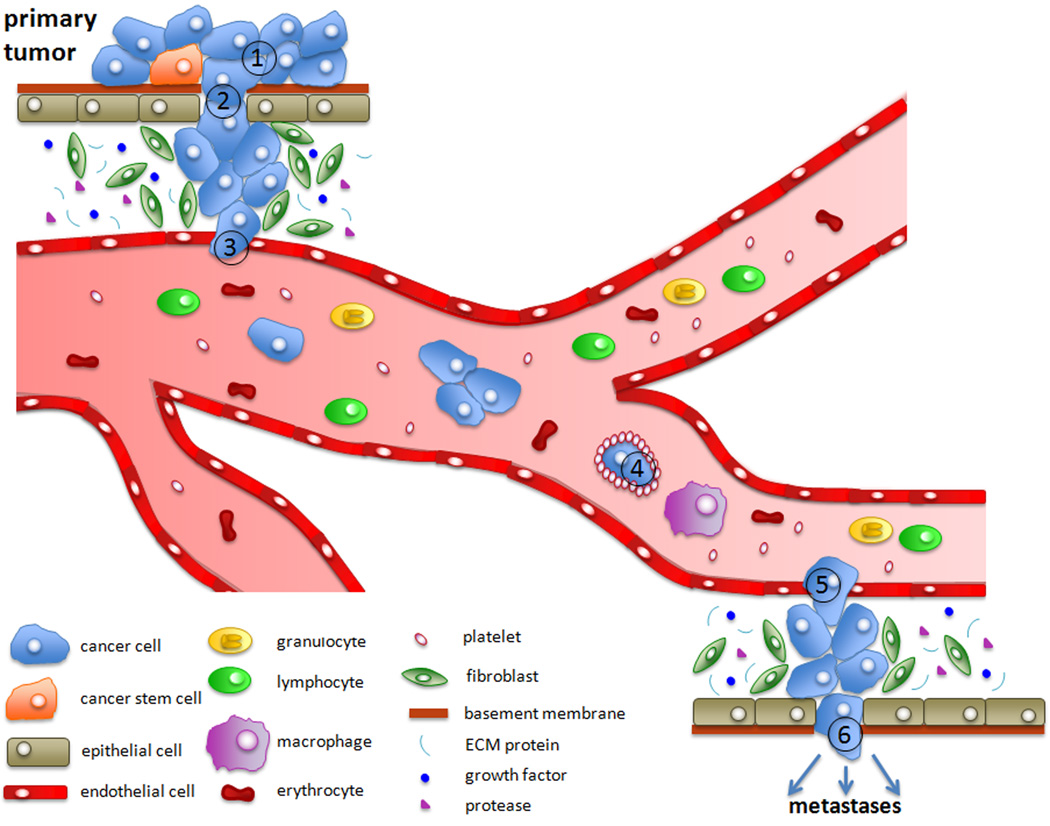
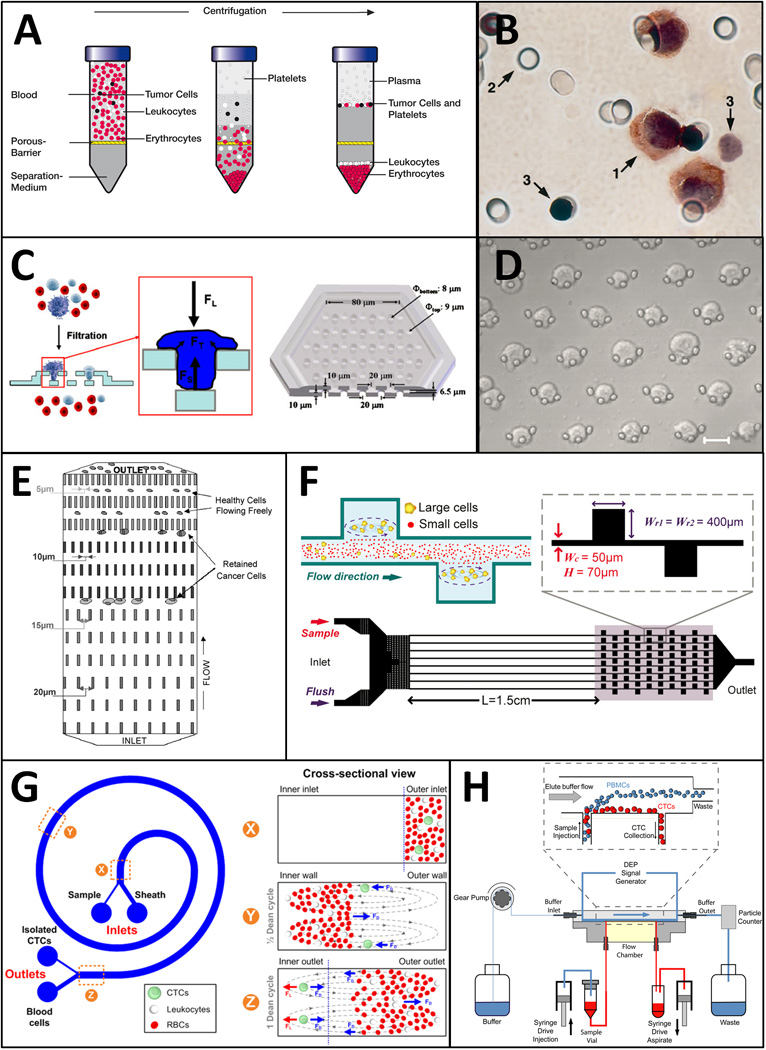
The metastatic dissemination and spread of malignant circulating tumor cells (CTCs) accounts for more than 90% of cancer-related deaths. CTCs detach from a primary tumor, travel through the circulatory system, and then invade and proliferate in distant organs. The detection of CTCs from blood has been established for prognostic monitoring and is predictive of patient outcome. Analysis of CTCs could enable the means for early detection and screening in cancer, as well as provide diagnostic access to tumor tissues in a minimally invasive way. The fundamental challenge with analyzing CTCs is the fact that they occur at extremely low concentrations in blood, on the order of one out of a billion cells. Various technologies have been proposed to isolate CTCs for enrichment. Here we focus on antigen-independent approaches that are not limited by specific capture antibodies. Intrinsic physical properties of CTCs, including cell size, deformability, and electrical properties, are reviewed, and technologies developed to exploit them for enrichment from blood are summarized. Physical enrichment technologies are of particular interest as they have the potential to increase yield and enable the analysis of rare CTC phenotypes that may not be otherwise obtained.
Keywords: antigen-independent; cancer; circulating tumor cells; enrichment; physical properties.
Figures
References
-
- Weinberg RA. The biology of cancer. New York: Garland Science, Talyor & Francis Group, LLC; 2007.
-
- Fidler IJ. Timeline - The pathogenesis of cancer metastasis: the 'seed and soil' hypothesis revisited. Nature Reviews Cancer. 2003;3:453–458. - PubMed
-
- Chambers AF, Groom AC, MacDonald IC. Dissemination and growth of cancer cells in metastatic sites. Nature Reviews Cancer. 2002;2:563–572. - PubMed
-
- Alix-Panabières C, Pantel K. Circulating Tumor Cells: Liquid Biopsy of Cancer. Clinical Chemistry. 2013;59:110–118. - PubMed
Publication types
MeSH terms
Grants and funding
LinkOut - more resources
Full Text Sources
Other Literature Sources
Medical
