


Inpatient diabetes education is associated with less frequent hospital readmission among patients with poor glycemic control
- PMID: 23835695
- PMCID: PMC3781555
- DOI: 10.2337/dc13-0108
Inpatient diabetes education is associated with less frequent hospital readmission among patients with poor glycemic control
Abstract
Objective: To explore the relationship between inpatient diabetes education (IDE) and hospital readmissions in patients with poorly controlled diabetes.
Research design and methods: Patients with a discharge diagnosis of diabetes (ICD-9 code 250.x) and HbA1c>9% who were hospitalized between 2008 and 2010 were retrospectively identified. All-cause first readmissions were determined within 30 days and 180 days after discharge. IDE was conducted by a certified diabetes educator or trainee. Relationships between IDE and hospital readmission were analyzed with stepwise backward logistic regression models.
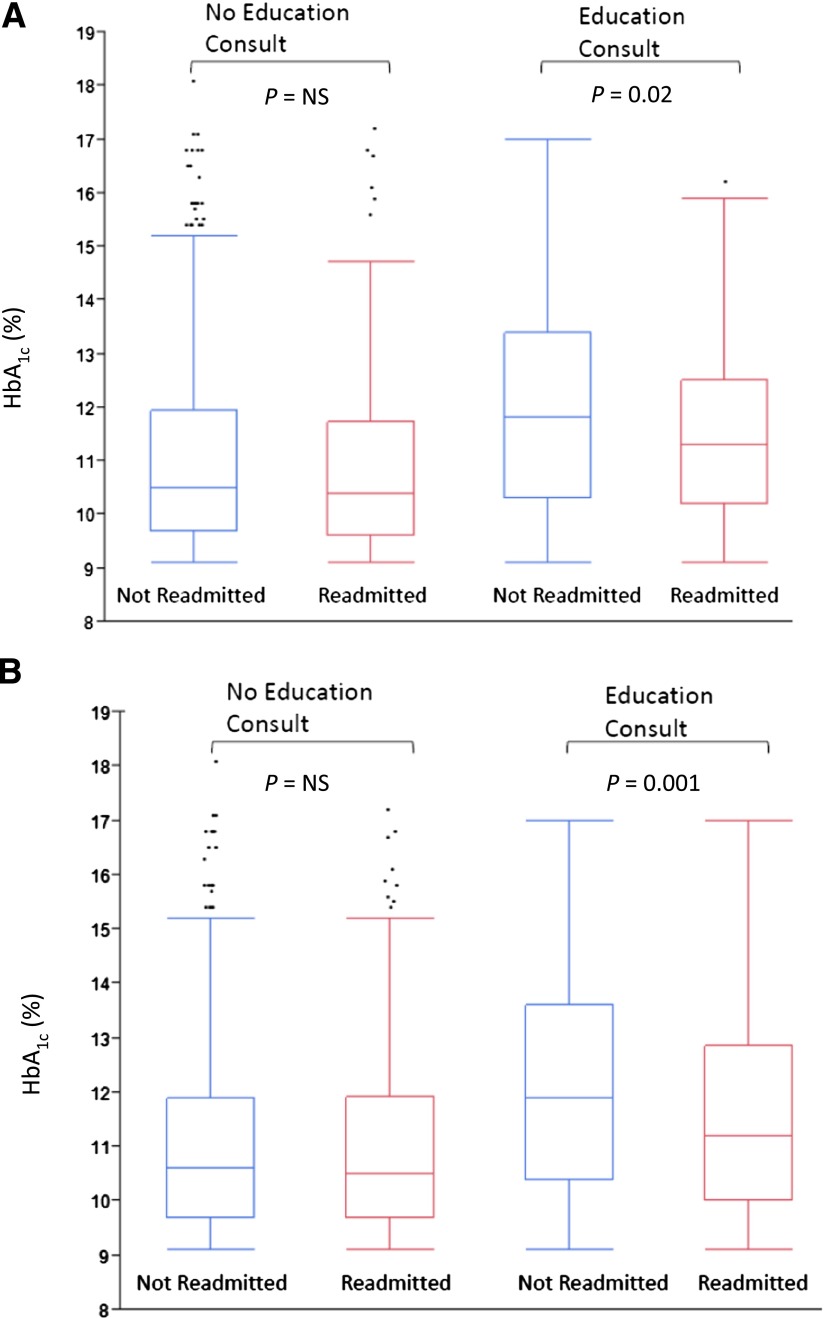
Results: In all, 2,265 patients were included in the 30-day analysis and 2,069 patients were included in the 180-day analysis. Patients who received IDE had a lower frequency of readmission within 30 days than did those who did not (11 vs. 16%; P=0.0001). This relationship persisted after adjustment for sociodemographic and illness-related factors (odds ratio 0.66 [95% CI 0.51-0.85]; P=0.001). Medicaid insurance and longer stay were also independent predictors in this model. IDE was also associated with reduced readmissions within 180 days, although the relationship was attenuated. In the final 180-day model, no IDE, African American race, Medicaid or Medicare insurance, longer stay, and lower HbA1c were independently associated with increased hospital readmission. Further analysis determined that higher HbA1c was associated with lower frequency of readmission only among patients who received a diabetes education consult.
Conclusions: Formal IDE was independently associated with a lower frequency of all-cause hospital readmission within 30 days; this relationship was attenuated by 180 days. Prospective studies are needed to confirm this association.
Figures
References
Publication types
MeSH terms
Substances
Grants and funding
LinkOut - more resources
Full Text Sources
Other Literature Sources
Medical
