


Genetic basis for in vitro and in vivo resistance to lincosamides, streptogramins A, and pleuromutilins (LSAP phenotype) in Enterococcus faecium
- PMID: 23836170
- PMCID: PMC3754343
- DOI: 10.1128/AAC.01030-13
Genetic basis for in vitro and in vivo resistance to lincosamides, streptogramins A, and pleuromutilins (LSAP phenotype) in Enterococcus faecium
Abstract
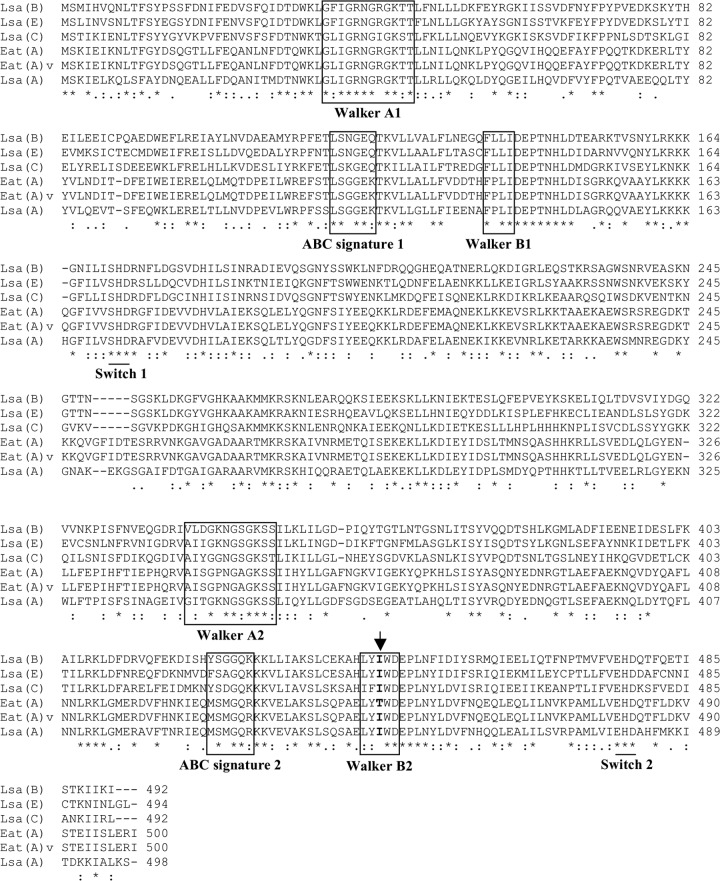
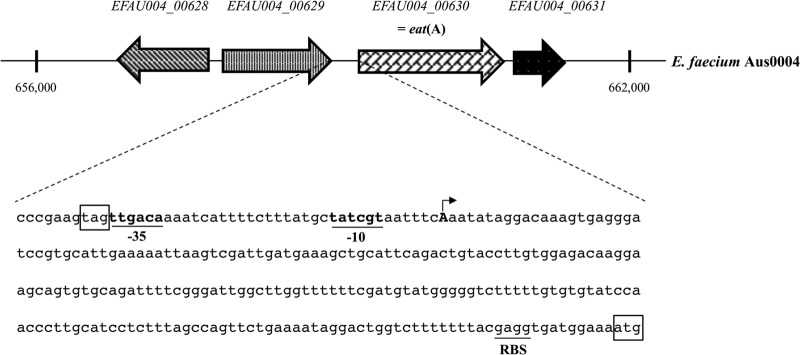
As opposed to Enterococcus faecalis, which is intrinsically resistant to lincosamides, streptogramins A, and pleuromutilins (LSAP phenotype) by production of the ABC protein Lsa(A), Enterococcus faecium is naturally susceptible. Since this phenotype may be selected for in vivo by quinupristin-dalfopristin (Q-D), the aim of this study was to investigate the molecular mechanism of acquired LSAP resistance in E. faecium. Six LSAP-resistant in vitro mutants of E. faecium HM1070 as well as three different pairs of clinical isolates (pre- and postexposure to Q-D) were studied. The full genome sequence of an in vitro mutant (E. faecium UCN90B) was determined by using 454 sequencing technology and was compared with that of the parental strain. Single-nucleotide replacement was carried out to confirm the role of this mutation. By comparative genomic analysis, a point mutation was found within a 1,503-bp gene coding for an ABC homologue showing 66% amino acid identity with Lsa(A). This mutation (C1349T) led to an amino acid substitution (Thr450Ile). An identical mutation was identified in all in vitro and in vivo resistant strains but was not present in susceptible strains. The wild-type allele was named eat(A) (for Enterococcus ABC transporter), and its mutated allelic variant was named eat(A)v. The introduction of eat(A)v from UCN90B into HM1070 conferred the LSAP phenotype, whereas that of eat(A) from HM1070 into UCN90B restored susceptibility entirely. This is the first description of the molecular mechanism of acquired LSAP resistance in E. faecium. Characterization of the biochemical mechanism of resistance and the physiological role of this ABC protein need further investigations.
Figures
References
-
- Cattoir V, Leclercq R. 2013. Twenty-five years of shared life with vancomycin-resistant enterococci: is it time to divorce? J. Antimicrob. Chemother. 68:731–742 - PubMed
-
- Eliopoulos GM. 2003. Quinupristin-dalfopristin and linezolid: evidence and opinion. Clin. Infect. Dis. 36:473–481 - PubMed
-
- Leclercq R. 2002. Mechanisms of resistance to macrolides and lincosamides: nature of the resistance elements and their clinical implications. Clin. Infect. Dis. 34:482–492 - PubMed
-
- Novak R, Shlaes DM. 2010. The pleuromutilin antibiotics: a new class for human use. Curr. Opin. Investig. Drugs 11:182–191 - PubMed
Publication types
MeSH terms
Substances
LinkOut - more resources
Full Text Sources
Other Literature Sources
Medical
Research Materials
