


Phase I study of intraprostatic vaccine administration in men with locally recurrent or progressive prostate cancer
- PMID: 23836412
- PMCID: PMC6351424
- DOI: 10.1007/s00262-013-1448-0
Phase I study of intraprostatic vaccine administration in men with locally recurrent or progressive prostate cancer
Abstract
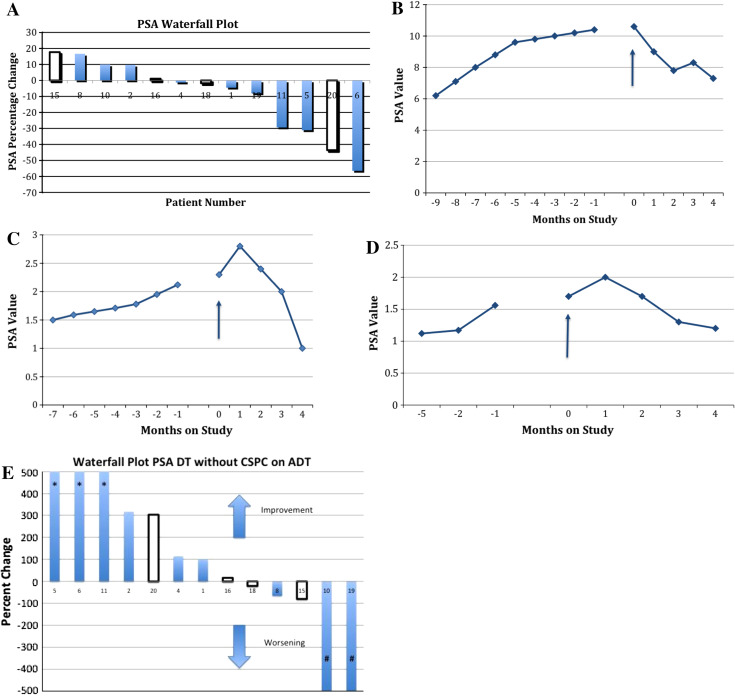
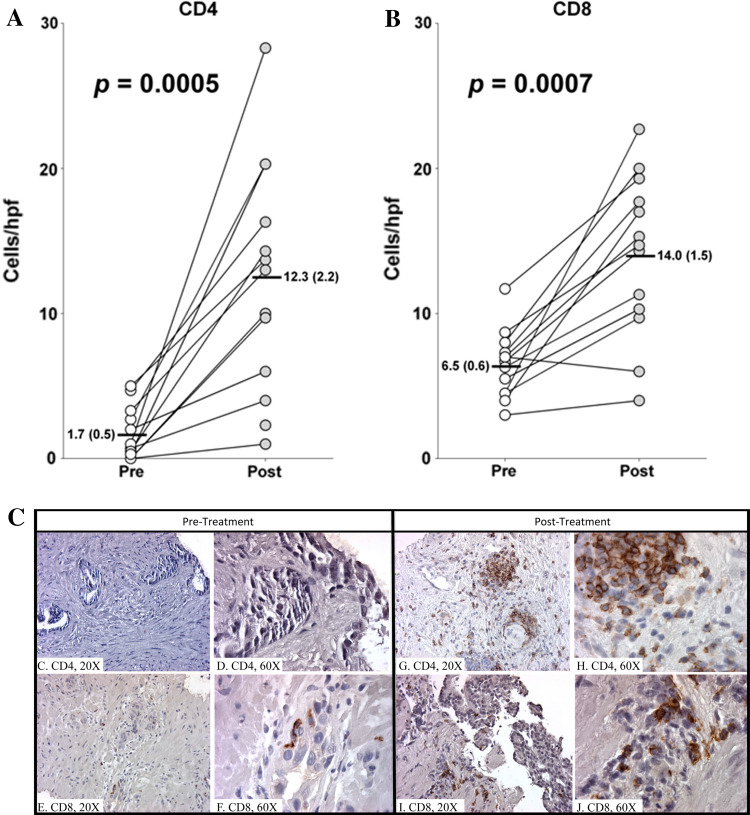
The primary end point of this study was to determine the safety and feasibility of intraprostatic administration of PSA-TRICOM vaccine [encoding transgenes for prostate-specific antigen (PSA) and 3 costimulatory molecules] in patients with locally recurrent or progressive prostate cancer. This trial was a standard 3 + 3 dose escalation with 6 patients each in cohorts 4 and 5 to gather more immunologic data. Nineteen of 21 patients enrolled had locally recurrent prostate cancer after definitive radiation therapy, and 2 had no local therapy. All cohorts received initial subcutaneous vaccination with recombinant vaccinia (rV)-PSA-TRICOM and intraprostatic booster vaccinations with recombinant fowlpox (rF)-PSA-TRICOM. Cohorts 3-5 also received intraprostatic rF-GM-CSF. Cohort 5 received additional subcutaneous boosters with rF-PSA-TRICOM and rF-GM-CSF. Patients had pre- and post-treatment prostate biopsies, and analyses of peripheral and intraprostatic immune cells were performed. There were no dose-limiting toxicities, and the maximum tolerated dose was not reached. The most common grade 2 adverse events were fever (38%) and subcutaneous injection site reactions (33%); the single grade 3 toxicity was transient fever. Overall, 19 of 21 patients on trial had stable (10) or improved (9) PSA values. There was a marked increase in CD4+ (p = 0.0002) and CD8+ (p = 0.0002) tumor infiltrates in post- versus pre-treatment tumor biopsies. Four of 9 patients evaluated had peripheral immune responses to PSA or NGEP. Intraprostatic administration of PSA-TRICOM is safe and feasible and can generate a significant immunologic response. Improved serum PSA kinetics and intense post-vaccination inflammatory infiltrates were seen in the majority of patients. Clinical trials examining clinical end points are warranted.
Conflict of interest statement
The authors declare that they have no conflicts of interest.
Figures
References
-
- Terasawa H, Tsang KY, Gulley J, Arlen P, Schlom J. Identification and characterization of a human agonist cytotoxic T-lymphocyte epitope of human prostate-specific antigen. Clin Cancer Res. 2002;8:41–53. - PubMed
-
- Kantoff PW, Schuetz TJ, Blumenstein BA, Glode LM, Bilhartz DL, Wyand M, Manson K, Panicali DL, Laus R, Schlom J, Dahut WL, Arlen PM, Gulley JL, Godfrey WR. Overall survival analysis of a phase II randomized controlled trial of a Poxviral-based PSA-targeted immunotherapy in metastatic castration-resistant prostate cancer. J Clin Oncol. 2010;28:1099–1105. doi: 10.1200/JCO.2009.25.0597. - DOI - PMC - PubMed
-
- Gulley JL, Arlen PM, Madan RA, Tsang KY, Pazdur MP, Skarupa L, Jones JL, Poole DJ, Higgins JP, Hodge JW, Cereda V, Vergati M, Steinberg SM, Halabi S, Jones E, Chen C, Parnes H, Wright JJ, Dahut WL, Schlom J. Immunologic and prognostic factors associated with overall survival employing a poxviral-based PSA vaccine in metastatic castrate-resistant prostate cancer. Cancer Immunol Immunother. 2010;59:663–674. doi: 10.1007/s00262-009-0782-8. - DOI - PMC - PubMed
Publication types
MeSH terms
Substances
Grants and funding
LinkOut - more resources
Full Text Sources
Other Literature Sources
Medical
Research Materials
Miscellaneous
