. 2013 Jul 10;3(1):23.
doi: 10.1186/2110-5820-3-23.

Beyond intracranial pressure: optimization of cerebral blood flow, oxygen, and substrate delivery after traumatic brain injury

Affiliations

Beyond intracranial pressure: optimization of cerebral blood flow, oxygen, and substrate delivery after traumatic brain injury

Pierre Bouzat et al. Ann Intensive Care. .

Abstract

Monitoring and management of intracranial pressure (ICP) and cerebral perfusion pressure (CPP) is a standard of care after traumatic brain injury (TBI). However, the pathophysiology of so-called secondary brain injury, i.e., the cascade of potentially deleterious events that occur in the early phase following initial cerebral insult-after TBI, is complex, involving a subtle interplay between cerebral blood flow (CBF), oxygen delivery and utilization, and supply of main cerebral energy substrates (glucose) to the injured brain. Regulation of this interplay depends on the type of injury and may vary individually and over time. In this setting, patient management can be a challenging task, where standard ICP/CPP monitoring may become insufficient to prevent secondary brain injury. Growing clinical evidence demonstrates that so-called multimodal brain monitoring, including brain tissue oxygen (PbtO2), cerebral microdialysis and transcranial Doppler among others, might help to optimize CBF and the delivery of oxygen/energy substrate at the bedside, thereby improving the management of secondary brain injury. Looking beyond ICP and CPP, and applying a multimodal therapeutic approach for the optimization of CBF, oxygen delivery, and brain energy supply may eventually improve overall care of patients with head injury. This review summarizes some of the important pathophysiological determinants of secondary cerebral damage after TBI and discusses novel approaches to optimize CBF and provide adequate oxygen and energy supply to the injured brain using multimodal brain monitoring.


Figures
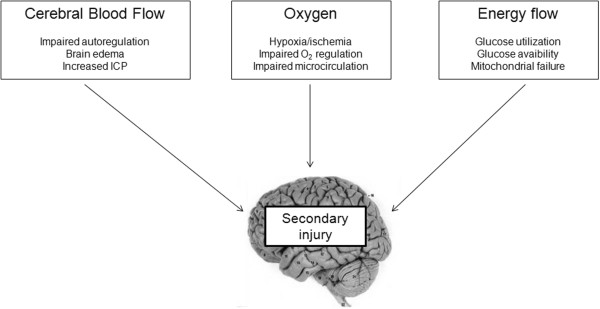
Figure 1
Figure 1
Pathophysiology of secondary cerebral damage after TBI. A schematic view of the pathophysiology of secondary cerebral damage after traumatic brain injury (TBI) that supports the concept of optimizing cerebral blood flow, the delivery of oxygen and the adequate supply of energy substrates.
Figure 2
Figure 2
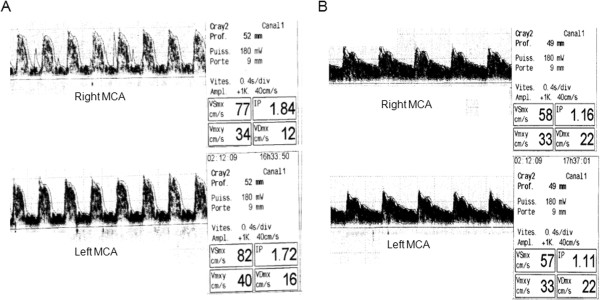
Noninvasive transcranial Doppler to manage CBF/CPP at the bedside. Example of transcranial Doppler in a patient with acute hydrocephalus and increased intracranial pressure (ICP). A. Before extraventricular drainage, TCD in the middle cerebral artery (MCA) shows cerebral ischemia with low diastolic CBF velocities (<20 cm/sec) and elevated pulsatility index (PI > 1.4). B. After extraventricular drainage, normalization of ICP was associated with normalization of diastolic velocities and PI, reflecting increased CBF.
Figure 3
Figure 3
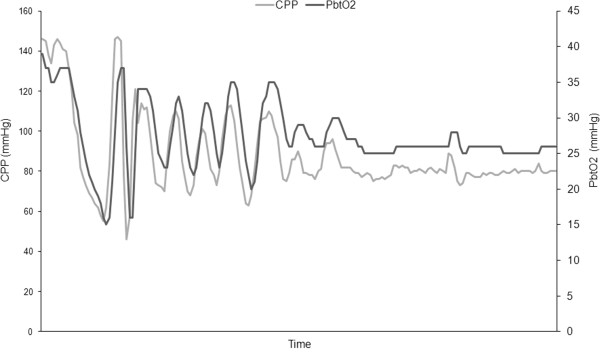
PbtO2-guided management of CPP in individual patients. Example of a patient exhibiting a linear correlation between CPP and PbtO2, which suggests impaired cerebrovascular reactivity (elevated oxygen reactivity index, ORx, > 0.7). In this case, higher CPP thresholds (>80 mmHg) are required to prevent secondary ischemia (PbtO2 < 20 mmHg). This is an example of how PbtO2 monitoring may guide CPP management and the setting of “optimal” CPP at the bedside.
Figure 4
Figure 4
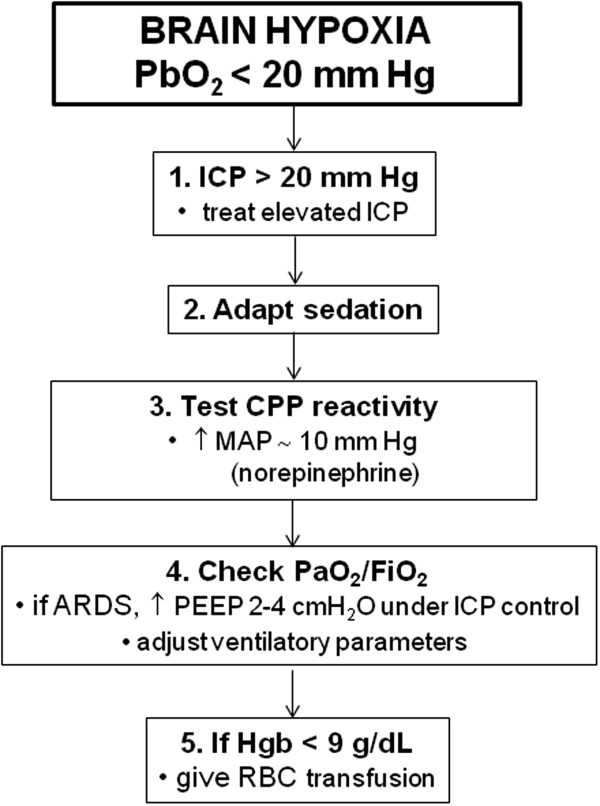
Management of brain hypoxia. A proposed algorithm for the practical management of low PbtO2 in patients with severe TBI.
Figure 5
Figure 5
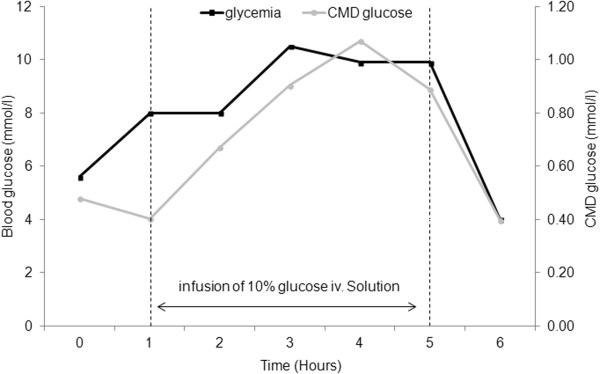
Cerebral microdialysis-guided management of glycemic control in individual patients. Example of a patient showing a linear relationship between blood and brain glucose, measured by cerebral microdialysis (CMD) glucose. Because of low CMD glucose <1 mmol/L, infusion of a 10% glucose solution was administered and was associated with a parallel increase of both arterial blood and CMD glucose. This illustrates the potential value of CMD for the management of blood glucose control in patients with severe brain injuries, aiming to prevent secondary systemic insults (brain glucopenia in this case).

References

    1. Patel HC, Menon DK, Tebbs S, Hawker R, Hutchinson PJ, Kirkpatrick PJ. Specialist neurocritical care and outcome from head injury. Intensive Care Med. 2002;3:547–553. doi: 10.1007/s00134-002-1235-4. - DOI - PubMed
    1. Stein SC, Georgoff P, Meghan S, Mirza KL, El Falaky OM. Relationship of aggressive monitoring and treatment to improved outcomes in severe traumatic brain injury. J Neurosurg. 2010;3:1105–1112. doi: 10.3171/2009.8.JNS09738. - DOI - PubMed
    1. Chesnut RM, Temkin N, Carney N, Dikmen S, Rondina C, Videtta W, Petroni G, Lujan S, Pridgeon J, Barber J. et al. A trial of intracranial-pressure monitoring in traumatic brain injury. N Engl J Med. 2012;3:2471–2481. doi: 10.1056/NEJMoa1207363. - DOI - PMC - PubMed
    1. Maas AI, Stocchetti N, Bullock R. Moderate and severe traumatic brain injury in adults. Lancet Neurol. 2008;3:728–741. doi: 10.1016/S1474-4422(08)70164-9. - DOI - PubMed
    1. Bouma GJ, Muizelaar JP, Bandoh K, Marmarou A. Blood pressure and intracranial pressure-volume dynamics in severe head injury: relationship with cerebral blood flow. J Neurosurg. 1992;3:15–19. doi: 10.3171/jns.1992.77.1.0015. - DOI - PubMed

LinkOut - more resources