


Role of microglia in CNS autoimmunity
- PMID: 23840238
- PMCID: PMC3694374
- DOI: 10.1155/2013/208093
Role of microglia in CNS autoimmunity
Abstract
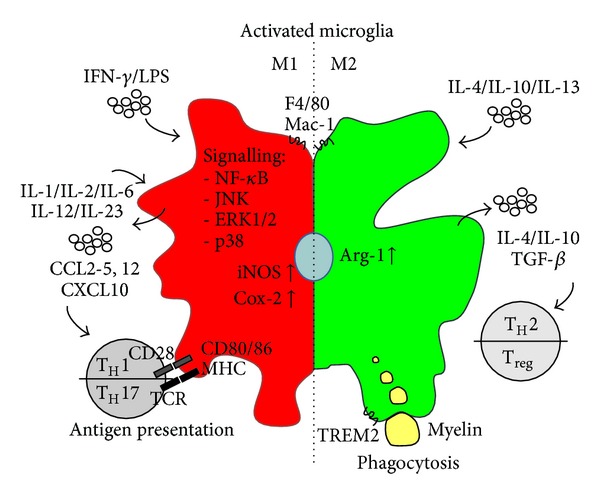
Multiple sclerosis (MS) is the most common autoimmune disease of the central nervous system (CNS) in the Western world. The disease is characterized histologically by the infiltration of encephalitogenic TH1/TH17-polarized CD4(+) T cells, B cells, and a plethora of myeloid cells, resulting in severe demyelination ultimately leading to a degeneration of neuronal structures. These pathological processes are substantially modulated by microglia, the resident immune competent cells of the CNS. In this overview, we summarize the current knowledge regarding the highly diverse and complex function of microglia during CNS autoimmunity in either promoting tissue injury or tissue repair. Hence, understanding microglia involvement in MS offers new exciting paths for therapeutic intervention.
Figures
References
-
- Lassmann H, van Horssen J, Mahad D. Progressive multiple sclerosis: pathology and pathogenesis. Nature Reviews Neurology. 2012;8(11):647–656. - PubMed
-
- Luessi F, Siffrin V, Zipp F. Neurodegeneration in multiple sclerosis: novel treatment strategies. Expert Reviews. 2012;12(9):1061–1077. - PubMed
-
- Brendecke SM, Prinz M. How type I interferons shape myeloid cell function in CNS autoimmunity. Journal of Leukocyte Biology. 2012;92(3):479–488. - PubMed
Publication types
MeSH terms
Substances
LinkOut - more resources
Full Text Sources
Other Literature Sources
Medical
Research Materials
