


HGF Expressing Stem Cells in Usual Interstitial Pneumonia Originate from the Bone Marrow and Are Antifibrotic
- PMID: 23840329
- PMCID: PMC3686785
- DOI: 10.1371/journal.pone.0065453
HGF Expressing Stem Cells in Usual Interstitial Pneumonia Originate from the Bone Marrow and Are Antifibrotic
Abstract
Background: Pulmonary fibrosis may result from abnormal alveolar wound repair after injury. Hepatocyte growth factor (HGF) improves alveolar epithelial wound repair in the lung. Stem cells were shown to play a major role in lung injury, repair and fibrosis. We studied the presence, origin and antifibrotic properties of HGF-expressing stem cells in usual interstitial pneumonia.
Methods: Immunohistochemistry was performed in lung tissue sections and primary alveolar epithelial cells obtained from patients with usual interstitial pneumonia (UIP, n = 7). Bone marrow derived stromal cells (BMSC) from adult male rats were transfected with HGF, instilled intratracheally into bleomycin injured rat lungs and analyzed 7 and 14 days later.
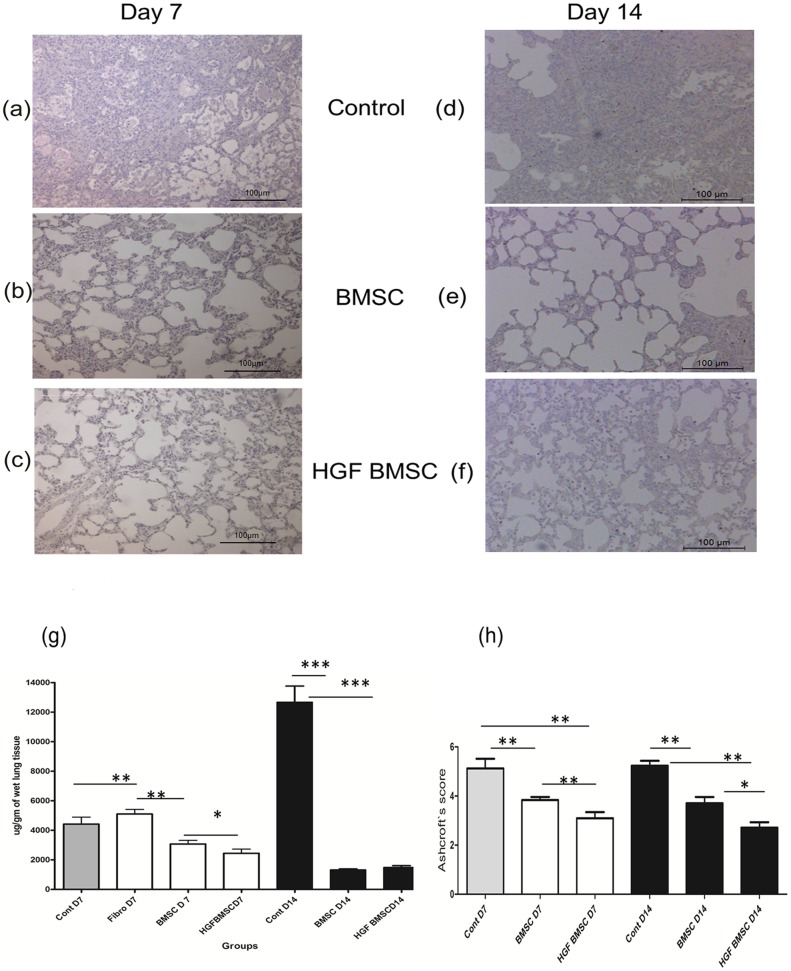
Results: In UIP, HGF was expressed in specific cells mainly located in fibrotic areas close to the hyperplastic alveolar epithelium. HGF-positive cells showed strong co-staining for the mesenchymal stem cell markers CD44, CD29, CD105 and CD90, indicating stem cell origin. HGF-positive cells also co-stained for CXCR4 (HGF+/CXCR4+) indicating that they originate from the bone marrow. The stem cell characteristics were confirmed in HGF secreting cells isolated from UIP lung biopsies. In vivo experiments showed that HGF-expressing BMSC attenuated bleomycin induced pulmonary fibrosis in the rat, indicating a beneficial role of bone marrow derived, HGF secreting stem cells in lung fibrosis.
Conclusions: HGF-positive stem cells are present in human fibrotic lung tissue (UIP) and originate from the bone marrow. Since HGF-transfected BMSC reduce bleomycin induced lung fibrosis in the bleomycin lung injury and fibrosis model, we assume that HGF-expressing, bone-marrow derived stem cells in UIP have antifibrotic properties.
Conflict of interest statement
Figures



References
-
- Nathan SD, Shlobin OA, Weir N, Ahmad S, Kaldjob JM, et al. (2011) Long-term Course and Prognosis of Idiopathic Pulmonary Fibrosis in the New Millennium. Chest 140: 221–229. - PubMed
-
- Wuyts WA, Agostini C, Antoniou K, Bouros D, Chambers R, et al.. (2012) The pathogenesis of pulmonary fibrosis: a moving target. European Respiratory Journal. - PubMed
-
- Geiser T (2003 ) Mechanisms of alveolar epithelial repair in acute lung injury – a translational approach. Swiss Med Wkly 133: 586–590. - PubMed
-
- Selman M, King TE, Pardo A (2001) Idiopathic Pulmonary Fibrosis: Prevailing and Evolving Hypotheses about Its Pathogenesis and Implications for Therapy. Annals of Internal Medicine 134: 136–151. - PubMed
-
- Leslie KO (2011) Idiopathic Pulmonary Fibrosis May Be a Disease of Recurrent, Tractional Injury to the Periphery of the Aging Lung: A Unifying Hypothesis Regarding Etiology and Pathogenesis. Arch Pathol Lab Med. - PubMed
Publication types
MeSH terms
Substances
LinkOut - more resources
Full Text Sources
Other Literature Sources
Medical
Miscellaneous
