


Assessment of Response to Lithium Maintenance Treatment in Bipolar Disorder: A Consortium on Lithium Genetics (ConLiGen) Report
- PMID: 23840348
- PMCID: PMC3686769
- DOI: 10.1371/journal.pone.0065636
Assessment of Response to Lithium Maintenance Treatment in Bipolar Disorder: A Consortium on Lithium Genetics (ConLiGen) Report
Abstract
Objective: The assessment of response to lithium maintenance treatment in bipolar disorder (BD) is complicated by variable length of treatment, unpredictable clinical course, and often inconsistent compliance. Prospective and retrospective methods of assessment of lithium response have been proposed in the literature. In this study we report the key phenotypic measures of the "Retrospective Criteria of Long-Term Treatment Response in Research Subjects with Bipolar Disorder" scale currently used in the Consortium on Lithium Genetics (ConLiGen) study.
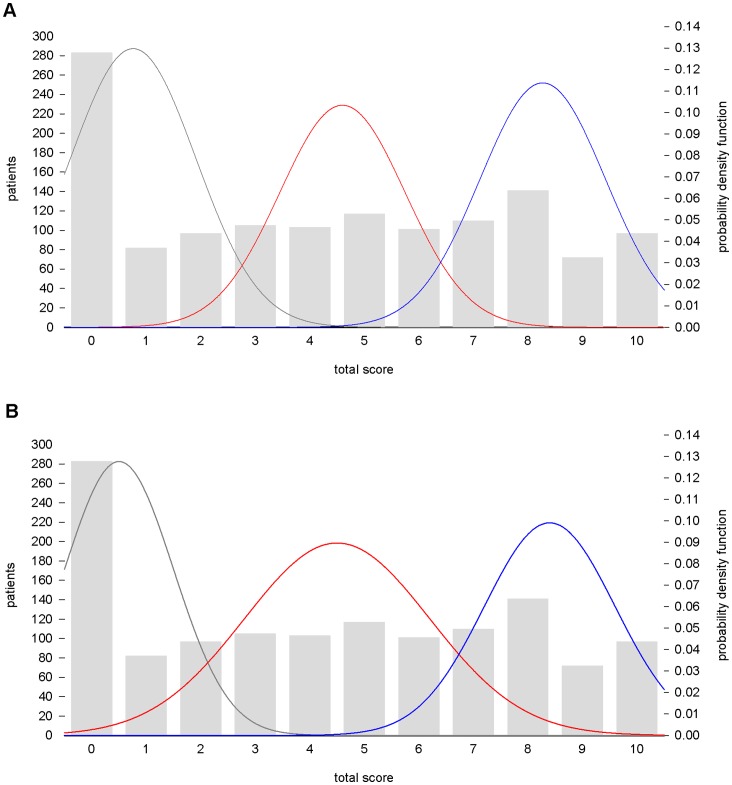
Materials and methods: Twenty-nine ConLiGen sites took part in a two-stage case-vignette rating procedure to examine inter-rater agreement [Kappa (κ)] and reliability [intra-class correlation coefficient (ICC)] of lithium response. Annotated first-round vignettes and rating guidelines were circulated to expert research clinicians for training purposes between the two stages. Further, we analyzed the distributional properties of the treatment response scores available for 1,308 patients using mixture modeling.
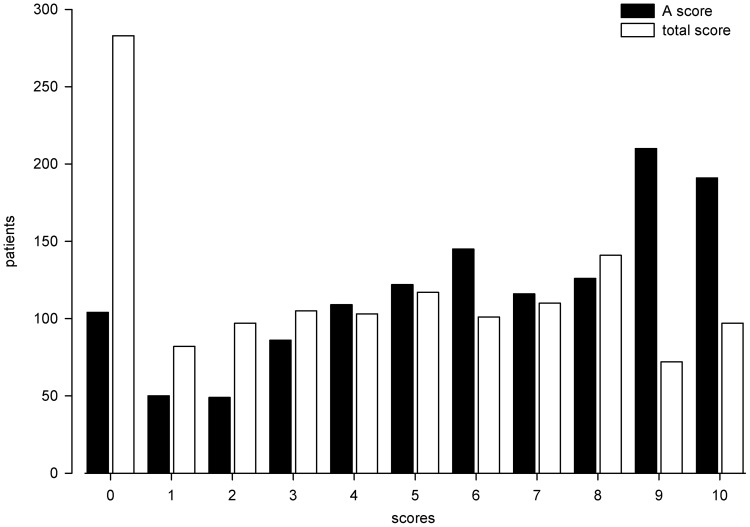
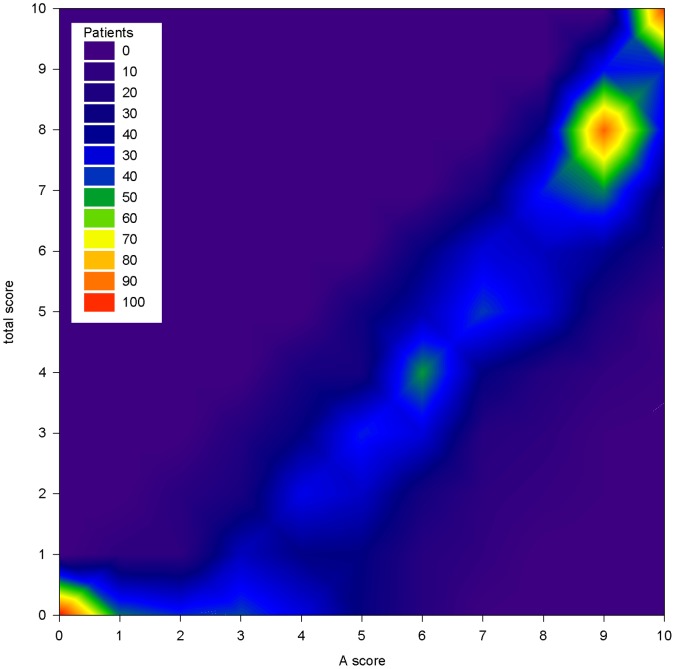
Results: Substantial and moderate agreement was shown across sites in the first and second sets of vignettes (κ = 0.66 and κ = 0.54, respectively), without significant improvement from training. However, definition of response using the A score as a quantitative trait and selecting cases with B criteria of 4 or less showed an improvement between the two stages (ICC1 = 0.71 and ICC2 = 0.75, respectively). Mixture modeling of score distribution indicated three subpopulations (full responders, partial responders, non responders).
Conclusions: We identified two definitions of lithium response, one dichotomous and the other continuous, with moderate to substantial inter-rater agreement and reliability. Accurate phenotypic measurement of lithium response is crucial for the ongoing ConLiGen pharmacogenomic study.
Conflict of interest statement
Figures
References
-
- Goodwin FK, Jamison KR (2007) Manic-depressive illness. New York: Oxford University Press.
-
- Yatham LN, Kennedy SH, O’Donovan C, Parikh S, MacQueen G, et al. (2005) Canadian Network for Mood and Anxiety Treatments (CANMAT) guidelines for the management of patients with bipolar disorder: consensus and controversies. Bipolar Disord 7 Suppl 35–69. - PubMed
-
- Fountoulakis KN, Kasper S, Andreassen O, Blier P, Okasha A, et al. (2012) Efficacy of pharmacotherapy in bipolar disorder: a report by the WPA section on pharmacopsychiatry. Eur Arch Psychiatry Clin Neurosci 262 Suppl 11–48. - PubMed
-
- Muller-Oerlinghausen B, Ahrens B, Grof E, Grof P, Lenz G, et al. (1992) The effect of long-term lithium treatment on the mortality of patients with manic-depressive and schizoaffective illness. Acta Psychiatr Scand 86: 218–222. - PubMed
-
- Cipriani A, Pretty H, Hawton K, Geddes JR (2005) Lithium in the prevention of suicidal behavior and all-cause mortality in patients with mood disorders: a systematic review of randomized trials. Am J Psychiatry 162: 1805–1819. - PubMed
Publication types
MeSH terms
Substances
Grants and funding
LinkOut - more resources
Full Text Sources
Other Literature Sources
Medical
