


Reducing mouse anxiety during handling: effect of experience with handling tunnels
- PMID: 23840458
- PMCID: PMC3688777
- DOI: 10.1371/journal.pone.0066401
Reducing mouse anxiety during handling: effect of experience with handling tunnels
Abstract
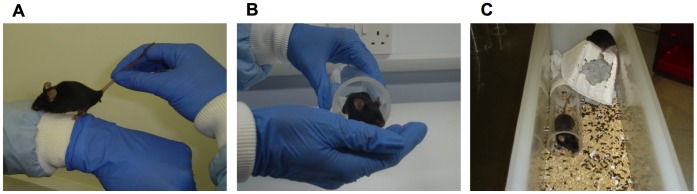
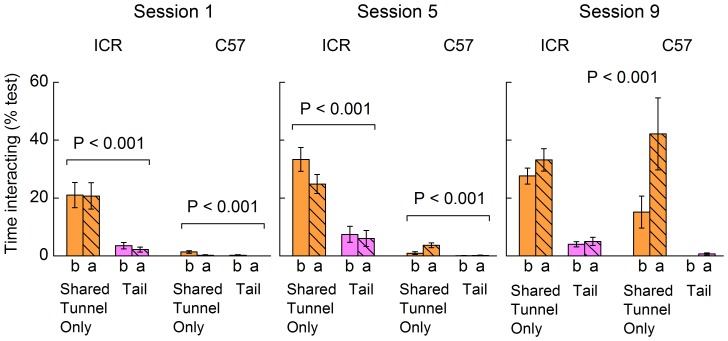
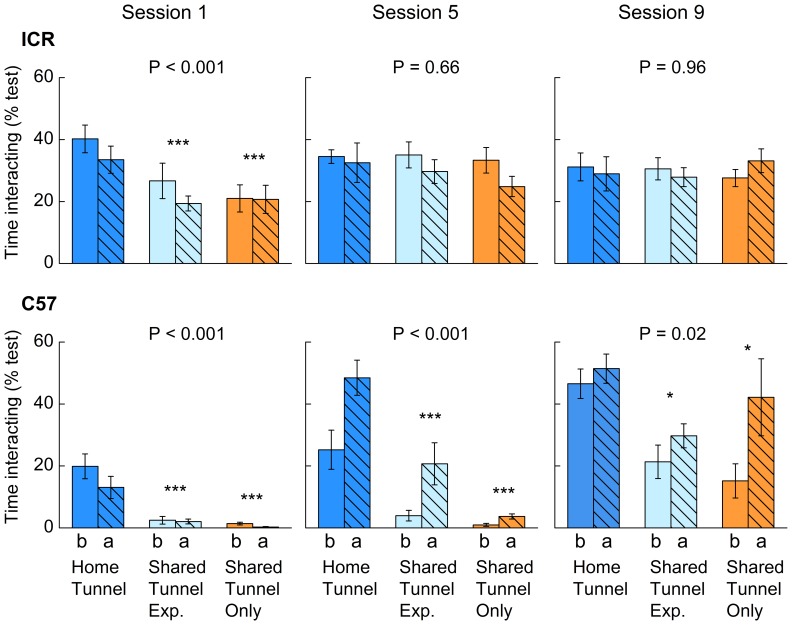
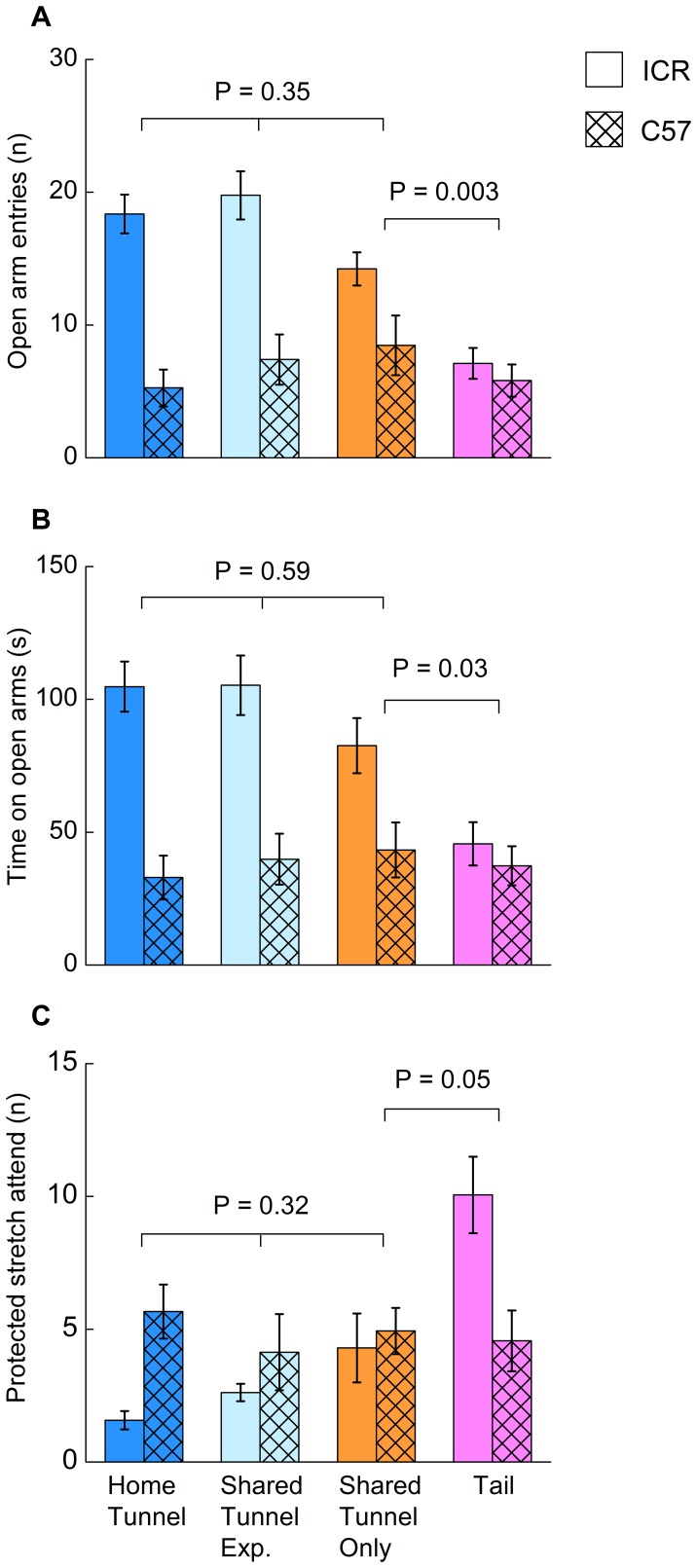
Handling stress is a well-recognised source of variation in animal studies that can also compromise the welfare of research animals. To reduce background variation and maximise welfare, methods that minimise handling stress should be developed and used wherever possible. Recent evidence has shown that handling mice by a familiar tunnel that is present in their home cage can minimise anxiety compared with standard tail handling. As yet, it is unclear whether a tunnel is required in each home cage to improve response to handling. We investigated the influence of prior experience with home tunnels among two common strains of laboratory mice: ICR(CD-1) and C57BL/6. We compared willingness to approach the handler and anxiety in an elevated plus maze test among mice picked up by the tail, by a home cage tunnel or by an external tunnel shared between cages. Willingness to interact with the handler was much greater for mice handled by a tunnel, even when this was unfamiliar, compared to mice picked up by the tail. Once habituated to handling, C57BL/6 mice were most interactive towards a familiar home tunnel, whereas the ICR strain showed strong interaction with all tunnel handling regardless of any experience of a home cage tunnel. Mice handled by a home cage or external tunnel showed less anxiety in an elevated plus maze than those picked up by the tail. This study shows that using a tunnel for routine handling reduces anxiety among mice compared to tail handling regardless of prior familiarity with tunnels. However, as home cage tunnels can further improve response to handling in some mice, we recommend that mice are handled with a tunnel provided in their home cage where possible as a simple practical method to minimise handling stress.
Conflict of interest statement
Figures
References
-
- Meaney MJ, Diorio J, Francis D, Widdowson J, LaPlante P, et al. (1996) Early environmental regulation of forebrain glucocorticoid receptor gene expression: Implications for adrenocortical responses to stress. Dev Neurosci 18: 49–72. - PubMed
-
- Núñez JF, Ferré P, Escorihuela RM, Tobeña A, Fernández-Teruel A (1996) Effects of Postnatal Handling of Rats on Emotional, HPA-Axis, and Prolactin Reactivity to Novelty and Conflict. Physiol Behav 60: 1355–1359. - PubMed
-
- Balbcombe JP, Barnard ND, Sandusky C (2004) Laboratory routines cause animal stress. Contemp Top Lab Anim Sci 43: 42–51. - PubMed
-
- Meijer MK, Sommer R, Spruijt BM, van Zutphen LF, Baumans V (2007) Influence of environmental enrichment and handling on the acute stress response in individually housed mice. Lab Anim 41: 161–173. - PubMed
-
- Festing MWF, Baumans V, Combes RD, Halder M, Hendriksen CFM, et al. (1998) Reducing the Use of Laboratory Animals in Biomedical Research: Problems and Possible Solutions. Altern Lab Anim 26: 283–301. - PubMed
Publication types
MeSH terms
Grants and funding
LinkOut - more resources
Full Text Sources
Other Literature Sources
Medical
Research Materials
