


Rapid Syphilis Tests as Catalysts for Health Systems Strengthening: A Case Study from Peru
- PMID: 23840552
- PMCID: PMC3694115
- DOI: 10.1371/journal.pone.0066905
Rapid Syphilis Tests as Catalysts for Health Systems Strengthening: A Case Study from Peru
Abstract
Objectives: Untreated maternal syphilis leads to adverse pregnancy outcomes. The use of point of care tests (POCT) offers an opportunity to improve screening coverage for syphilis and other aspects of health systems. Our objective is to present the experience of the introduction of POCT for syphilis in Peru and describe how new technology can catalyze health system strengthening.
Methods: The study was implemented from September 2009-November 2010 to assess the feasibility of the use of a POCT for syphilis for screening pregnant women in Lima, Peru. Outcomes measured included access to syphilis screening, treatment coverage, partner treatment, effect on patient flow and service efficiency, acceptability among providers and patients, and sustainability.
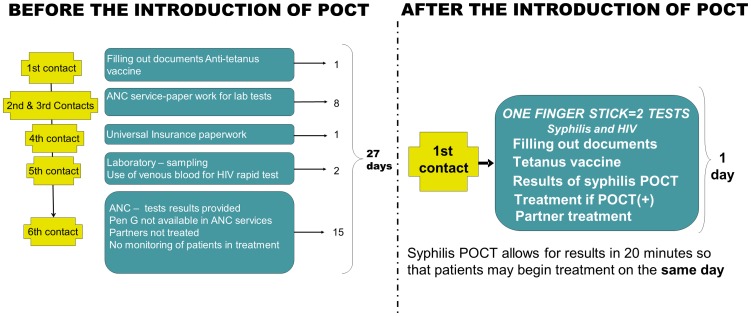
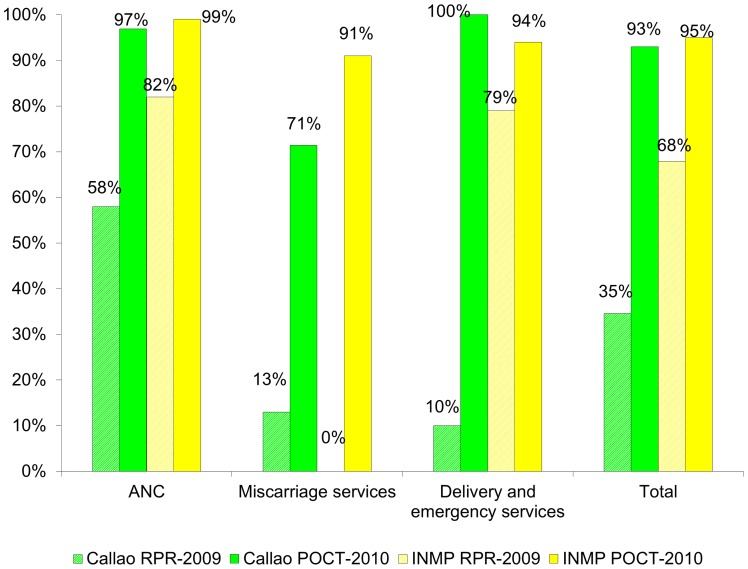
Results: Before the introduction of POCT, a pregnant woman needed 6 visits to the health center in 27 days before she received her syphilis result. We trained 604 health providers and implemented the POCT for syphilis as the "two for one strategy", offering with one finger stick both syphilis and HIV testing. Implementation of the POCT resulted in testing and treatment on the first visit. Screening and treatment coverages for syphilis improved significantly compared with the previous year. Implementation of POCT has been scaled up nationally since the study ended, and coverages for screening, treatment and partner treatment have remained over 92%.
Conclusions: Implementation of POCT for syphilis proved feasible and acceptable, and led to improvement in several aspects of health services. For the process to be effective we highlight the importance of: (1) engaging the authorities; (2) dissipating tensions between providers and identifying champions; (3) training according to the needs; (4) providing monitoring, supervision, support and recognition; (5) sharing results and discussing actions together; (6) consulting and obtaining feedback from users; and (7) integrating with other services such as with rapid HIV testing.
Conflict of interest statement
Figures
References
-
- Hawkes S, Matin N, Broutet N, Low N (2011) Effectiveness of interventions to improve screening for syphilis in pregnancy: a systematic review and meta-analysis. Lancet Infect Dis 11: 684–691. - PubMed
-
- Watson-Jones D, Gumodoka B, Weiss H, Changalucha J, Todd J, et al. (2002) Syphilis in pregnancy in Tanzania. II. The effectiveness of antenatal syphilis screening and single-dose benzathine penicillin treatment for the prevention of adverse pregnancy outcome. J Infect Dis. 186: 948–957. - PubMed
Publication types
MeSH terms
Substances
LinkOut - more resources
Full Text Sources
Other Literature Sources
Medical
