


In silico platform for prediction of N-, O- and C-glycosites in eukaryotic protein sequences
- PMID: 23840574
- PMCID: PMC3695939
- DOI: 10.1371/journal.pone.0067008
In silico platform for prediction of N-, O- and C-glycosites in eukaryotic protein sequences
Abstract
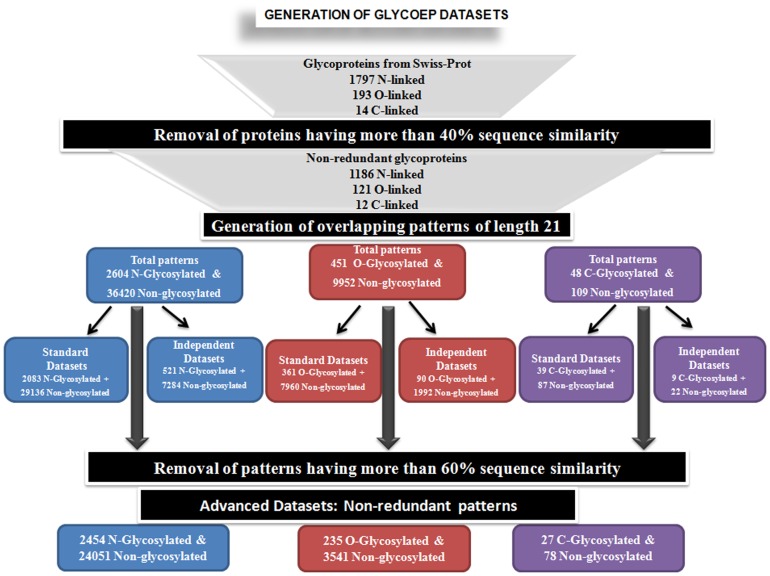
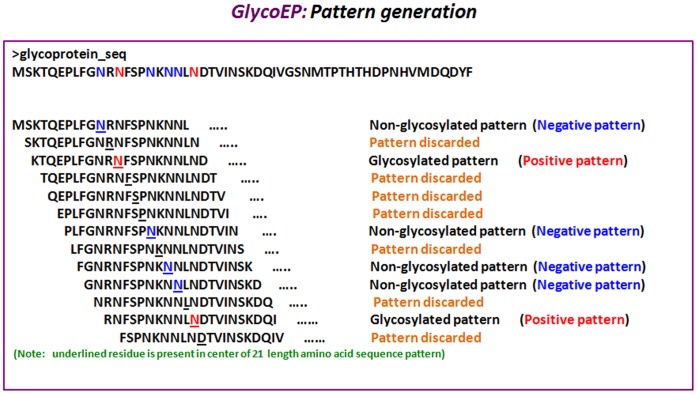
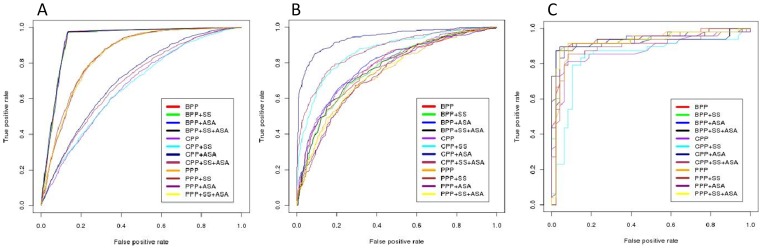
Glycosylation is one of the most abundant and an important post-translational modification of proteins. Glycosylated proteins (glycoproteins) are involved in various cellular biological functions like protein folding, cell-cell interactions, cell recognition and host-pathogen interactions. A large number of eukaryotic glycoproteins also have therapeutic and potential technology applications. Therefore, characterization and analysis of glycosites (glycosylated residues) in these proteins is of great interest to biologists. In order to cater these needs a number of in silico tools have been developed over the years, however, a need to get even better prediction tools remains. Therefore, in this study we have developed a new webserver GlycoEP for more accurate prediction of N-linked, O-linked and C-linked glycosites in eukaryotic glycoproteins using two larger datasets, namely, standard and advanced datasets. In case of standard datasets no two glycosylated proteins are more similar than 40%; advanced datasets are highly non-redundant where no two glycosites' patterns (as defined in methods) have more than 60% similarity. Further, based on our results with several algorihtms developed using different machine-learning techniques, we found Support Vector Machine (SVM) as optimum tool to develop glycosite prediction models. Accordingly, using our more stringent and non-redundant advanced datasets, the SVM based models developed in this study achieved a prediction accuracy of 84.26%, 86.87% and 91.43% with corresponding MCC of 0.54, 0.20 and 0.78, for N-, O- and C-linked glycosites, respectively. The best performing models trained on advanced datasets were then implemented as a user-friendly web server GlycoEP (http://www.imtech.res.in/raghava/glycoep/). Additionally, this server provides prediction models developed on standard datasets and allows users to scan sequons in input protein sequences.
Conflict of interest statement
Figures
References
-
- Hart GW (1992) Glycosylation. Curr Opin Cell Biol 4: 1017–1023. - PubMed
-
- Haltiwanger R, Lowe J (2004) Role of Glycosylation in Development. Annual Review of Biochemistry 73: 491–537. - PubMed
-
- Miyamoto S (2006) Clinical applications of glycomic approaches for the detection of cancer and other diseases. Curr Opin Mol Ther 8: 507–513. - PubMed
-
- Helenius A, Aebi M (2004) Roles of N-linked glycans in the endoplasmic reticulum. Annu Rev Biochem 73: 1019–1049. - PubMed
-
- Helenius A, Aebi M (2001) Intracellular Functions of N-linked glycans. Science 291: 2364–2369. - PubMed
Publication types
MeSH terms
Substances
LinkOut - more resources
Full Text Sources
Other Literature Sources
Molecular Biology Databases
