


Why are sensory axons more vulnerable for ischemia than motor axons?
- PMID: 23840596
- PMCID: PMC3688630
- DOI: 10.1371/journal.pone.0067113
Why are sensory axons more vulnerable for ischemia than motor axons?
Abstract
Objective: In common peripheral neuropathies, sensory symptoms usually prevail over motor symptoms. This predominance of sensory symptoms may result from higher sensitivity of sensory axons to ischemia.
Methods: We measured median nerve compound sensory action potentials (CSAPs), compound muscle action potentials (CMAPs), and excitability indices in five healthy subjects during forearm ischemia lasting up to disappearance of both CSAPs and CMAPs.
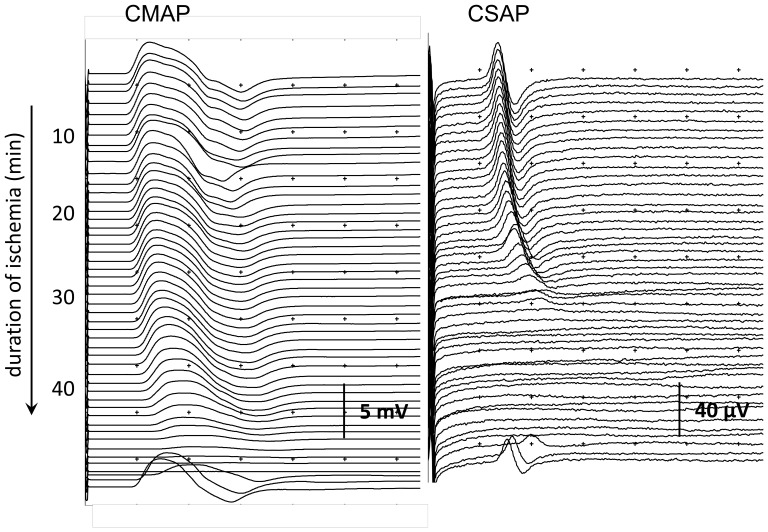
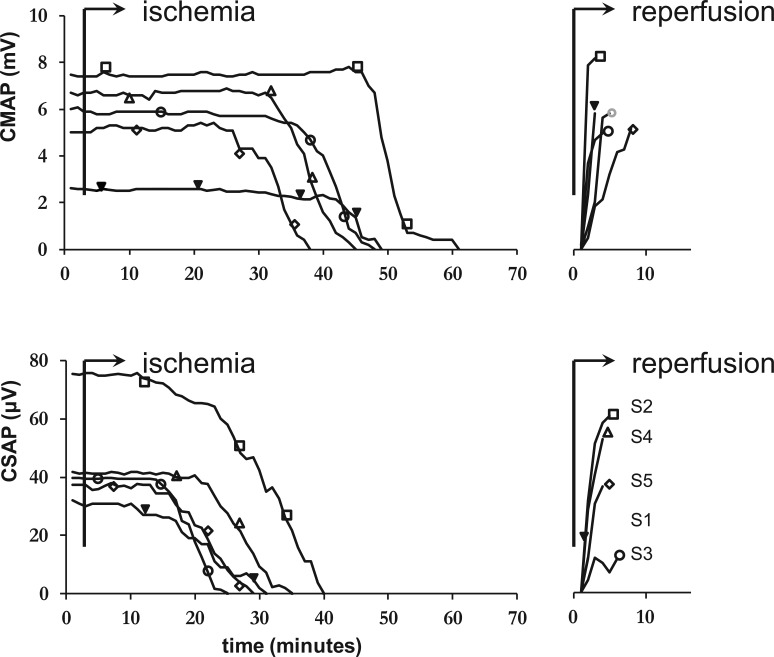
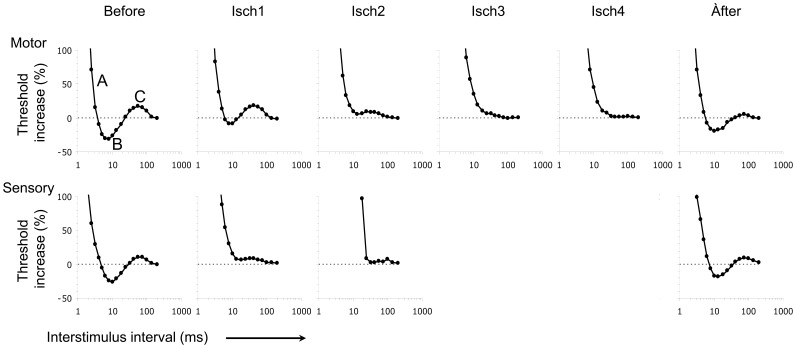
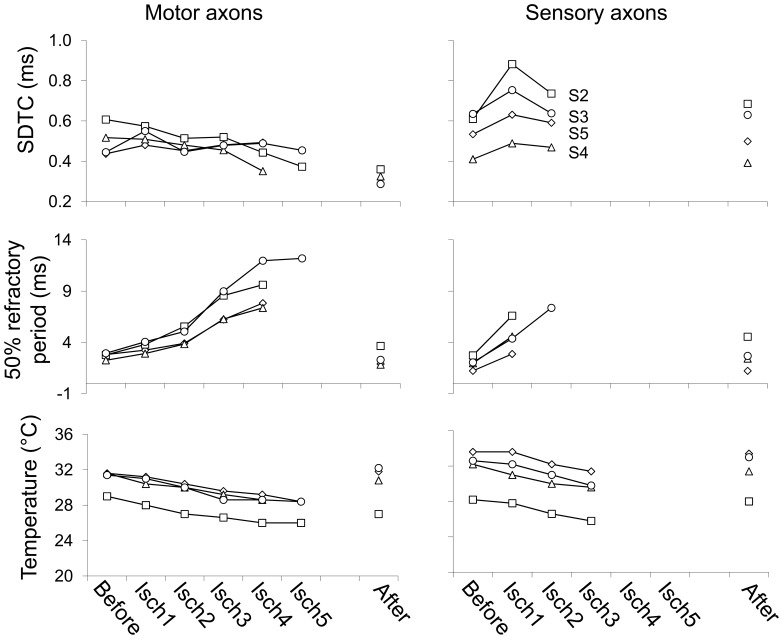
Results: ISCHEMIA INDUCED: (1) earlier disappearance of CSAPs than CMAPs (mean ± standard deviation 30±5 vs. 46±6 minutes), (2) initial changes compatible with axonal depolarization on excitability testing (decrease in threshold, increase in strength duration time constant (SDTC) and refractory period, and decrease in absolute superexcitability) which were all more prominent in sensory than in motor axons, and (3) a subsequent decrease of SDTC reflecting a decrease in persistent Na(+) conductance during continuing depolarisation.
Interpretation: Our study shows that peripheral sensory axons are more vulnerable for ischemia than motor axons, with faster inexcitability during ischemia. Excitability studies during ischemia showed that this was associated with faster depolarization and faster persistent Na(+) channel inactivation in sensory than in motor axons. These findings might be attributed to differences in ion channel composition between sensory and motor axons and may contribute to the predominance of sensory over motor symptoms in common peripheral neuropathies.
Conflict of interest statement
Figures
References
-
- Ross MA (1993) Neuropathies associated with diabetes. Med Clin North Am 77: 111–124. - PubMed
-
- Krishnan AV, Kiernan MC (2005) Altered nerve excitability properties in established diabetic neuropathy. Brain 128: 1178–1187. - PubMed
-
- Schneider U, Jund R, Nees S, Grafe P (1992) Differences in sensitivity to hyperglycemic hypoxia of isolated rat sensory and motor nerve fibers. Ann Neurol 31: 605–610. - PubMed
MeSH terms
LinkOut - more resources
Full Text Sources
Other Literature Sources
