


Low omega-3 index in pregnancy is a possible biological risk factor for postpartum depression
- PMID: 23844041
- PMCID: PMC3701051
- DOI: 10.1371/journal.pone.0067617
Low omega-3 index in pregnancy is a possible biological risk factor for postpartum depression
Abstract
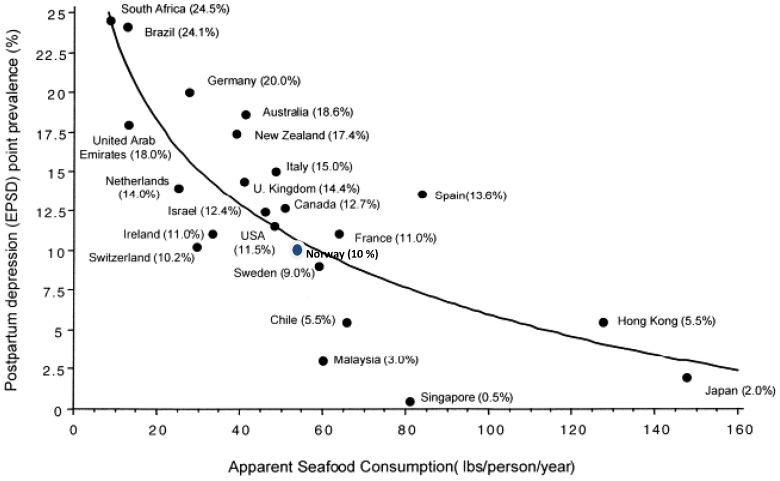
Background: Depression is a common disorder affecting 10-15% women in the postpartum period. Postpartum depression can disrupt early mother-infant interaction, and constitutes a risk factor for early child development. Recently, attention has been drawn to the hypothesis that a low intake of seafood in pregnancy can be a risk factor for postpartum depression. Seafood is a unique dietary source of the marine omega-3 fatty acids and is a natural part of a healthy balanced diet that is especially important during pregnancy.
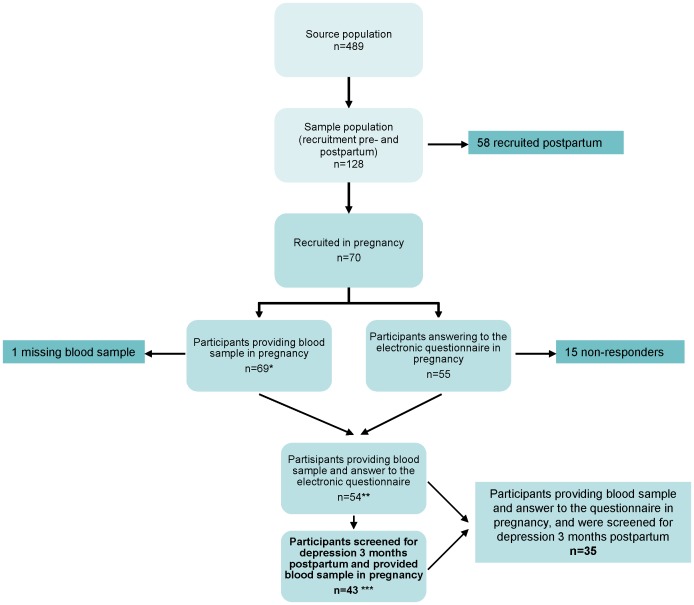
Methods: In a community based prospective cohort in a municipality in Western Norway, we investigated both nutritional and psychological risk factors for postpartum depression. The source population was all women who were pregnant within the period November 2009 - June 2011. The fatty acid status in red blood cells was assessed in the 28(th) gestation week and participants were screened for postpartum depression using the Edinburgh Postnatal Depression Scale (EPDS) three months after delivery. The aim of the present study was to investigate if a low omega-3 index in pregnancy is a possible risk factor for postpartum depression.
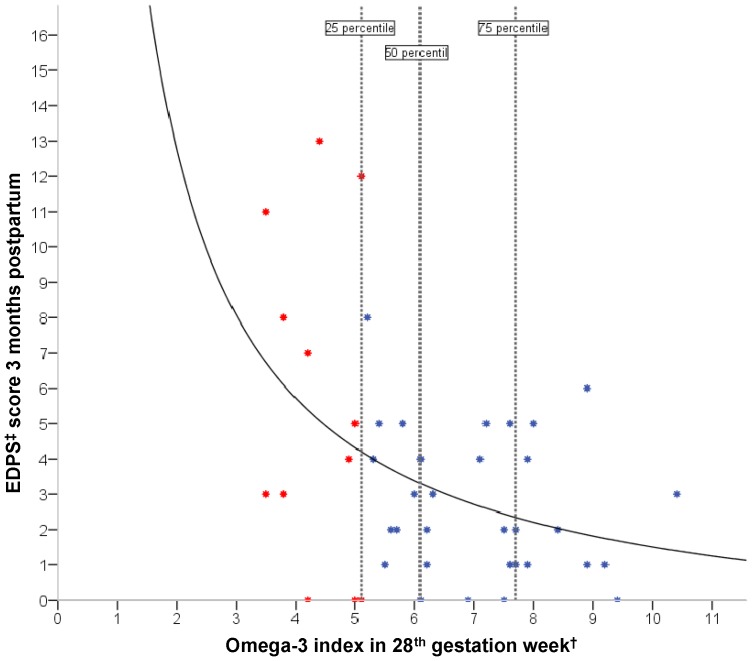
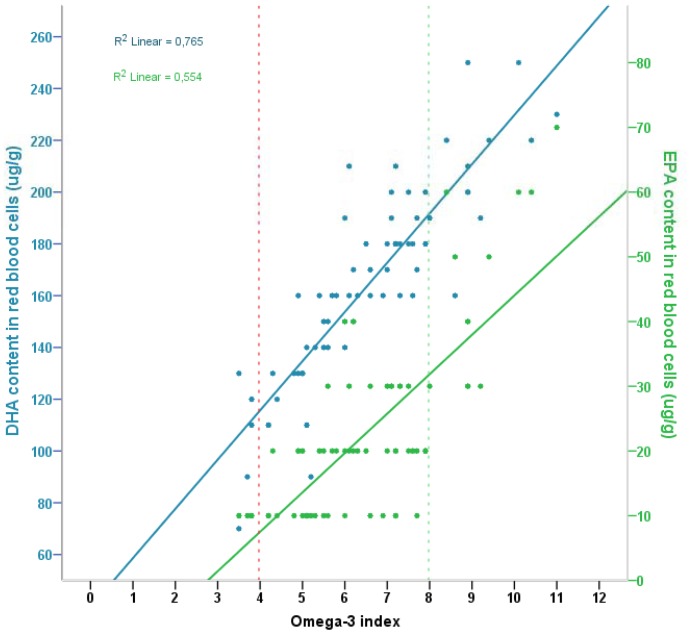
Results: In a simple regression model, the omega-3 index was associated with the EPDS score in a nonlinear inverse manner with an R square of 19. Thus, the low omega-3 index explained 19% of the variance in the EPDS score. The DPA content, DHA content, omega-3 index, omega-3/omega-6 ratio, total HUFA score, and the omega-3 HUFA score were all inversely correlated with the EPDS score. The EPDS scores of participants in the lowest omega-3 index quartile were significantly different to the three other omega-3 index quartiles.
Conclusion: In this study population, a low omega-3 index in late pregnancy was associated with higher depression score three months postpartum.
Conflict of interest statement
Figures
References
-
- WHO (2012) Maternal Mental Health & Child Health and Developmant. World Health Organization.
-
- Whiffen VE (1992) Is Postpartum Depression a Distinct Diagnosis. Clinical psychology review 12: 485–508.
-
- Berle J, Aarre T, Mykletun A, Dahl A, Holsten F (2003) Screening for postnatal depression. Validation of the Norwegian version of the Edinburgh Postnatal Depression Scale, and assessment of risk factors for postnatal depression. J Affect Disord 76: 151–156. - PubMed
-
- O’Hara MW, Swain AM (1996) Rates and risk of postpartum depression - A meta-analysis. International Review of Psychiatry 8: 37–54.
-
- Trevarthen C (1979) Communication and cooperation in early infancy: A description of primary intersubjectivity. In: Bullowa M, editor. Before speech The beginning of interpersonal communication. New York. 321–348.
MeSH terms
Substances
LinkOut - more resources
Full Text Sources
Other Literature Sources
Medical
