. 2013 Jul 2;8(7):e67902.
doi: 10.1371/journal.pone.0067902. Print 2013.

Improved blue, green, and red fluorescent protein tagging vectors for S. cerevisiae

Affiliations

Improved blue, green, and red fluorescent protein tagging vectors for S. cerevisiae

Sidae Lee et al. PLoS One. .

Abstract

Fluorescent protein fusions are a powerful tool to monitor the localization and trafficking of proteins. Such studies are particularly easy to carry out in the budding yeast Saccharomyces cerevisiae due to the ease with which tags can be introduced into the genome by homologous recombination. However, the available yeast tagging plasmids have not kept pace with the development of new and improved fluorescent proteins. Here, we have constructed yeast optimized versions of 19 different fluorescent proteins and tested them for use as fusion tags in yeast. These include two blue, seven green, and seven red fluorescent proteins, which we have assessed for brightness, photostability and perturbation of tagged proteins. We find that EGFP remains the best performing green fluorescent protein, that TagRFP-T and mRuby2 outperform mCherry as red fluorescent proteins, and that mTagBFP2 can be used as a blue fluorescent protein tag. Together, the new tagging vectors we have constructed provide improved blue and red fluorescent proteins for yeast tagging and three color imaging.


Conflict of interest statement

Competing Interests: The authors have declared that no competing interests exist.

Figures

Figure 1
Figure 1. Schematic design of tagging plasmids.
The overall design of these plasmids is identical to the pFA6a-link tagging plasmids previously published . yoFP is one of the 24 yeast optimized proteins cloned here and S.M. is the yeast selectable marker, either SpHis5, CaUra3, or KanR. These tagging sequences can be amplified with the forward primer (gene-specific sequence)-GGTGACGGTGCTGGTTTA and reverse primer (gene-specific sequence)-TCGATGAATTCGAGCTCG. A complete list of plasmids constructed in this study is in Table S2.
Figure 2
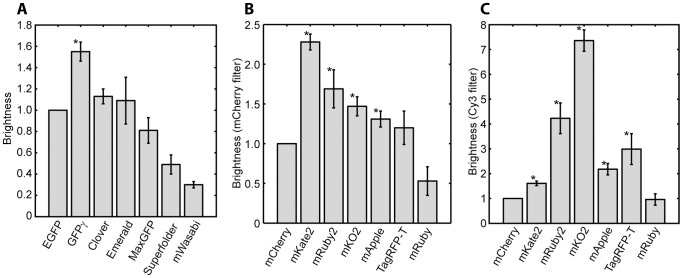
Figure 2. Brightness of green and red fluorescent proteins.
Yeast expressing fusions of each of the optimized fluorescent proteins to the TDH3 protein were imaged, and the mean fluorescence of each strain was calculated. Data from each day was normalized to EGFP (for green proteins) or mCherry (red proteins) to compensate for day-to-day fluctuations in lamp brightness and detection efficiency. The measurement was repeated on at least three days and the mean and standard error for each strain is plotted. * indicates a protein significantly brighter than EGFP or mCherry as determined by a one-sided t-test with 5% significance threshold. A. Green fluorescent proteins. B. Red fluorescent proteins imaged with an mCherry filter set. C. Red fluorescent proteins imaged with a Cy3 filter set.
Figure 3
Figure 3. Photostability of red and green fluorescent proteins.
Yeast expressing fusions of each of the optimized fluorescent proteins to the TDH3 protein were imaged continuously until their intensity dropped below 50% of the initial intensity. The intensity of each cell integrated over the time until 50% bleaching occurred was then calculated, and the mean integrated intensity for each strain on each day was normalized to EGFP (for green proteins) or mCherry (red proteins) to compensate for day-to-day fluctuations in lamp brightness and detection efficiency. The measurement was repeated on at least two days and the mean and standard error for each strain is plotted. * indicates a protein with significantly larger integrated intensity than mCherry as determined by a one-sided t-test with 5% significance threshold.
Figure 4
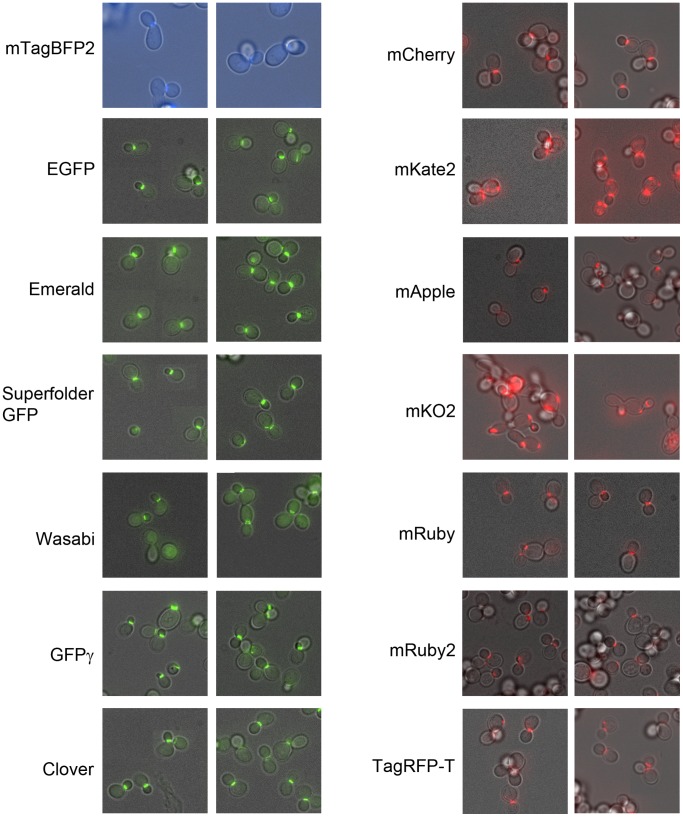
Figure 4. Perturbation of protein function.
Yeast expressing fusions of each of the indicated proteins to the C-terminus of Cdc12 were imaged to assess whether they perturb its function. Perturbation of Cdc12 function manifests as misshapen yeast cells and/or mislocalized Cdc12. The green fluorescent proteins show minimal perturbation; mKate2 and mKO2 show major perturbation; mTagBFP2 is intermediate. Brightness has been normalized separately for each image so it is not comparable from image to image.
Figure 5
Figure 5. Recommended fluorescent protein combinations for yeast imaging.
Recommended fluorescent protein combinations for imaging in yeast are broken down by filter set (horizontal axis) and experimental requirement (vertical axis). All proteins mentioned here are available in yeast tagging vectors either from this paper or from , and most are available from Addgene. Recommended proteins are listed first, with alternatives given in parentheses. It is likely that iFP1.4 or iRFP can be used to image in the far-red (Cy5) channel, but this has not been tested in yeast. mWasabi is dimmer that EGFP or GFPγ, but is not excited at 405 nm, allowing it to be multiplexed with T-Sapphire .

References

    1. Petracek ME, Longtine MS (2002) PCR-based engineering of yeast genome. Meth Enzymol 350: 445–469. - PubMed
    1. Slaughter BD, Schwartz JW, Li R (2007) Mapping dynamic protein interactions in MAP kinase signaling using live-cell fluorescence fluctuation spectroscopy and imaging. Proc Natl Acad Sci USA 104: 20320–20325 doi:10.1073/pnas.0710336105 - DOI - PMC - PubMed
    1. Hailey DW, Davis TN, Muller EGD (2002) Fluorescence resonance energy transfer using color variants of green fluorescent protein. Meth Enzymol 351: 34–49. - PubMed
    1. Wach A, Brachat A, Alberti-Segui C, Rebischung C, Philippsen P (1997) AID-YEA159>3.0.CO;2-K. - PubMed
    1. Reid RJD, Lisby M, Rothstein R (2002) Cloning-free genome alterations in Saccharomyces cerevisiae using adaptamer-mediated PCR. Meth Enzymol 350: 258–277. - PubMed

Publication types

MeSH terms

Substances