


Evaluation of the acceptability and usefulness of an information website for caregivers of people with bipolar disorder
- PMID: 23844755
- PMCID: PMC3717000
- DOI: 10.1186/1741-7015-11-162
Evaluation of the acceptability and usefulness of an information website for caregivers of people with bipolar disorder
Abstract
Background: Bipolar disorder is associated with extreme mood symptoms, disability and suicide risk. Close family or friends often have a primary role in supporting an adult with bipolar disorder. However, not all support is helpful and there is little publicly accessible evidence-based information to guide caregivers. Caregiver burden increases the risk of caregiver depression and health problems. To help fill the information gap, expert clinicians, caregivers and consumers contributed to the development of guidelines for caregivers of adults with bipolar disorder using the Delphi consensus method. This paper reports on an evaluation of the acceptability and usefulness of the online version of the guidelines, http://www.bipolarcaregivers.org.
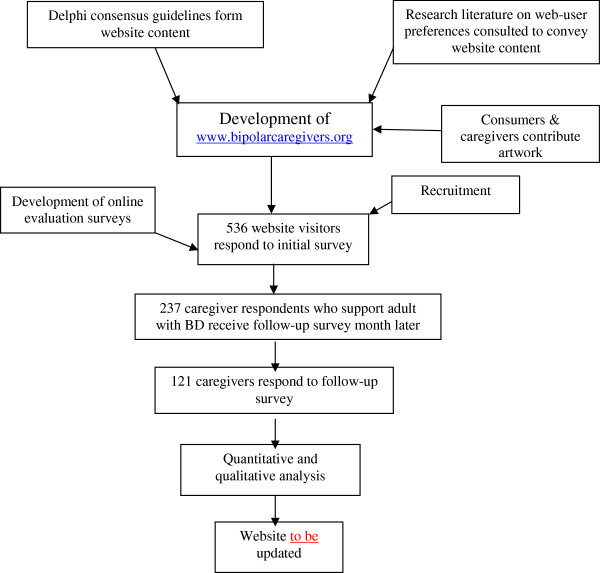
Methods: Visitors to the website responded to an initial online survey about the usefulness of the information (N=536). A more detailed follow-up feedback survey was emailed to web users who were adult caregivers of adults with bipolar disorder a month later (N=121). The feedback was analyzed quantitatively and qualitatively to establish user appraisals of the online information, whether and how caregivers applied the information and ways it could be improved.
Results: The majority of users (86.4% to 97.4%) found the various sections of the website useful. At follow-up, nearly 93% of caregivers reported that the information was relevant to them and 96% thought it would help others. Most respondents said that the information was supportive and encouraged adaptive control appraisals. However, a few respondents who were experiencing complex family problems, or who cared for a person with severe chronic bipolar disorder did not appraise it as positively. Nevertheless, over two-thirds of the caregivers reported using the information. Optional interactive features were recommended to maximize benefits.
Conclusions: Overall, http://www.bipolarcaregivers.org was appraised positively and used. It appears useful to close family and friends seeking basic information and reassurance, and may be an inexpensive way to disseminate guidelines for caregivers. Those who care for people with more severe and chronic bipolar disorder, or who have complex family problems might benefit from more specialized interventions, suggesting the importance of a stepped-care approach to supporting caregivers. The potential of evidence-based, collaboratively developed information websites to enhance caregiver and consumer outcomes merits further investigation.
Figures
References
-
- Judd LL, Schettler PJ. In: Bipolar Disorder: Clinical and Neurobiological Foundations. Yatham L, Maj M, editor. Chichester, UK: John Wiley and Sons Ltd; 2010. The long-term course and clinical management of bipolar I and bipolar II disorder; pp. 17–30.
-
- Kupka RW, Altshuler LL, Nolen WA, Suppes T, Luckenbaugh DA, Leverich GS, Frye MA, Keck PE Jr, McElroy SL, Grunze H, Post RM. Three times more days depressed than manic or hypomanic in both bipolar I and bipolar II disorder. Bipolar Disord. 2007;9:531–535. doi: 10.1111/j.1399-5618.2007.00467.x. - DOI - PubMed
Publication types
MeSH terms
LinkOut - more resources
Full Text Sources
Other Literature Sources
Medical
Miscellaneous
