


Predictors of postoperative complications after trimodality therapy for esophageal cancer
- PMID: 23845841
- PMCID: PMC3786201
- DOI: 10.1016/j.ijrobp.2013.04.006
Predictors of postoperative complications after trimodality therapy for esophageal cancer
Abstract
Purpose: While trimodality therapy for esophageal cancer has improved patient outcomes, surgical complication rates remain high. The goal of this study was to identify modifiable factors associated with postoperative complications after neoadjuvant chemoradiation.
Methods and materials: From 1998 to 2011, 444 patients were treated at our institution with surgical resection after chemoradiation. Postoperative (pulmonary, gastrointestinal [GI], cardiac, wound healing) complications were recorded up to 30 days postoperatively. Kruskal-Wallis tests and χ(2) or Fisher exact tests were used to assess associations between continuous and categorical variables. Multivariate logistic regression tested the association between perioperative complications and patient or treatment factors that were significant on univariate analysis.
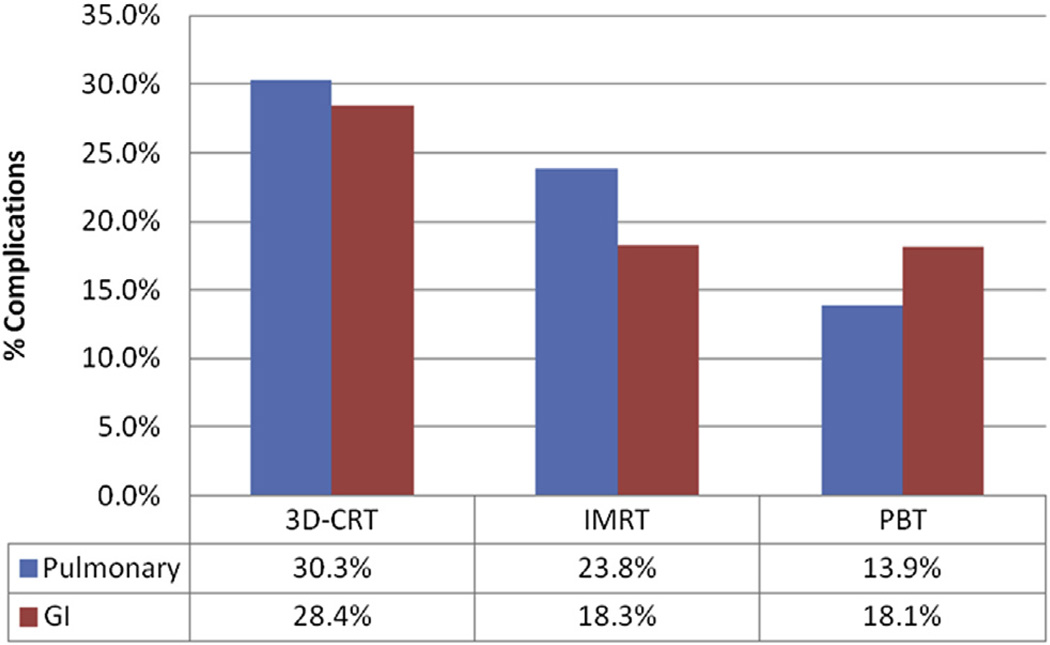
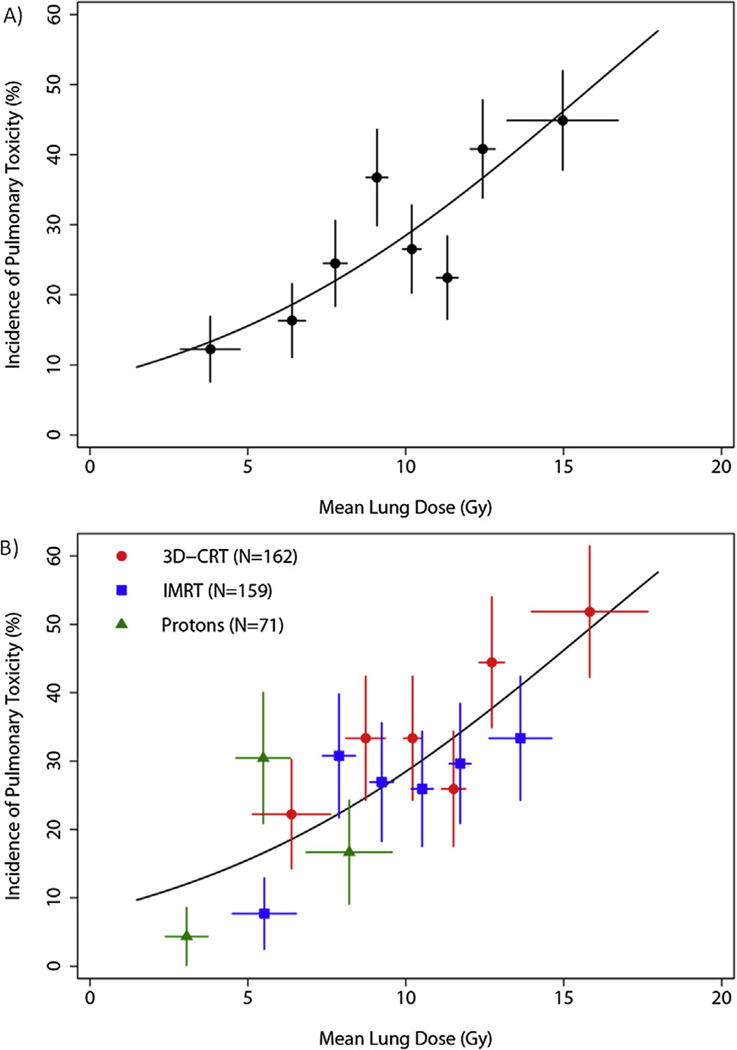
Results: The most frequent postoperative complications after trimodality therapy were pulmonary (25%) and GI (23%). Lung capacity and the type of radiation modality used were independent predictors of pulmonary and GI complications. After adjusting for confounding factors, pulmonary and GI complications were increased in patients treated with 3-dimensional conformal radiation therapy (3D-CRT) versus intensity modulated radiation therapy (IMRT; odds ratio [OR], 2.018; 95% confidence interval [CI], 1.104-3.688; OR, 1.704; 95% CI, 1.03-2.82, respectively) and for patients treated with 3D-CRT versus proton beam therapy (PBT; OR, 3.154; 95% CI, 1.365-7.289; OR, 1.55; 95% CI, 0.78-3.08, respectively). Mean lung radiation dose (MLD) was strongly associated with pulmonary complications, and the differences in toxicities seen for the radiation modalities could be fully accounted for by the MLD delivered by each of the modalities.
Conclusions: The radiation modality used can be a strong mitigating factor of postoperative complications after neoadjuvant chemoradiation.
Copyright © 2013 Elsevier Inc. All rights reserved.
Conflict of interest statement
Conflict of interest: none.
Figures
References
-
- Feig B, Berger BH, Fuhrman GM. The MD Anderson Surgical Oncology Handbook. Philadelphia, PA: Lippincott Williams & Wilkins; 2006. pp. 367–390.
-
- Derogar M, Orsini N, Sadr-Azodi O, et al. Influence of major postoperative complications on health-related quality of life among long-term survivors of esophageal cancer surgery. J Clin Oncol. 2012;30:1615–1619. - PubMed
-
- Hirai T, Yamashita Y, Mukaida H, et al. Poor prognosis in esophageal cancer patients with postoperative complications. Surg Today. 1998;28:576–579. - PubMed
-
- Bosset JF, Gignoux M, Triboulet JP, et al. Chemoradiotherapy followed by surgery compared with surgery alone in squamous-cell cancer of the esophagus. N Engl J Med. 1997;337:161–167. - PubMed
Publication types
MeSH terms
Grants and funding
LinkOut - more resources
Full Text Sources
Other Literature Sources
Medical
Research Materials
