


Temporal relationship between insulin sensitivity and the pubertal decline in physical activity in peripubertal Hispanic and African American females
- PMID: 23846812
- PMCID: PMC3816891
- DOI: 10.2337/dc13-0083
Temporal relationship between insulin sensitivity and the pubertal decline in physical activity in peripubertal Hispanic and African American females
Abstract
Objective: Little attention has been paid to possible intrinsic biological mechanisms for the decline in physical activity that occurs during puberty. This longitudinal observational study examined the association between baseline insulin sensitivity (SI) and declines in physical activity and increases in sedentary behavior in peripubertal minority females over a year.
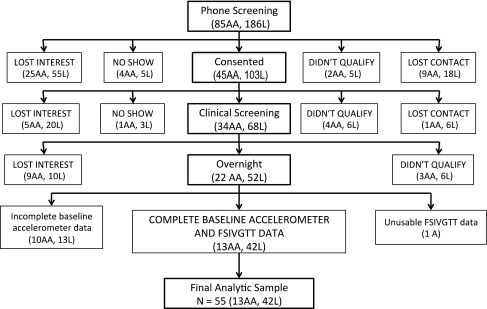
Research design and methods: Participants were Hispanic and African American girls (n = 55; 76% Hispanic; mean age 9.4 years; 36% obese). SI and other insulin indices were measured at baseline using the frequently sampled intravenous glucose tolerance test. Physical activity was measured on a quarterly basis by accelerometry and self-report.
Results: Physical activity declined by 25% and time spent in sedentary behaviors increased by ∼13% over 1 year. Lower baseline SI predicted the decline in physical activity measured by accelerometry, whereas higher baseline acute insulin response to glucose predicted the decline in physical activity measured by self-report. Time spent in sedentary behavior increased by ~13% over 1 year, and this was predicted by lower baseline SI. All models controlled for adiposity, age, pubertal stage, and ethnicity.
Conclusions: When evaluated using a longitudinal design with strong outcome measures, this study suggests that lower baseline SI predicts a greater decline in physical activity in peripubertal minority females.
Figures
References
-
- USDHHS Physical Activity and Health: A Report of the Surgeon General. Atlanta, GA, U.S. Department of Health and Human Services, Centers for Disease Control and Prevention, National Center for Chronic Disease Prevention and Health Promotion, 1996
-
- Nader PR, Bradley RH, Houts RM, McRitchie SL, O’Brien M. Moderate-to-vigorous physical activity from ages 9 to 15 years. JAMA 2008;300:295–305 - PubMed
-
- Nader PR, Bradley RH, Houts RM, McRitchie SL, O’Brien M: Moderate-to-vigorous physical activity from ages 9 to 15 years [published correction appears in JAMA 2009;301:2094–2095]. JAMA 2008;300:295–305 - PubMed
-
- Kimm SY, Glynn NW, Kriska AM, et al. Longitudinal changes in physical activity in a biracial cohort during adolescence. Med Sci Sports Exerc 2000;32:1445–1454 - PubMed
Publication types
MeSH terms
Grants and funding
LinkOut - more resources
Full Text Sources
Other Literature Sources
Medical
