


Preparation, characterization, and transport of dexamethasone-loaded polymeric nanoparticles across a human placental in vitro model
- PMID: 23850397
- PMCID: PMC3800161
- DOI: 10.1016/j.ijpharm.2013.07.010
Preparation, characterization, and transport of dexamethasone-loaded polymeric nanoparticles across a human placental in vitro model
Abstract
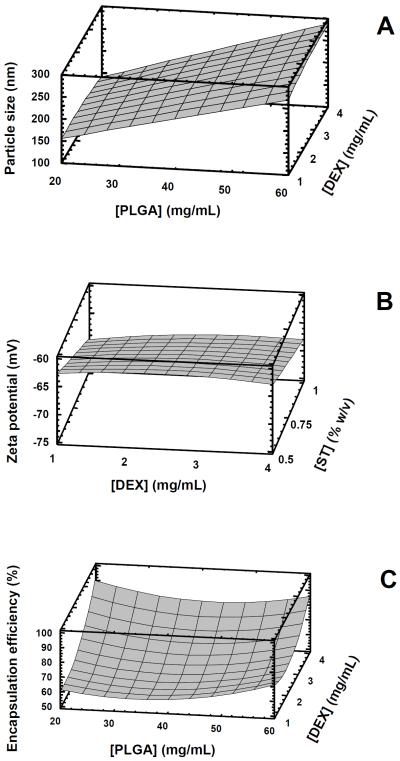
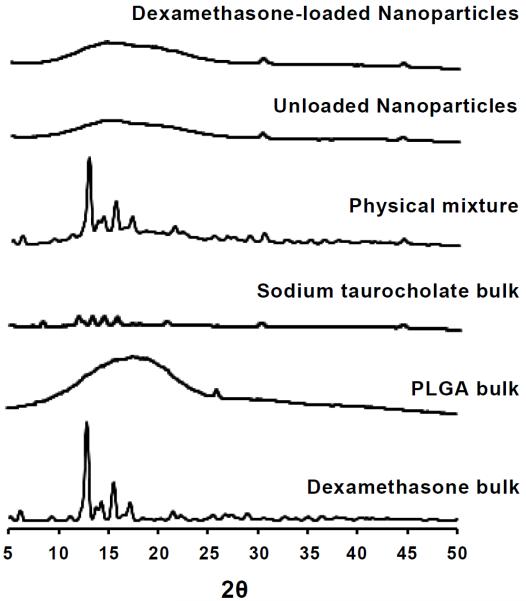
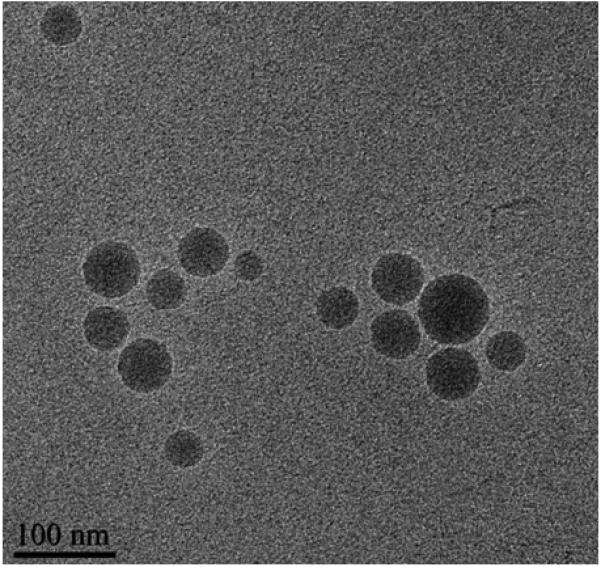
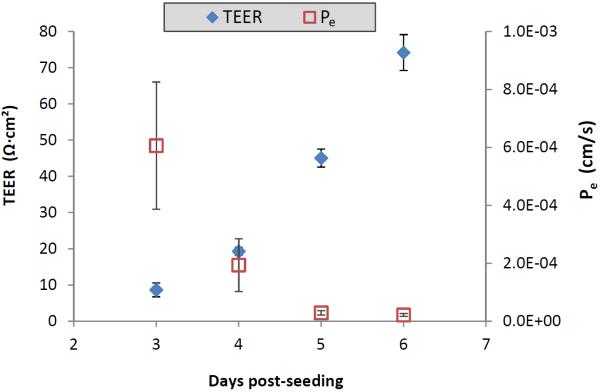
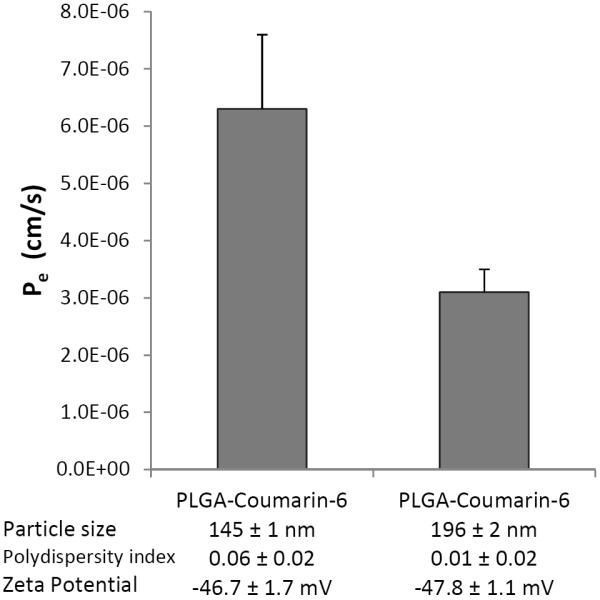
The purpose of this study was to prepare dexamethasone-loaded polymeric nanoparticles and evaluate their potential for transport across human placenta. Statistical modeling and factorial design was applied to investigate the influence of process parameters on the following nanoparticle characteristics: particle size, polydispersity index, zeta potential, and drug encapsulation efficiency. Dexamethasone and nanoparticle transport was subsequently investigated using the BeWo b30 cell line, an in vitro model of human placental trophoblast cells, which represent the rate-limiting barrier for maternal-fetal transfer. Encapsulation efficiency and drug transport were determined using a validated high performance liquid chromatography method. Nanoparticle morphology and drug encapsulation were further characterized by cryo-transmission electron microscopy and X-ray diffraction, respectively. Nanoparticles prepared from poly(lactic-co-glycolic acid) were spherical, with particle sizes ranging from 140 to 298 nm, and encapsulation efficiency ranging from 52 to 89%. Nanoencapsulation enhanced the apparent permeability of dexamethasone from the maternal compartment to the fetal compartment more than 10-fold in this model. Particle size was shown to be inversely correlated with drug and nanoparticle permeability, as confirmed with fluorescently labeled nanoparticles. These results highlight the feasibility of designing nanoparticles capable of delivering medication to the fetus, in particular, potential dexamethasone therapy for the prenatal treatment of congenital adrenal hyperplasia.
Keywords: BeWo cells; Congenital adrenal hyperplasia; Dexamethasone; Nanoparticles; Placenta; Pregnancy.
Copyright © 2013 Elsevier B.V. All rights reserved.
Figures
References
-
- Ali H, Shirode AB, Sylvester PW, Nazzal S. Preparation and in vitro antiproliferative effect of tocotrienol loaded lipid nanoparticles. Colloids and Surfaces A: Physicochem. Eng. Aspects. 2010;353:43–51.
-
- Ampasavate C, Chandorkar GA, Vande Velde DG, Stobaugh JF, Audus KL. Transport and metabolism of opioid peptides across BeWo cells, an in vitro model of the placental barrier. Int. J. Pharm. 2002;233:85–98. - PubMed
-
- Beck-Broichsitter M, Rytting E, Lebhardt T, Wang X, Kissel T. Preparation of nanoparticles by solvent displacement for drug delivery: a shift in the “ouzo region” upon drug loading. Eur. J. Pharm. Sci. 2010;41:244–253. - PubMed
Publication types
MeSH terms
Substances
Grants and funding
LinkOut - more resources
Full Text Sources
Other Literature Sources
