


Windows of vulnerability: maternal separation, age, and fluoxetine on adolescent depressive-like behavior in rats
- PMID: 23850503
- PMCID: PMC5267225
- DOI: 10.1016/j.neuroscience.2013.06.066
Windows of vulnerability: maternal separation, age, and fluoxetine on adolescent depressive-like behavior in rats
Abstract
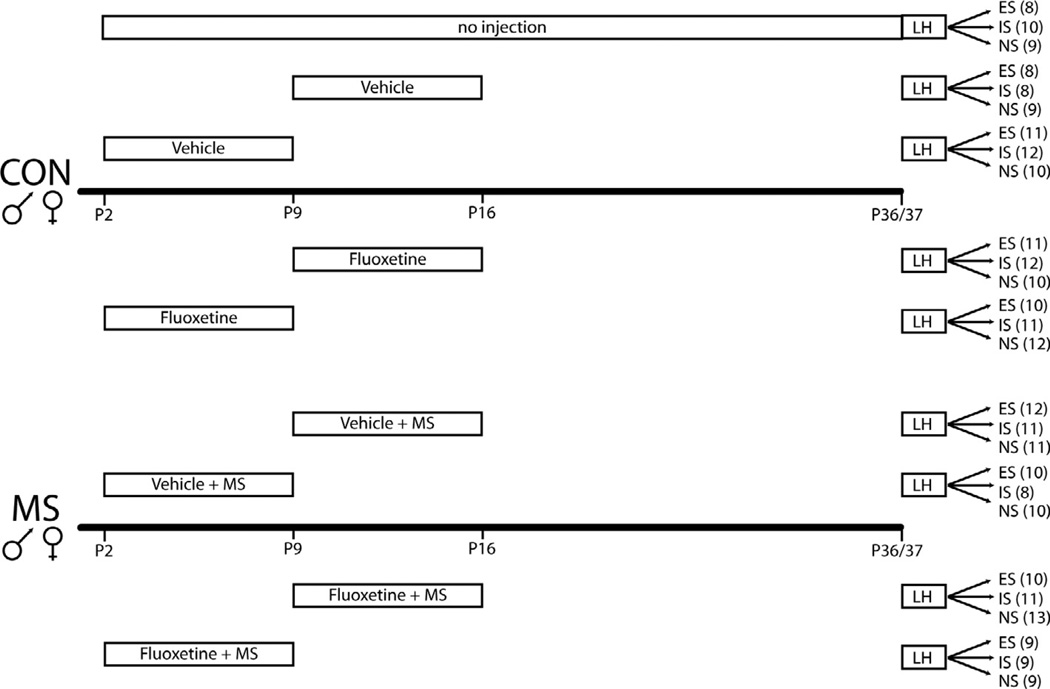
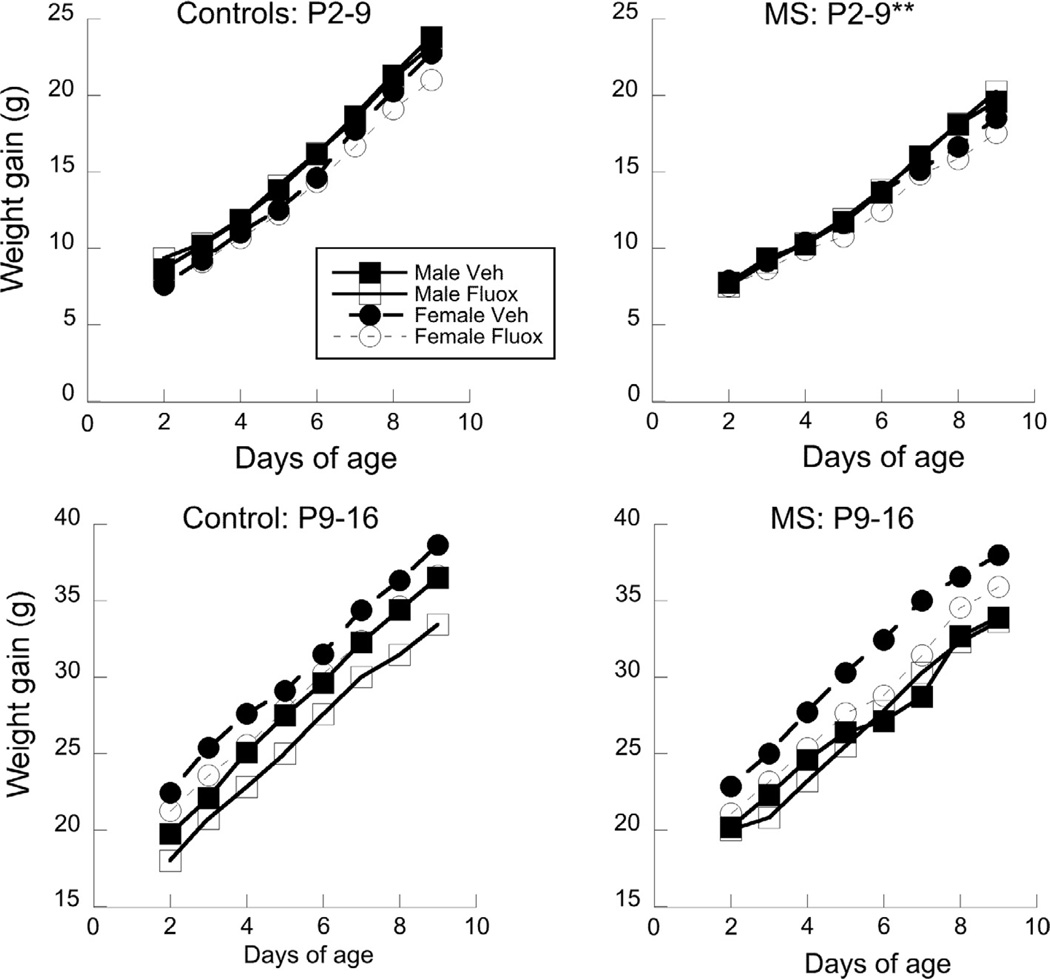
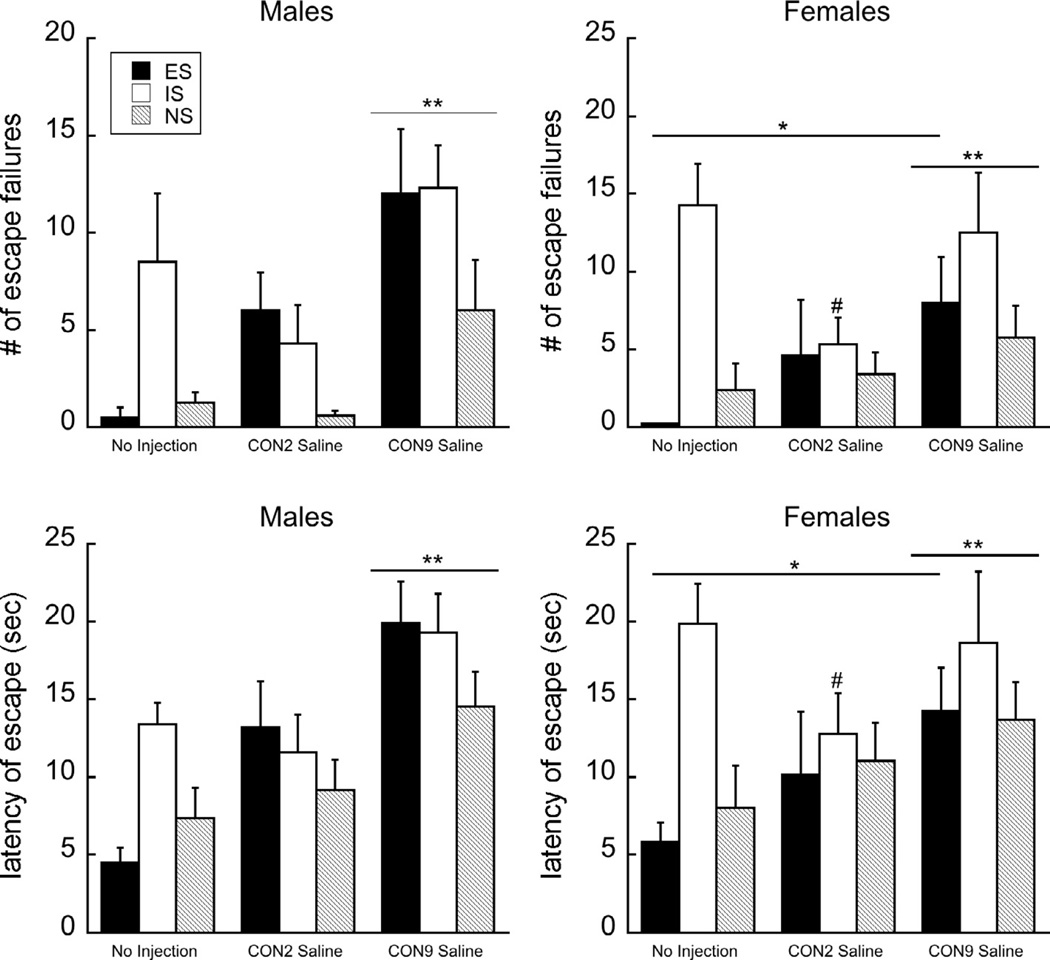
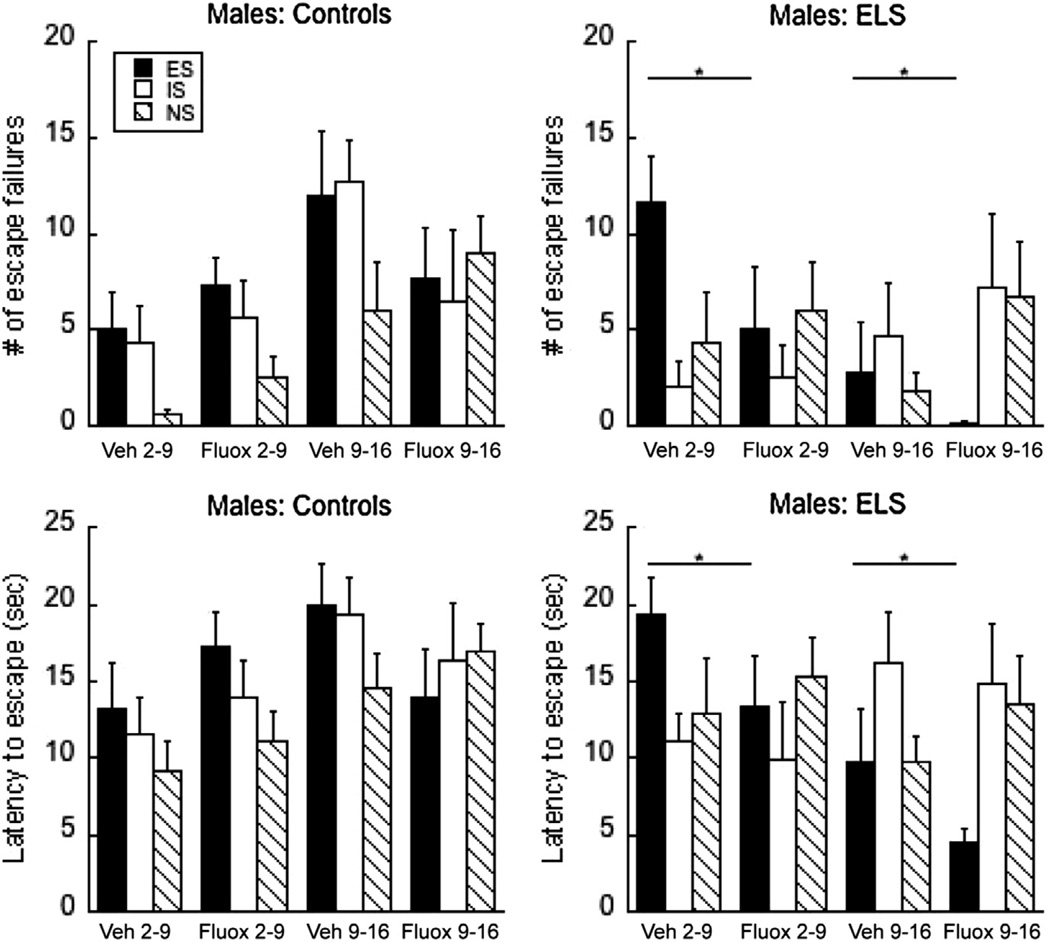
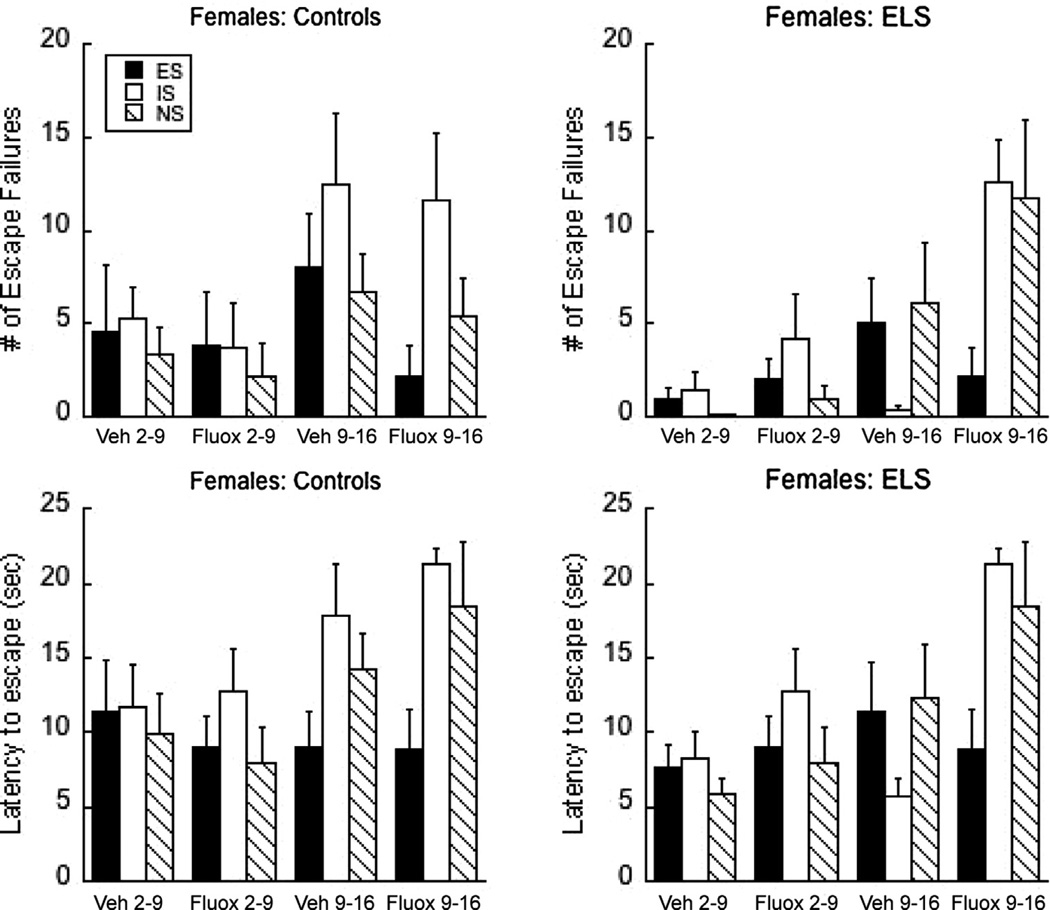
Early exposure to stressful life events plays a significant role in adolescent depression. Clinical studies have identified a number of factors that increase the risk of depression, including sex of the subject, duration of the stressor, and genetic polymorphisms that elevate serotonin levels. In this study we used the maternal separation (MS) model to investigate to what extent these factors interacted during development to manifest in depressive-like behavior in male and female rats. The triadic model of learned helplessness parses depressive-like behavior into aspects of controllable, uncontrollable, and motivational behaviors. This model was used to investigate how the timing of MS between the ages of postnatal day (P) 2-9 and P9-16 interacted with either simultaneous vehicle (saline; 1ml/kg; i.p.) or fluoxetine (10mg/kg) exposure, which was used to enhance serotonin levels; these experiments also compared the effect of a vehicle injection during these developmental periods to a no injection control. Vehicle injections alone increased helplessness in the controllable condition in male rats when injected between P9-16 only, and did not interact further with MS. MS at both ages decreased controllability in male adolescents; females demonstrated an increase in controllability after MS. Elevated serotonin at P2-9 increased escape latencies in male and female control and MS subjects. Fluoxetine exposure at P9-16 increased helplessness in controls. Fluoxetine decreased helplessness in MS males independent of age, but increases helplessness in MS females. This study highlights the importance of age of MS (MS between P2-9 increases helplessness in males more than females), the duration of the stressor (previous results show females are effected by longer MS [P2-20], but not shorter [this study]), and that elevated serotonin increases escape latencies to a greater extent in females.
Keywords: ES; IS; LH; MS; NS; P; abuse; adolescence; depression; escapable shock; fluoxetine; inescapable shock; learned helplessness; maternal separation; no shock; postnatal day; stress.
Copyright © 2013 IBRO. Published by Elsevier Ltd. All rights reserved.
Figures
References
-
- Amat J, Baratta MV, Paul E, Bland ST, Watkins LR, Maier SF. Medial prefrontal cortex determines how stressor controllability affects behavior and dorsal raphe nucleus. Nat Neurosci. 2005;8:365–371. - PubMed
-
- Andersen SL, Lyss PJ, Dumont NL, Teicher MH. Enduring neurochemical effects of early maternal separation on limbic structures. Ann N Y Acad Sci. 1999;877:756–759. - PubMed
-
- Andersen SL, Teicher MH. Delayed effects of early stress on hippocampal development. Neuropsychopharmacology. 2004;29:1988–1993. - PubMed
-
- Andersen SL, Teicher MH. Stress, sensitive periods and maturational events in adolescent depression. Trends Neurosci. 2008;31:183–191. - PubMed
Publication types
MeSH terms
Substances
Grants and funding
LinkOut - more resources
Full Text Sources
Other Literature Sources
Medical
Miscellaneous
