Diversity of metabolic syndrome criteria in association with cardiovascular diseases--a family medicine-based investigation
- PMID: 23852333
- PMCID: PMC3713877
- DOI: 10.12659/MSM.889343
Diversity of metabolic syndrome criteria in association with cardiovascular diseases--a family medicine-based investigation
Abstract
Background: This study compared the association between the 3 definitions of metabolic syndrome (MetS) suggested by the World Health Organization (WHO), National Cholesterol Education Programme (NCEP ATP III), and International Diabetes Federation (IDF), and the risk of cardiovascular diseases (CVD) and shows the prevalence and characteristics of persons with MetS in continental vs. coastal regions and rural vs. urban residence in Croatia.
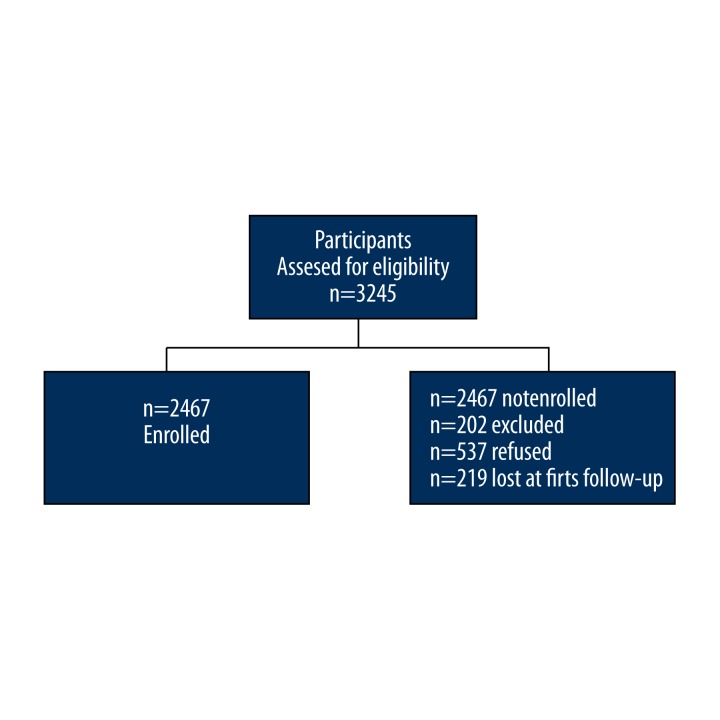
Material/methods: A prospective multicenter study was conducted on 3245 participants≥40 years, who visited general practices from May to July 2008 for any reason. This was a cross-sectional study of the Cardiovascular Risk and Intervention Study in Croatia-family medicine project (ISRCTN31857696).
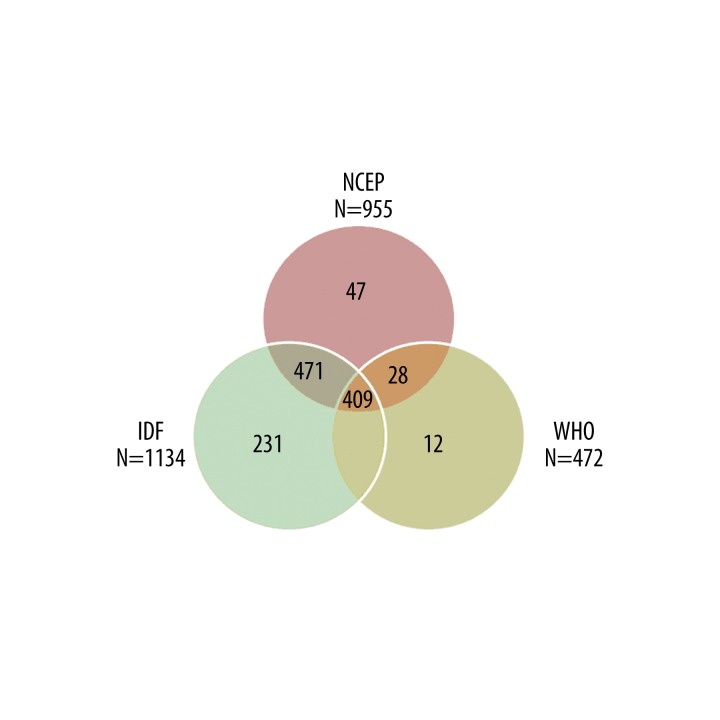
Results: All analyzed MetS definitions showed an association with CVD, but the strongest was shown by NCEP ATP III; coronary disease OR 2.48 (95% CI 1.80-3.82), cerebrovascular disease OR 2.14 (1.19-3.86), and peripheral artery disease OR 1.55 (1.04-2.32), especially for age and male sex. According to the NCEP ATP III (IDF), the prevalence was 38.7% (45.9%) [15.9% (18.6%) in men, and 22.7% (27.3%) in women, and 28.4% (33.9%) in the continental region, 10.2% (10.9%) in the coastal region, 26.2% (31.5%) in urban areas, and 12.4% (14.4%) in rural areas. Older age, male sex, and residence in the continental area were positively associated with MetS diagnosis according to NCEP ATP III, and current smoking and Mediterranean diet adherence have protective effects.
Conclusions: The NCEP ATP III definition seems to provide the strongest association with CVD and should therefore be preferred for use in this population.
Figures
Comment in
-
Body fat, cholesterol, triglycerides, and adipokines as predictors of waist circumference in overweight and obese adults. Comment to: Diversity of metabolic syndrome criteria in association with cardiovascular diseases--a family medicine-based investigation. Dragica Ivezić-Lalić, Biserka Bergman Marković, Ksenija Krančević, Josipa Kern, Davorka Vrdoljak, Jasna Vučak. Med Sci Monit, 2013; 19: 571-78.Med Sci Monit. 2013 Sep 6;19:740-1. doi: 10.12659/MSM.889612. Med Sci Monit. 2013. PMID: 24008519 Free PMC article. No abstract available.
References
-
- Reaven GM. Banting lecture 1988. Role of insulin resistance in human disease. Diabetes. 1988;37(12):1595–607. - PubMed
-
- Kaplan NM. The deadly quartet and the insulin resistance syndrome: an historical overview. Hypertens Res. 1996;19(Suppl 1):S9–11. - PubMed
-
- Kahn R, Buse J, Ferrannini E, Stern M American Diabetes Association; European Association for the Study of Diabetes. The metabolic syndrome: time for a critical appraisal: joint statement from the American Diabetes Association and the European Association for the Study of Diabetes. Diabetes Care. 2005;28(9):2289–304. - PubMed
-
- Rydén L, Standl E, Bartnik M, et al. Guidelines on diabetes, pre-diabetes, and cardiovascular diseases: executive summary. The Task Force on Diabetes and Cardiovascular Diseases of the European Society of Cardiology (ESC) and of the European Association for the Study of Diabetes (EASD) Eur Heart J. 2007;28(1):88–136. - PubMed
-
- Hanefeld M, Köhler C. The metabolic syndrome and its epidemiologic dimensions in historical perspective. Z Arztl Fortbild Qualitatssich. 2002;96(3):183–88. - PubMed
Publication types
MeSH terms
Associated data
LinkOut - more resources
Full Text Sources
Other Literature Sources
Medical