The effectiveness of light/dark exposure to treat insomnia in female nurses undertaking shift work during the evening/night shift
- PMID: 23853555
- PMCID: PMC3671326
- DOI: 10.5664/jcsm.2824
The effectiveness of light/dark exposure to treat insomnia in female nurses undertaking shift work during the evening/night shift
Abstract
Study objectives: The present study investigated whether bright light exposure during the first half of the evening/night shift combined with light attenuation in the morning is effective in improving sleep problems in nurses undertaking rotating shift work who suffer from clinical insomnia.
Methods: This was a prospective, randomized control study. The Insomnia Severity Index (ISI) and the Hospital Anxiety Depression Scale (HADS) were used to evaluate insomnia and anxiety/depression severity, respectively. Female hospital nurses on rotating shifts during the evening or night shift with an ISI score > 14 were enrolled. Subjects in the treatment group (n = 46) were exposed to bright light at 7,000-10,000 lux for ≥ 30 minutes. Exposure was continued for at least 10 days during 2 weeks, and the subjects avoided daytime outdoor sun exposure after work by wearing dark sunglasses. Subjects in the control group (n = 46) were not exposed to bright light, but also wore sunglasses after work. Statistical analyses were performed to examine group differences and differences across treatments.
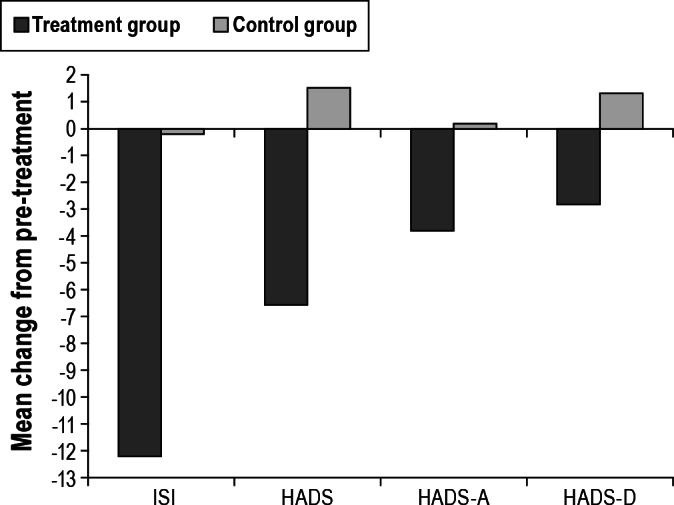
Results: After treatment, the treatment group showed significant improvements in the ISI score and the HADS total and subscale scores as compared with pre-treatment. The ISI, HADS, and subscales of the HADS scores were significantly improved across treatments in the treatment group as compared with the control group.
Conclusions: The design of this study is easy to put into practice in the real world. This is the first study to document that a higher intensity and briefer duration of bright light exposure during the first half of the evening/night shift with a daytime darkness procedure performed in rotating shift work female nurses suffering from clinical insomnia could improve their insomnia, anxiety, and depression severity.
Keywords: Bright light; anxiety; circadian rhythm; depression; insomnia; nurses; rotating shift; shift work.
Figures
Comment in
-
Bright light improves sleep and psychological health in shift working nurses.J Clin Sleep Med. 2013 Jul 15;9(7):647-8. doi: 10.5664/jcsm.2826. J Clin Sleep Med. 2013. PMID: 23853556 Free PMC article. No abstract available.
References
-
- Ohayon MM. Epidemiology of insomnia: what we know and what we still need to learn. Sleep Med Rev. 2002;6:97–111. - PubMed
-
- Hsu SC, Liu CY, Chen NH. Psychiatric diagnoses of patients visiting a sleep disorder clinic due to dyssomnias. Psychol Rep. 2006;98:789–97. - PubMed
-
- Ohayon MM, Roth T. Place of chronic insomnia in the course of depressive and anxiety disorders. J Psychiatr Res. 2003;37:9–15. - PubMed
-
- Buysse DJ, Tu XM, Cherry CR, et al. Pretreatment REM sleep and subjective sleep quality distinguish depressed psychotherapy remitters and nonremitters. Biol Psychiatry. 1999;45:205–13. - PubMed
-
- Moos RH, Cronkite RC. Symptom-based predictors of a 10-year chronic course of treated depression. J Nerv Ment Dis. 1999;187:360–8. - PubMed
Publication types
MeSH terms
LinkOut - more resources
Full Text Sources
Other Literature Sources
Medical