


Genetic epidemiology, hematological and clinical features of hemoglobinopathies in Iran
- PMID: 23853772
- PMCID: PMC3703361
- DOI: 10.1155/2013/803487
Genetic epidemiology, hematological and clinical features of hemoglobinopathies in Iran
Abstract
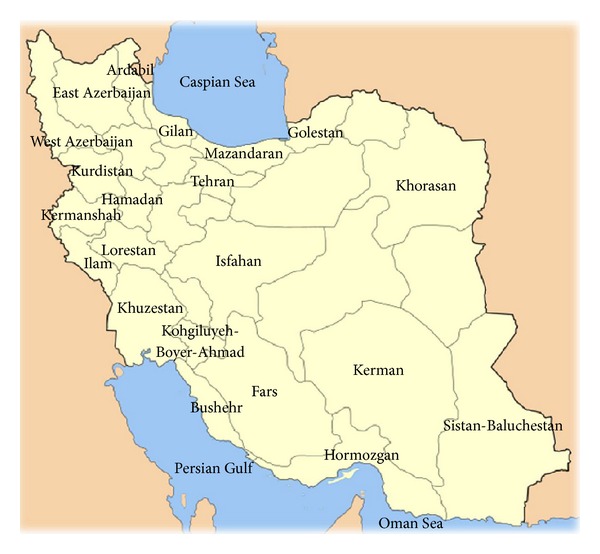
There is large variation in the molecular genetics and clinical features of hemoglobinopathies in Iran. Studying structural variants of hemoglobin demonstrated that the β-chain variants of hemoglobin S and D-Punjab are more prevalent in the Fars (southwestern Iran) and Kermanshah (western Iran) provinces, respectively. Also, α-chain variants of Hb Q-Iran and Hb Setif are prevalent in western Iran. The molecular basis and clinical severity of thalassemias are extremely heterogenous among Iranians due to the presence of multiethnic groups in the country. β-Thalassemia is more prevalent in northern and southern Iran. Among 52 different β-thalassemia mutations that have been identified among Iranian populations, IVSII-1 G:A is the most frequent mutation in most parts of the country. The presence of IVS I-5 G:C mutation with high frequency in southeastern Iran might reflect gene flow from neighboring countries. A wide spectrum of α-thalassemia alleles has been detected among Iranians with -α(3.7 kb) as the most prevalent α-thalassemia mutation. The prevention program of thalassemia birth in Iran has reduced the birth rate of homozygous β-thalassemia since the implementation of the program in 1997. In this review genetic epidemiology, clinical and hematological aspects of hemoglobinopathies, and the prevention programs of β-thalassemia in Iran will be discussed.
Figures
References
-
- Weatherall DJ. Current trends in the diagnosis and management of haemoglobinopathies. Scandinavian Journal of Clinical and Laboratory Investigation. 2007;67(1):1–2. - PubMed
-
- Old JM. Screening and genetic diagnosis of haemoglobinopathies. Scandinavian Journal of Clinical and Laboratory Investigation. 2007;67(1):71–86. - PubMed
-
- López C, Saravia C, Gomez A, Hoebeke J, Patarroyo MA. Mechanisms of genetically-based resistance to malaria. Gene. 2010;467(1-2):1–12. - PubMed
-
- Shear HL, Grinberg L, Gilman J, et al. Transgenic mice expressing human fetal globin are protected from malaria by a novel mechanism. Blood. 1998;92(7):2520–2526. - PubMed
Publication types
MeSH terms
Substances
LinkOut - more resources
Full Text Sources
Other Literature Sources
