


Objective measures of physical activity, fractures and falls: the osteoporotic fractures in men study
- PMID: 23855842
- PMCID: PMC3713521
- DOI: 10.1111/jgs.12326
Objective measures of physical activity, fractures and falls: the osteoporotic fractures in men study
Abstract
Objectives: To determine the association between objectively measured physical activity (PA), fractures, and falls.
Design: Longitudinal cohort study.
Setting: Six U.S. clinical sites.
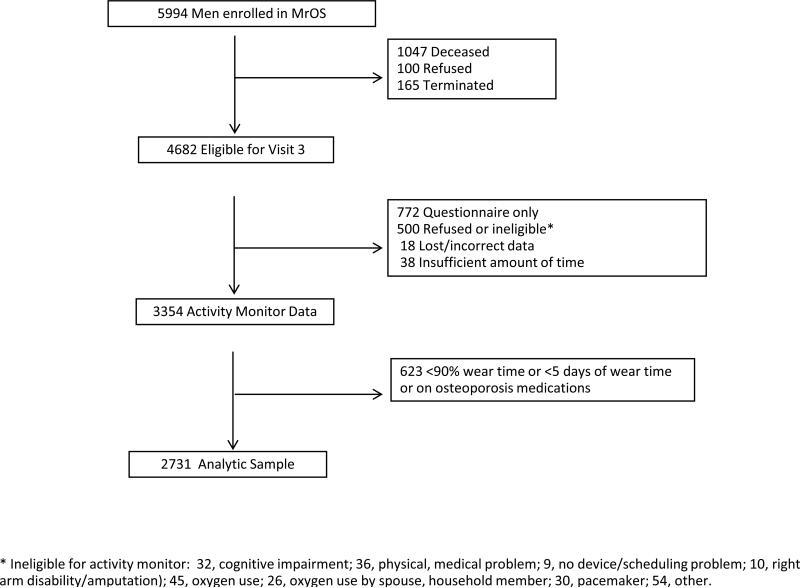
Participants: Two thousand seven hundred thirty-one men with a mean age of 79.
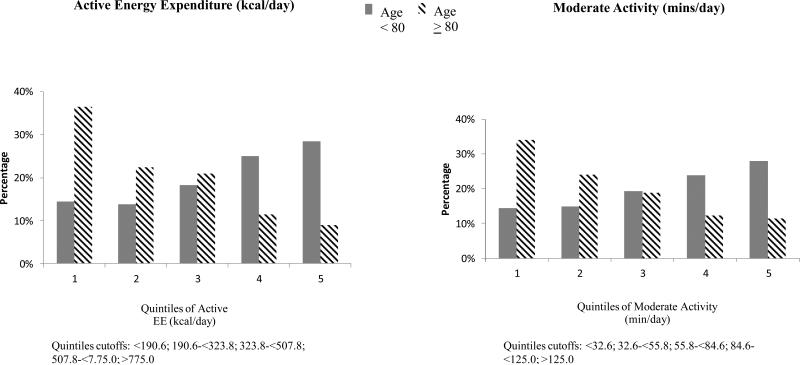
Measurements: Total and active energy expenditure (EE) and minutes per day spent in sedentary and moderate intensity activities were measured for at least 5 days. Energy expended at a metabolic equivalent of greater than three was termed active EE. Incident nonspine fractures and falls were identified every 4 months.
Results: Seven hundred fifty-nine (28.2%) men fell at least once over 12 months of follow-up; 186 (6.8%) experienced one or more fractures over an average follow-up of 3.5 ± 0.9 years. The association between PA and falling varied according to age (P interaction = .02). Men younger than 80 with the lowest active EE had a lower risk of falling than men with the highest active EE (relative risk (RR) = 0.75; P trend = .08), whereas men aged 80 and older with the lowest active EE had a higher risk of falling than men with the highest active EE (RR = 1.43, P trend = .09). In multivariate models including health status, men in the lowest quintile of active EE had a significantly higher risk of fracture (hazard ratio (HR) = 1.82, 95% confidence interval (CI) = 1.10-3.00, P trend = .04) than men in highest quintile. Men with <33 min/d of moderate activity had a 70% greater risk of fracture (HR = 1.70, 95% CI = 1.03-2.80).
Conclusion: Age modifies the association between PA and falling. Interventions aimed at obtaining more than 30 minutes of moderate PA per day may reduce fractures, extending PA guidelines to the oldest old, the fastest-growing proportion of those aged 65 and older.
Keywords: exercise; falls; fractures; osteoporosis; physical activity; population studies.
© 2013, Copyright the Authors Journal compilation © 2013, The American Geriatrics Society.
Figures
References
-
- Rubenstein LZ. Falls in older people: Epidemiology, risk factors and strategies for prevention. Age Ageing. 2006 Sep;35(Suppl 2):ii37–ii41. - PubMed
-
- Masud T, Morris RO. Epidemiology of falls. Age Ageing. 2001 Nov;30(Suppl 4):3–7. - PubMed
-
- Centers for Disease Control and Prevention Website. Falls Among Older Adults: An Overview. 2012 http://wwwcdcgov/HomeandRecreationalSafety/Falls/adultfallshtml Accessed....
-
- Grisso JA, Kelsey JL, Strom BL, et al. Risk factors for falls as a cause of hip fracture in women. The Northeast Hip Fracture Study Group. N Engl J Med. 1991 May 9;324(19):1326–31. - PubMed
Publication types
MeSH terms
Grants and funding
- U01 AR45632/AR/NIAMS NIH HHS/United States
- P30 AG024827/AG/NIA NIH HHS/United States
- U01 AR45647/AR/NIAMS NIH HHS/United States
- U01 AR45614/AR/NIAMS NIH HHS/United States
- U01 AR045654/AR/NIAMS NIH HHS/United States
- U01-AG027810/AG/NIA NIH HHS/United States
- U01 AR045583/AR/NIAMS NIH HHS/United States
- U01 AG042140/AG/NIA NIH HHS/United States
- U01 AR45583/AR/NIAMS NIH HHS/United States
- U01 AR045614/AR/NIAMS NIH HHS/United States
- U01 AR45654/AR/NIAMS NIH HHS/United States
- U01 AR045647/AR/NIAMS NIH HHS/United States
- U01 AR45580/AR/NIAMS NIH HHS/United States
- U01 AG027810/AG/NIA NIH HHS/United States
- UL1 RR024140/RR/NCRR NIH HHS/United States
- U01 AR045580/AR/NIAMS NIH HHS/United States
- U01 AG18197/AG/NIA NIH HHS/United States
- U01 AG018197/AG/NIA NIH HHS/United States
- U01 AR066160/AR/NIAMS NIH HHS/United States
- U01 AR045632/AR/NIAMS NIH HHS/United States
LinkOut - more resources
Full Text Sources
Other Literature Sources
Medical
