Infertility, infertility treatment, and achievement of pregnancy in female survivors of childhood cancer: a report from the Childhood Cancer Survivor Study cohort
- PMID: 23856401
- PMCID: PMC3845882
- DOI: 10.1016/S1470-2045(13)70251-1
Infertility, infertility treatment, and achievement of pregnancy in female survivors of childhood cancer: a report from the Childhood Cancer Survivor Study cohort
Abstract
Background: Previous studies have shown decreased pregnancy rates and early menopause in female cancer survivors; however, infertility rates and reproductive interventions have not been studied. We investigated infertility and time to pregnancy in female childhood cancer survivors, and analysed treatment characteristics associated with infertility and subsequent pregnancy.
Methods: The Childhood Cancer Survivor Study (CCSS) is a cohort study including 5 year cancer survivors from 26 Canadian and US institutions who were younger than 21 years at the time of diagnosis between Jan 1, 1970, and Dec 31, 1986, and a sibling control group. We included women aged 18-39 years who had ever been sexually active. We gathered demographic, medical, and reproductive data via a baseline questionnaire, and quantified exposure to alkylating agents and radiation therapy. Self-reported infertility, medical treatment for infertility, time to first pregnancy in survivors and siblings, and the risk of infertility in survivors by demographic, disease, and treatment variables were analysed.
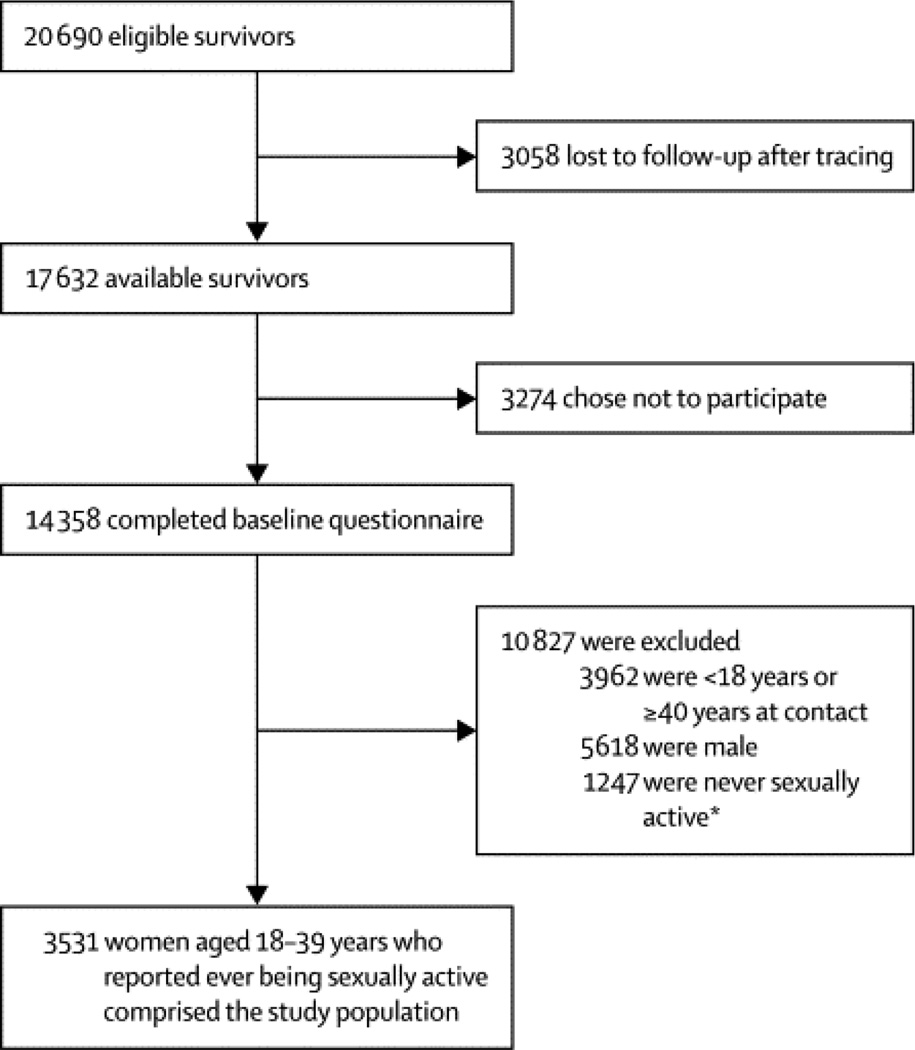
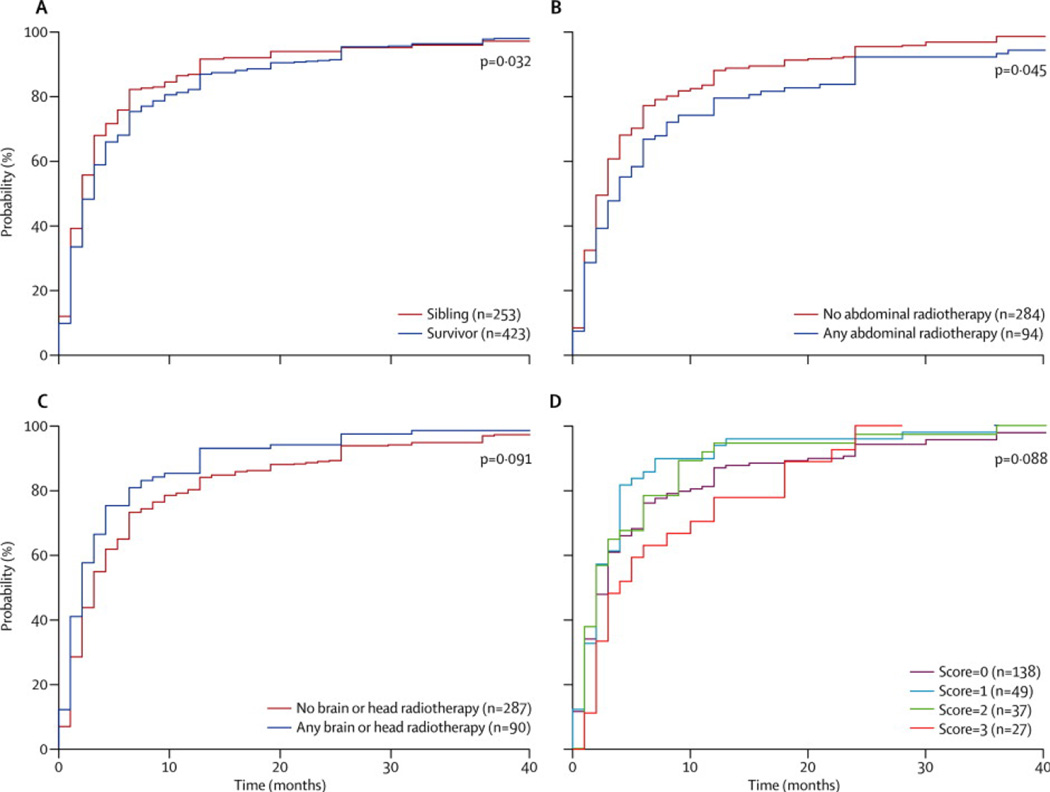
Findings: 3531 survivors and 1366 female sibling controls who enrolled between Nov 3, 1992, and April 4, 2004, were included. Compared with their siblings, survivors had an increased risk (relative risk [RR] 1·48 [95% CI 1·23-1·78]; p<0·0001) of clinical infertility (ie, >1 year of attempts at conception without success), which was most pronounced at early reproductive ages (RR 2·92 [95% CI 1·18-7·20], p=0·020, in participants ≤24 years; 1·61 [1·05-2·48], p=0·029, in those aged 25-29 years; and 1·37 [1·11-1·69], p=0·0035, in those aged 30-40 years). Despite being equally likely to seek treatment for infertility, survivors were less likely than were their siblings to be prescribed drugs for treatment of infertility (0·57 [95% CI 0·46-0·70], p<0·0001). Increasing doses of uterine radiation and alkylating agent chemotherapy were strongly associated with infertility. Although survivors had an increased time to pregnancy compared with their siblings (p=0·032), 292 (64%) of 455 participants with self-reported clinical infertility achieved a pregnancy.
Interpretation: A more comprehensive understanding of infertility after cancer is crucial for counselling and decision making about future conception attempts and fertility preservation.
Funding: National Cancer Institute, American Lebanese Syrian Associated Charities, Swim Across America.
Copyright © 2013 Elsevier Ltd. All rights reserved.
Conflict of interest statement
Conflicts of interest: Dr. Barton has no conflicts of interest to report. Dr. Najita has no conflicts of interest to report. Dr. Ginsburg has no conflicts of interest to report. Dr. Leisenring has no conflicts of interest to report. Dr. Stovall has no conflicts of interest to report. Ms. Weathers has no conflicts of interest to report. Dr. Sklar has no conflicts of interest to report. Dr. Robison has no conflicts of interest to report. Dr. Diller has no conflicts of interest to report.
Figures
Comment in
-
Infertility in women after childhood cancer.Lancet Oncol. 2013 Aug;14(9):797-8. doi: 10.1016/S1470-2045(13)70278-X. Epub 2013 Jul 13. Lancet Oncol. 2013. PMID: 23856400 No abstract available.
References
-
- Connell S, Patterson C, Newman B. Issues and concerns of young Australian women with breast cancer. Support Care Cancer. 2006;14(5):419–426. - PubMed
-
- Peate M, Meiser B, Hickey M, Friedlander M. The fertility-related concerns, needs and preferences of younger women with breast cancer: a systematic review. Breast Cancer Res Treat. 2009;116(2):215–223. - PubMed
-
- Meirow D, Nugent D. The effects of radiotherapy and chemotherapy on female reproduction. Hum Reprod Update. 2001;7(6):535–543. - PubMed
-
- Sklar CA, Mertens AC, Mitby P, et al. Premature menopause in survivors of childhood cancer: a report from the childhood cancer survivor study. J Natl Cancer Inst. 2006;98(13):890–896. - PubMed
Publication types
MeSH terms
Grants and funding
LinkOut - more resources
Full Text Sources
Other Literature Sources
Medical
Research Materials
Miscellaneous