


The upstream enhancer elements of the G6PC promoter are critical for optimal G6PC expression in murine glycogen storage disease type Ia
- PMID: 23856420
- PMCID: PMC3898731
- DOI: 10.1016/j.ymgme.2013.06.014
The upstream enhancer elements of the G6PC promoter are critical for optimal G6PC expression in murine glycogen storage disease type Ia
Abstract
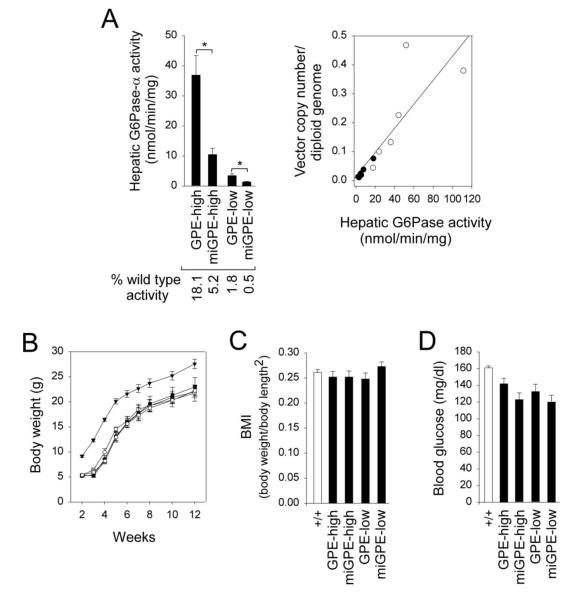
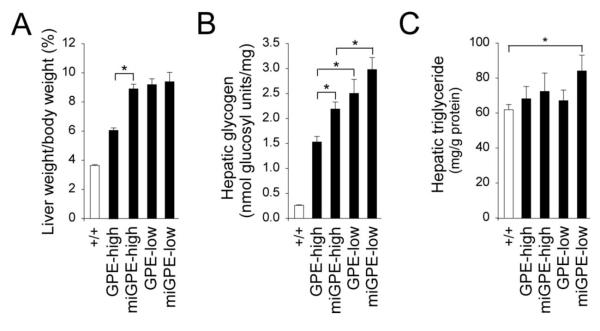
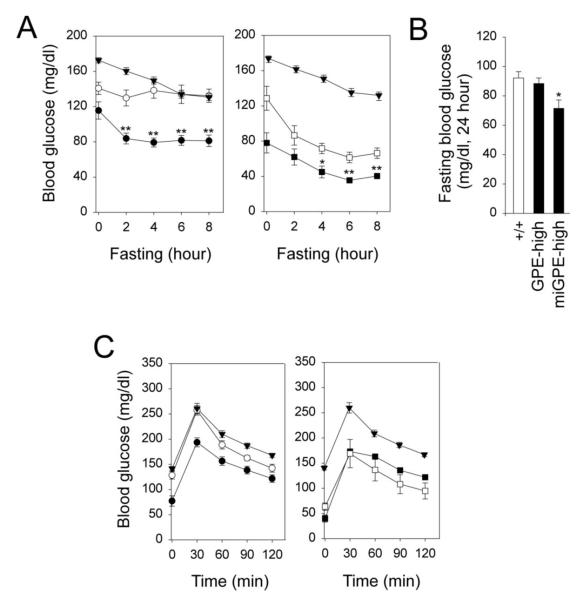
Glycogen storage disease type-Ia (GSD-Ia) patients deficient in glucose-6-phosphatase-α (G6Pase-α or G6PC) manifest impaired glucose homeostasis characterized by fasting hypoglycemia, growth retardation, hepatomegaly, nephromegaly, hyperlipidemia, hyperuricemia, and lactic acidemia. Two efficacious recombinant adeno-associated virus pseudotype 2/8 (rAAV8) vectors expressing human G6Pase-α have been independently developed. One is a single-stranded vector containing a 2864-bp of the G6PC promoter/enhancer (rAAV8-GPE) and the other is a double-stranded vector containing a shorter 382-bp minimal G6PC promoter/enhancer (rAAV8-miGPE). To identify the best construct, a direct comparison of the rAAV8-GPE and the rAAV8-miGPE vectors was initiated to determine the best vector to take forward into clinical trials. We show that the rAAV8-GPE vector directed significantly higher levels of hepatic G6Pase-α expression, achieved greater reduction in hepatic glycogen accumulation, and led to a better toleration of fasting in GSD-Ia mice than the rAAV8-miGPE vector. Our results indicated that additional control elements in the rAAV8-GPE vector outweigh the gains from the double-stranded rAAV8-miGPE transduction efficiency, and that the rAAV8-GPE vector is the current choice for clinical translation in human GSD-Ia.
Keywords: AAV; Adeno-associated virus; G6P; G6PC promoter/enhancer; G6Pase; GPE; GSD-Ia; Gene therapy; Glucose-6-phosphatase; Glycogen storage disease type I; HCA; adeno-associated virus; glucose-6-phosphatase; glucose-6-phosphate; glycogen storage disease type Ia; hepatocellular adenoma.
© 2013.
Figures
References
-
- Chou JY, Matern D, Mansfield BC, Chen YT. Type I glycogen storage diseases: disorders of the glucose-6-phosphatase complex. Curr. Mol. Med. 2002;2:121–143. - PubMed
-
- Greene HL, Slonim AE, O’Neill JA, Jr., Burr IM. Continuous nocturnal intragastric feeding for management of type 1 glycogen-storage disease. N. Engl. J. Med. 1976;294:423–425. - PubMed
-
- Chen YT, Cornblath M, Sidbury JB. Cornstarch therapy in type I glycogen storage disease. N. Engl. J. Med. 1984;310:171–175. - PubMed
Publication types
MeSH terms
Substances
Grants and funding
LinkOut - more resources
Full Text Sources
Other Literature Sources
Molecular Biology Databases
