


The potential role of lycopene for the prevention and therapy of prostate cancer: from molecular mechanisms to clinical evidence
- PMID: 23857058
- PMCID: PMC3742263
- DOI: 10.3390/ijms140714620
The potential role of lycopene for the prevention and therapy of prostate cancer: from molecular mechanisms to clinical evidence
Abstract
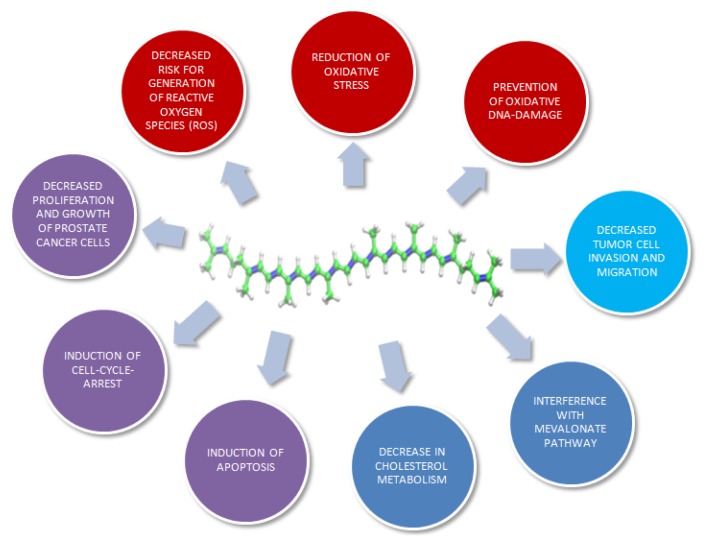
Lycopene is a phytochemical that belongs to a group of pigments known as carotenoids. It is red, lipophilic and naturally occurring in many fruits and vegetables, with tomatoes and tomato-based products containing the highest concentrations of bioavailable lycopene. Several epidemiological studies have linked increased lycopene consumption with decreased prostate cancer risk. These findings are supported by in vitro and in vivo experiments showing that lycopene not only enhances the antioxidant response of prostate cells, but that it is even able to inhibit proliferation, induce apoptosis and decrease the metastatic capacity of prostate cancer cells. However, there is still no clearly proven clinical evidence supporting the use of lycopene in the prevention or treatment of prostate cancer, due to the only limited number of published randomized clinical trials and the varying quality of existing studies. The scope of this article is to discuss the potential impact of lycopene on prostate cancer by giving an overview about its molecular mechanisms and clinical effects.
Figures
References
-
- Bray F., Lortet-Tieulent J., Ferlay J., Forman D., Auvinen A. Prostate cancer incidence and mortality trends in 37 European countries: An overview. Eur. J. Cancer. 2010;46:3040–3052. - PubMed
-
- Ferlay J., Shin H.R., Bray F., Forman D., Mathers C., Parkin D.M. GLOBOCAN 2008 v2.0, Cancer Incidence and Mortality Worldwide: IARC Cancer Base. International Agency for Research on Cancer; Lyon, France: 2010.
-
- Klotz L. Active surveillance for prostate cancer: Overview and update. Curr. Treat. Options Oncol. 2013;14:97–108. - PubMed
-
- Schmidt K., Pittler M.H., Ernst E. A profile of journals of complementary and alternative medicine. Swiss Med. Wkly. 2001;131:588–591. - PubMed
Publication types
MeSH terms
Substances
LinkOut - more resources
Full Text Sources
Other Literature Sources
Medical
