


Heterogeneous nuclear ribonucleoprotein (HnRNP) K genome-wide binding survey reveals its role in regulating 3'-end RNA processing and transcription termination at the early growth response 1 (EGR1) gene through XRN2 exonuclease
- PMID: 23857582
- PMCID: PMC3750174
- DOI: 10.1074/jbc.M113.496679
Heterogeneous nuclear ribonucleoprotein (HnRNP) K genome-wide binding survey reveals its role in regulating 3'-end RNA processing and transcription termination at the early growth response 1 (EGR1) gene through XRN2 exonuclease
Abstract
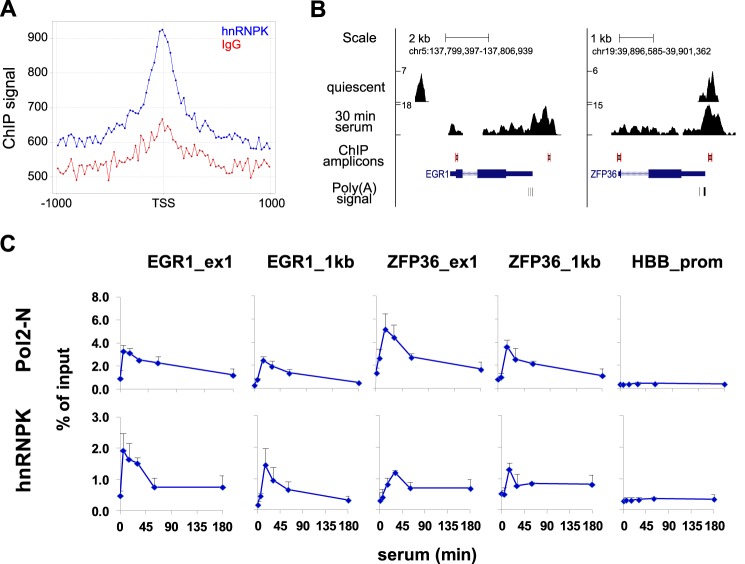
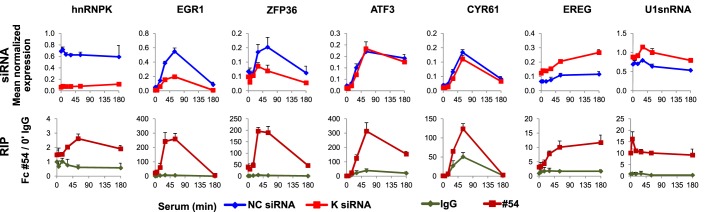
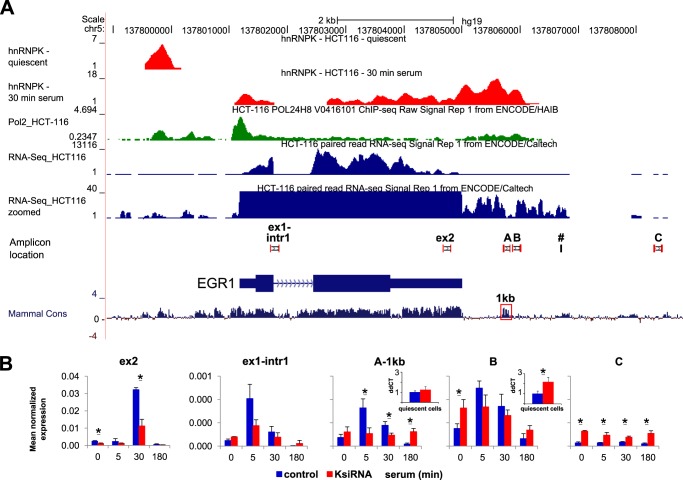
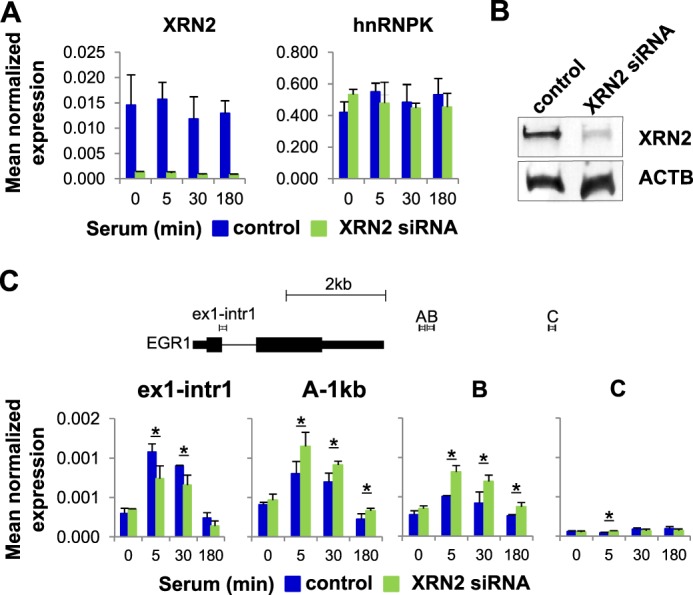
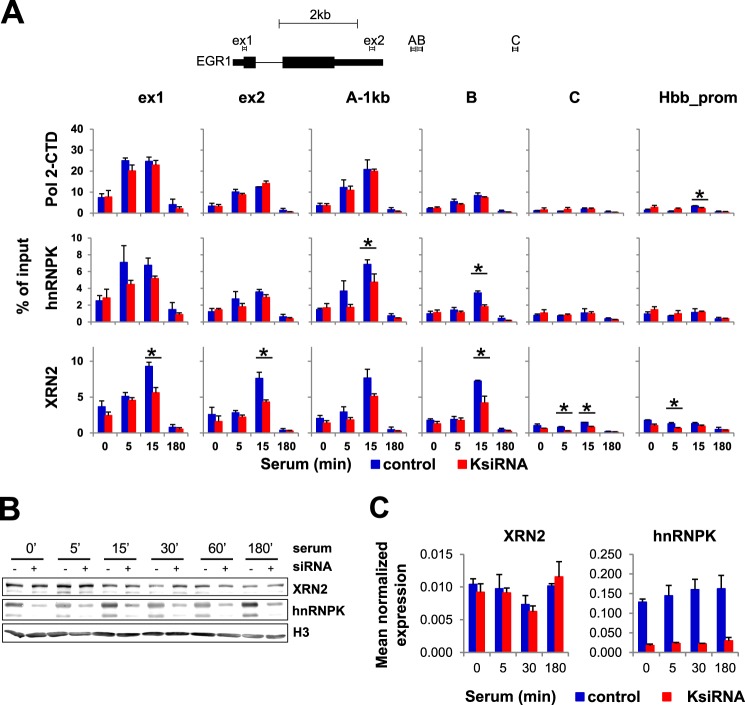
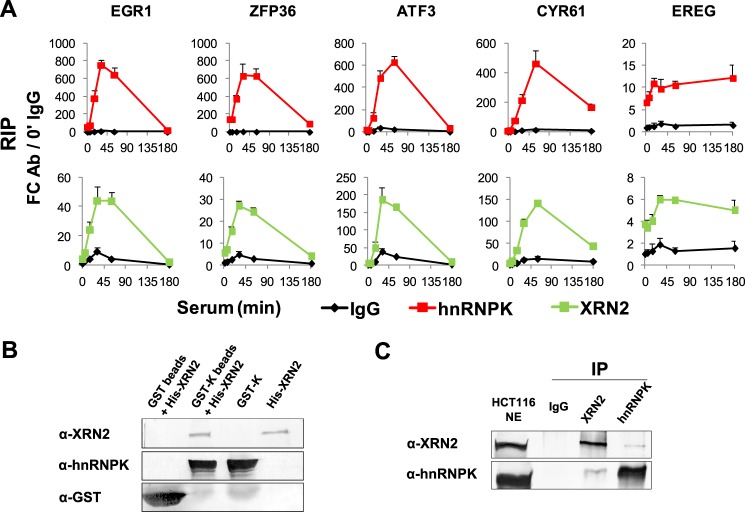
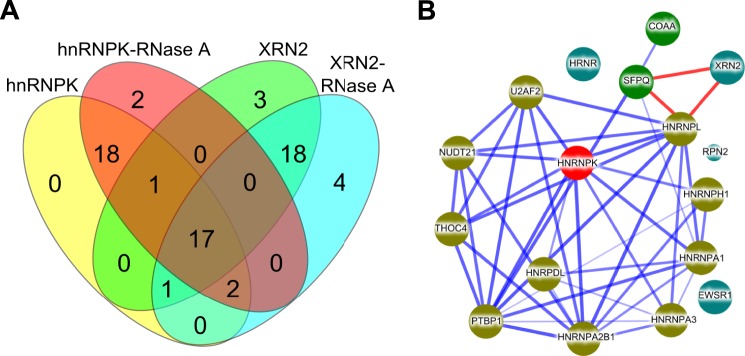
The heterogeneous nuclear ribonucleoprotein K (hnRNPK) is a nucleic acid-binding protein that acts as a docking platform integrating signal transduction pathways to nucleic acid-related processes. Given that hnRNPK could be involved in other steps that compose gene expression the definition of its genome-wide occupancy is important to better understand its role in transcription and co-transcriptional processes. Here, we used chromatin immunoprecipitation followed by deep sequencing (ChIP-Seq) to analyze the genome-wide hnRNPK-DNA interaction in colon cancer cell line HCT116. 9.1/3.6 and 7.0/3.4 million tags were sequenced/mapped, then 1809 and 642 hnRNPK binding sites were detected in quiescent and 30-min serum-stimulated cells, respectively. The inspection of sequencing tracks revealed inducible hnRNPK recruitment along a number of immediate early gene loci, including EGR1 and ZFP36, with the highest densities present at the transcription termination sites. Strikingly, hnRNPK knockdown with siRNA resulted in increased pre-RNA levels transcribed downstream of the EGR1 polyadenylation (A) site suggesting altered 3'-end pre-RNA degradation. Further ChIP survey of hnRNPK knockdown uncovered decreased recruitment of the 5'-3' exonuclease XRN2 along EGR1 and downstream of the poly(A) signal without altering RNA polymerase II density at these sites. Immunoprecipitation of hnRNPK and XRN2 from intact and RNase A-treated nuclear extracts followed by shotgun mass spectrometry revealed the presence of hnRNPK and XRN2 in the same complexes along with other spliceosome-related proteins. Our data suggest that hnRNPK may play a role in recruitment of XRN2 to gene loci thus regulating coupling 3'-end pre-mRNA processing to transcription termination.
Keywords: Chromatin Immunoprecipitation (ChiP); Gene Expression; Mass Spectrometry (MS); RNA Polymerase II; Transcription Termination; XRN2; hnRNPK.
Figures
References
-
- Bomsztyk K., Denisenko O., Ostrowski J. (2004) HnRNP K. One protein multiple processes. Bioessays 26, 629–638 - PubMed
-
- Du Q., Melnikova I. N., Gardner P. D. (1998) Differential effects of heterogeneous nuclear ribonucleoprotein K on Sp1- and Sp3-mediated transcriptional activation of a neuronal nicotinic acetylcholine receptor promoter. J. Biol. Chem. 273, 19877–19883 - PubMed
-
- Shi L., Ko S., Kim S., Echchgadda I., Oh T. S., Song C. S., Chatterjee B. (2008) Loss of androgen receptor in aging and oxidative stress through Myb proto-oncoprotein-regulated reciprocal chromatin dynamics of p53 and poly(ADP-ribose) polymerase PARP-1. J. Biol. Chem. 283, 36474–36485 - PMC - PubMed
-
- Takimoto M., Tomonaga T., Matunis M., Avigan M., Krutzsch H., Dreyfuss G., Levens D. (1993) Specific binding of heterogeneous ribonucleoprotein particle protein K to the human c-myc promoter, in vitro. J. Biol. Chem. 268, 18249–18258 - PubMed
Publication types
MeSH terms
Substances
Grants and funding
LinkOut - more resources
Full Text Sources
Other Literature Sources
Miscellaneous
