


Review
doi: 10.4155/fmc.13.51.
Transition-state inhibitors of purine salvage and other prospective enzyme targets in malaria
Affiliations
- PMID: 23859211
- PMCID: PMC3819805
- DOI: 10.4155/fmc.13.51
Item in Clipboard
Review
Transition-state inhibitors of purine salvage and other prospective enzyme targets in malaria
Future Med Chem.
2013 Jul.
Abstract
Malaria is a leading cause of human death within the tropics. The gradual generation of drug resistance imposes an urgent need for the development of new and selective antimalarial agents. Kinetic isotope effects coupled to computational chemistry have provided the relevant details on geometry and charge of enzymatic transition states to facilitate the design of transition-state analogs. These features have been reproduced into chemically stable mimics through synthetic chemistry, generating inhibitors with dissociation constants in the pico- to femto-molar range. Transition-state analogs are expected to contribute to the control of malaria.
Figures
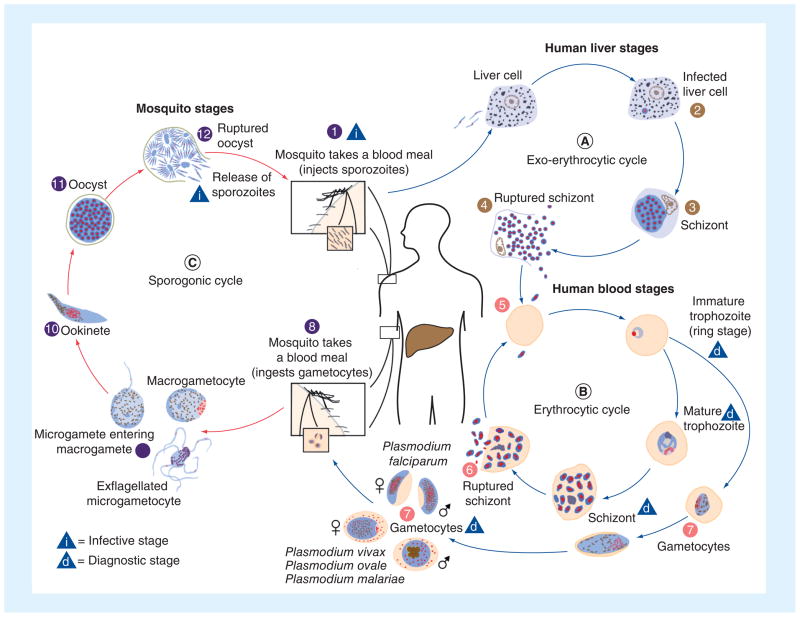
Reproduced from [201].
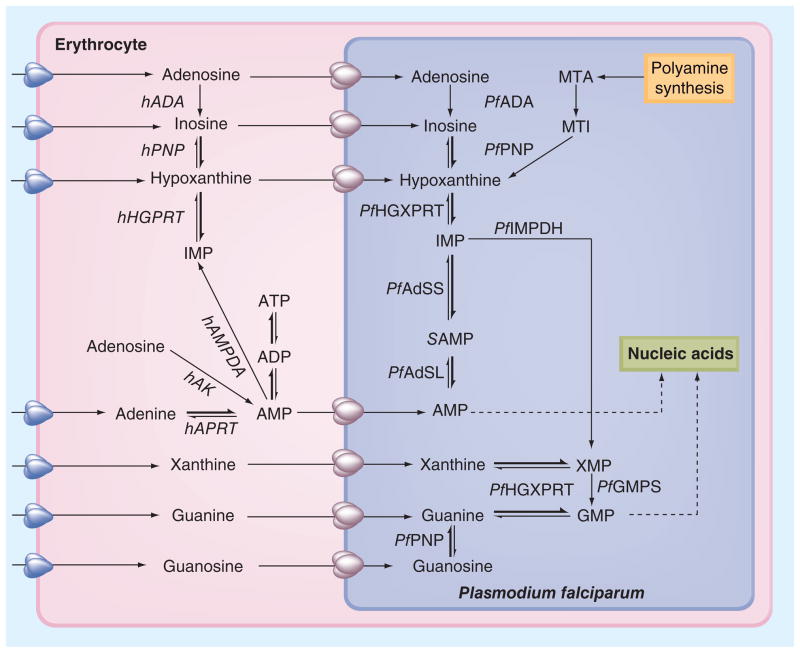
Bold arrows on reversible steps indicate the metabolically favored direction. MTA: 5′-methylthioadenosine; MTI: 5′-methylthioinosine; SAMP: Adenylosuccinate. Adapted from [33].
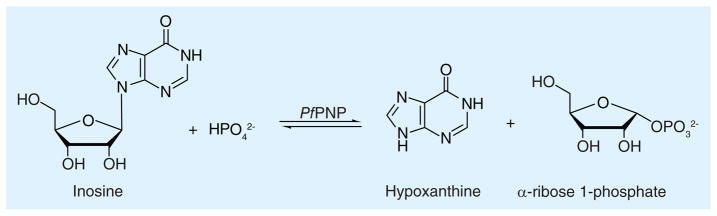
PfPNP catalyzes the reversible phosphorolysis of the N-glycosidic bond of β-purine (deoxy)ribonucleosides to generate α-(deoxy) ribose 1-phosphate and the corresponding purine bases. PfPNP: Plasmodium falciparum PNP.
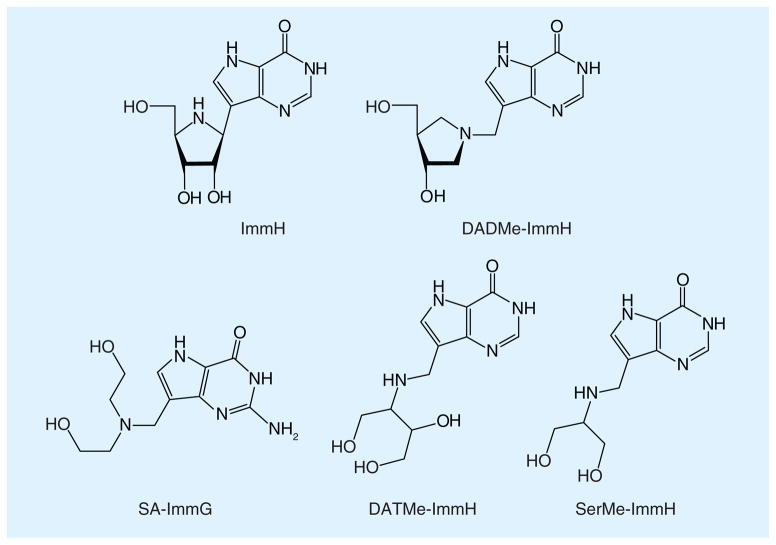
DADMe–ImmH: 4′-deaza-1′-aza-2′-deoxy-1′-(9-methylene) –ImmH; DATMe–ImmH: 2′-deoxy-2′-amino-tetritol-N-(9-methylene) –ImmH; ImmH: Immucillin H; SA-ImmG: Simplified analog of Immucillin G; SerMe–ImmH: Serinol-N-(9-methylene) –ImmH.
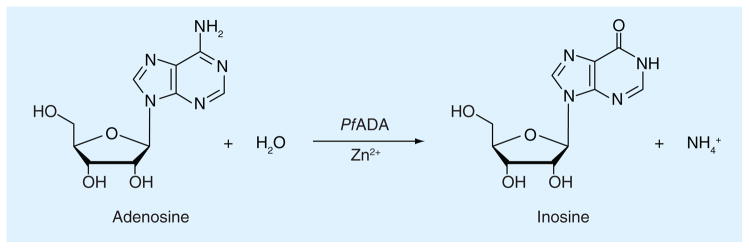
PfADA catalyzes the Zn2+-dependent irreversible hydrolytic deamination of (deoxy)adenosine to generate (deoxy) inosine and ammonia. PfADA: Plasmodium falciparum ADA.
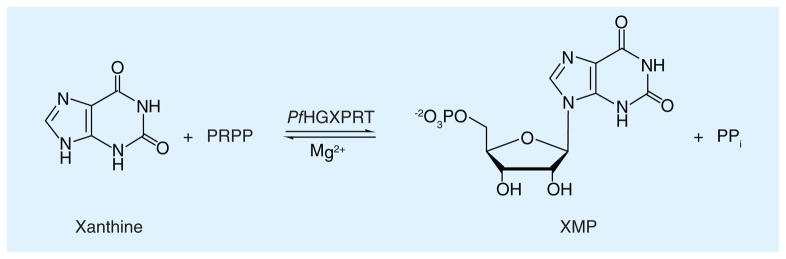
PfHGXPRT catalyzes the Mg2+-dependent reversible conversion of 6-oxopurine bases to their respective nucleotides and PPi, with the phosphoribosyl group being derived from phosphoribosyl pyrophosphate. PfHGXPRT: Plasmodium falciparum HGXPRT; PPi: Inorganic pyrophosphate.
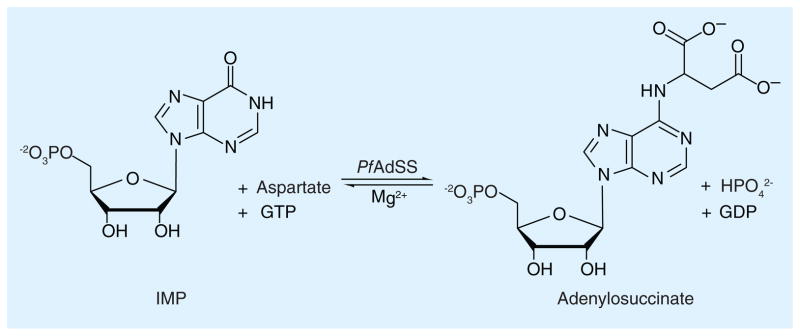
PfAdSS catalyzes the first committed step in the synthesis of AMP, more specifically the Mg2+-dependent reversible formation of adenylosuccinate from IMP and aspartate, in a two-step reaction driven by the hydrolysis of GTP to GDP and inorganic phosphate. IMP: Inosine monophosphate; PfAdSS: Plasmodium falciparum AdSS.
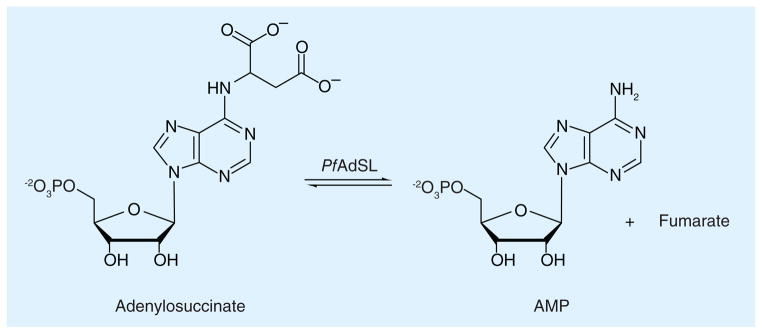
PfAdSL catalyzes the final step in AMP synthesis, more specifically the reversible cleavage of adenylosuccinate to AMP and fumarate. PfAdSL: Plasmodium falciparum AdSL.
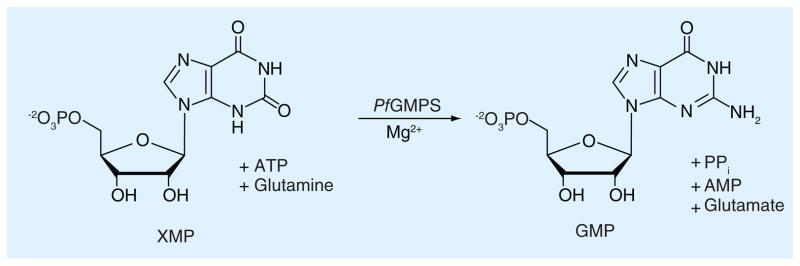
PfGMPS catalyzes the Mg2+-dependent irreversible biosynthesis of GMP from XMP and glutamine in the presence of ATP, producing GMP, inorganic pyrophosphate, AMP and glutamate. PfGMPS: Plasmodium falciparum GMPS.
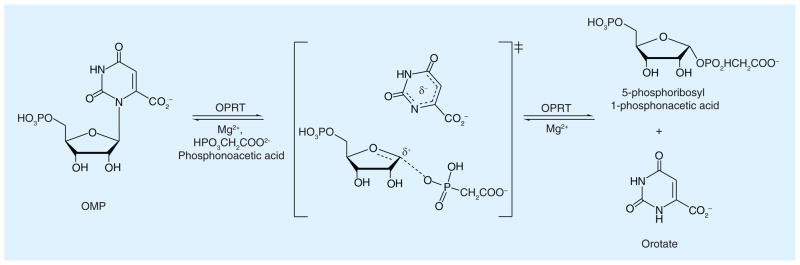
Reaction catalyzed by Plasmodium falciparum OPRT with phosphonoacetic acid as the substrate, revealing the ribooxocarbenium ion formation, a fully dissociated orotate, and a partially bonded nucleophile transition-state structure.
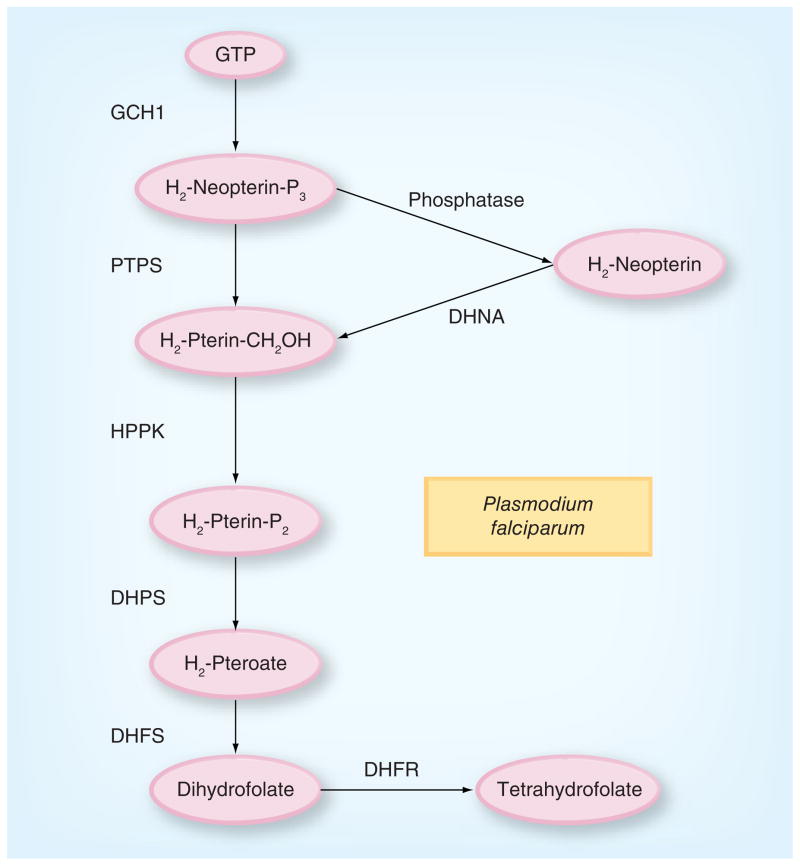
Folate biosynthetic pathway in Plasmodium falciparum.
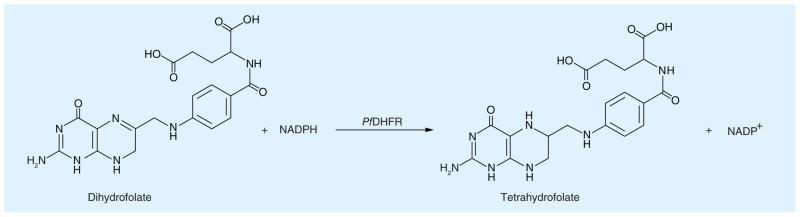
P. falciparum DHFR catalyzes the NADPH-dependent reduction of dihydrofolate to tetrahydrofolate during the de novo folate biosynthetic pathway. PfDHFR: Plasmodium falciparum DHFR.
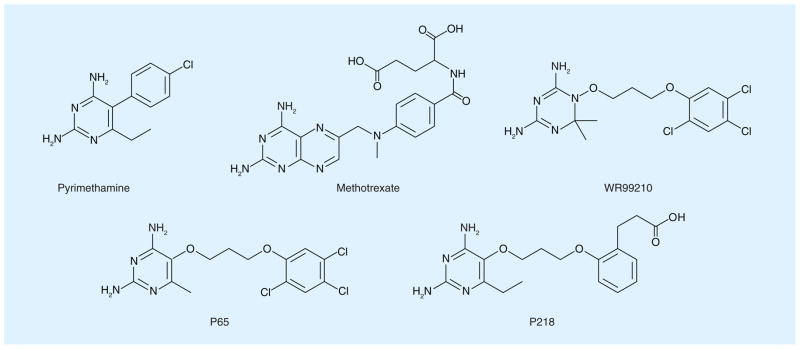
DHFR inhibitors.
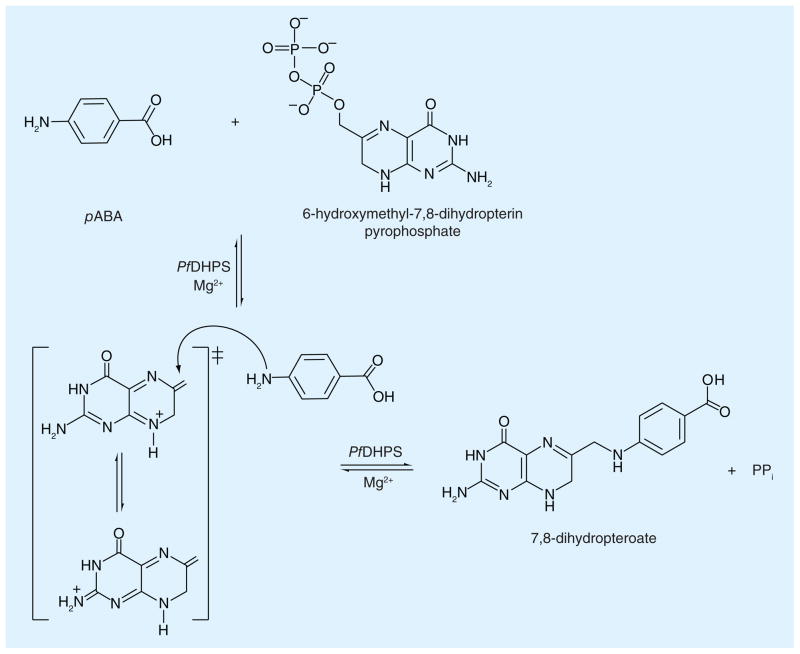
P. falciparum DHPS catalyzes the Mg2+-dependent reversible condensation of p-amino benzoic acid and 6-hydroxymethyl-7,8-dihydropterin pyrophosphate to yield 7,8-dihydropteroate during the de novo folate biosynthetic pathway. The reaction is likely to undergo an SN1 mechanism, where a cationic intermediate is formed as a result of loss of PPi from 6-hydroxymethyl-7,8-dihydropterin pyrophosphate. PfDHPS: Plasmodium falciparum DHPS; PPi: Inorganic pyrophosphate.
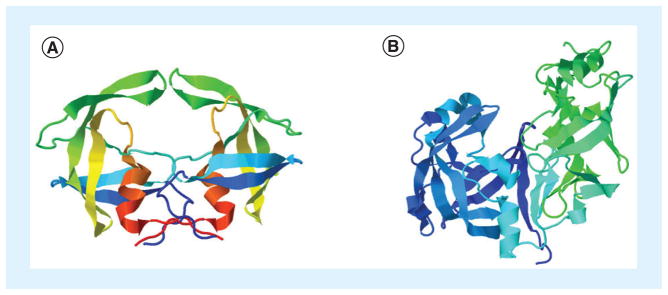
(A) Homodimeric HIV-1 protease (3HVP). (B) Single chain polypeptide plasmepsin II (1LF4).
References
-
- Svenson JE, MacLean JD, Gyorkos TW, Keystone J. Imported malaria. Clinical presentation and examination of symptomatic travelers. Arch Intern Med. 1995;155(8):861–868. - PubMed
-
- Holt RA, Subramanian GM, Halpern A, et al. The genome sequence of the malaria mosquito Anopheles gambiae. Science. 2002;298(5591):129–149. - PubMed
-
- White NJ, Breman JG. Malaria. In: Anthony SF, Dennis LK, Dan LL, et al., editors. Harrison’s Principles of Internal Medicine. The McGraw-Hill Companies; NY, USA: 2008. pp. 1280–1294.
-
- Foley M, Tilley L. Quinoline antimalarials: mechanisms of action and resistance and prospects for new agents. Pharmacol Ther. 1998;79(1):55–87. - PubMed
Websites
-
- Centers for Disease Control and Prevention. Malaria Biology. www.cdc.gov/malaria/about/biology.
-
- WHO. World Malaria Report. 2011 www.who.int/malaria/world_malaria_report_2011/en.
Publication types
MeSH terms
Substances
Grants and funding
LinkOut - more resources
Full Text Sources
Other Literature Sources
Medical
