Targeting SREBP-1-driven lipid metabolism to treat cancer
- PMID: 23859617
- PMCID: PMC4148912
- DOI: 10.2174/13816128113199990486
Targeting SREBP-1-driven lipid metabolism to treat cancer
Abstract
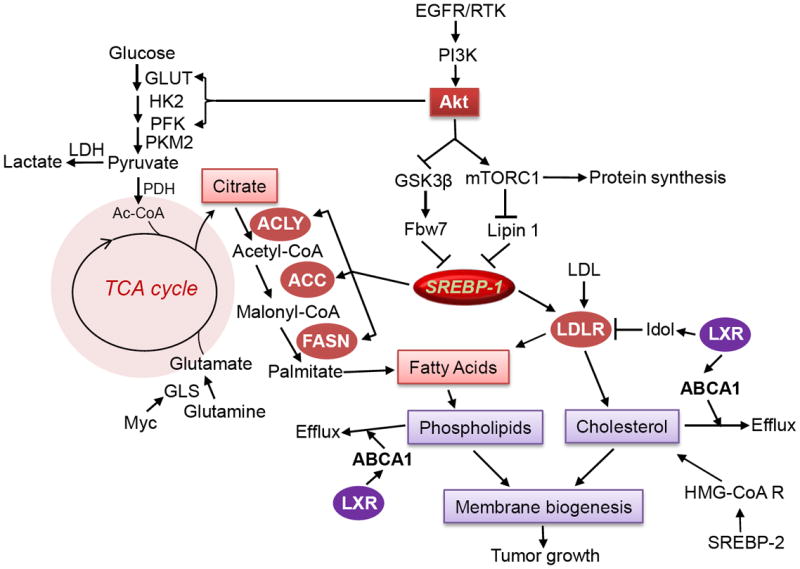
Metabolic reprogramming is a hallmark of cancer. Oncogenic growth signaling regulates glucose, glutamine and lipid metabolism to meet the bioenergetics and biosynthetic demands of rapidly proliferating tumor cells. Emerging evidence indicates that sterol regulatory element-binding protein 1 (SREBP-1), a master transcription factor that controls lipid metabolism, is a critical link between oncogenic signaling and tumor metabolism. We recently demonstrated that SREBP-1 is required for the survival of mutant EGFR-containing glioblastoma, and that this pro-survival metabolic pathway is mediated, in part, by SREBP-1-dependent upregulation of the fatty acid synthesis and low density lipoprotein (LDL) receptor (LDLR). These results have identified EGFR/PI3K/Akt/SREBP-1 signaling pathway that promotes growth and survival in glioblastoma, and potentially other cancer types. Here, we summarize recent insights in the understanding of cancer lipid metabolism, and discuss the evidence linking SREBP-1 with PI3K/Akt signaling-controlled glycolysis and with Myc-regulated glutaminolysis to lipid metabolism. We also discuss the development of potential drugs targeting the SREBP-1- driven lipid metabolism as anti-cancer agents.
Figures
References
-
- Menendez JA, Lupu R. Fatty acid synthase and the lipogenic phenotype in cancer pathogenesis. Nature reviews Cancer. 2007;7:763–77. - PubMed
-
- Medes G, Thomas A, Weinhouse S. Metabolism of neoplastic tissue. IV. A study of lipid synthesis in neoplastic tissue slices in vitro. Cancer research. 1953;13:27–9. - PubMed
-
- Kuhajda FP. Fatty-acid synthase and human cancer: new perspectives on its role in tumor biology. Nutrition. 2000;16:202–8. - PubMed
-
- Kuhajda FP, Piantadosi S, Pasternack GR. Haptoglobin-related protein (Hpr) epitopes in breast cancer as a predictor of recurrence of the disease. The New England journal of medicine. 1989;321:636–41. - PubMed
Publication types
MeSH terms
Substances
Grants and funding
LinkOut - more resources
Full Text Sources
Other Literature Sources
Research Materials
Miscellaneous